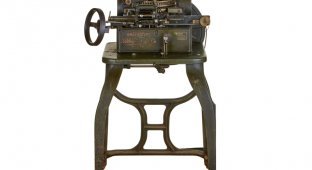
Why This Typewriter Used a "Typeball" (3 Photos)
The IBM Selectric housed all its characters on a single, spherical element known as a "typeball." It tilted and rotated to strike the paper with the correct character. To change fonts, users could simply swap out the typeball for another. 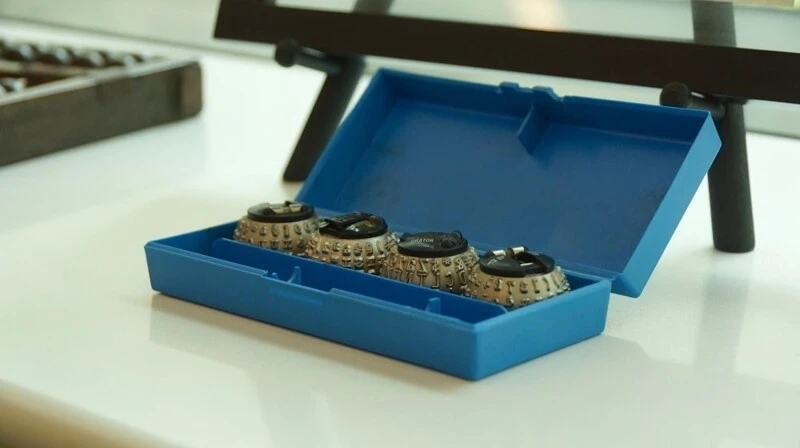
Interchangeable Selectric typing elements. Photo by Ted Eytan, 2013; CC BY-SA 2.0.
Traditional typewriters relied on individual typebars for each character. If keys were struck too quickly in succession, these arms would collide and jam. Meanwhile, the paper moved across the page on a heavy carriage.
Introduced on July 31, 1961, the Selectric completely redesigned this mechanism. Instead of the carriage moving back and forth, the typeball traveled across the stationary paper. Early models featured 88 characters on the ball's surface. 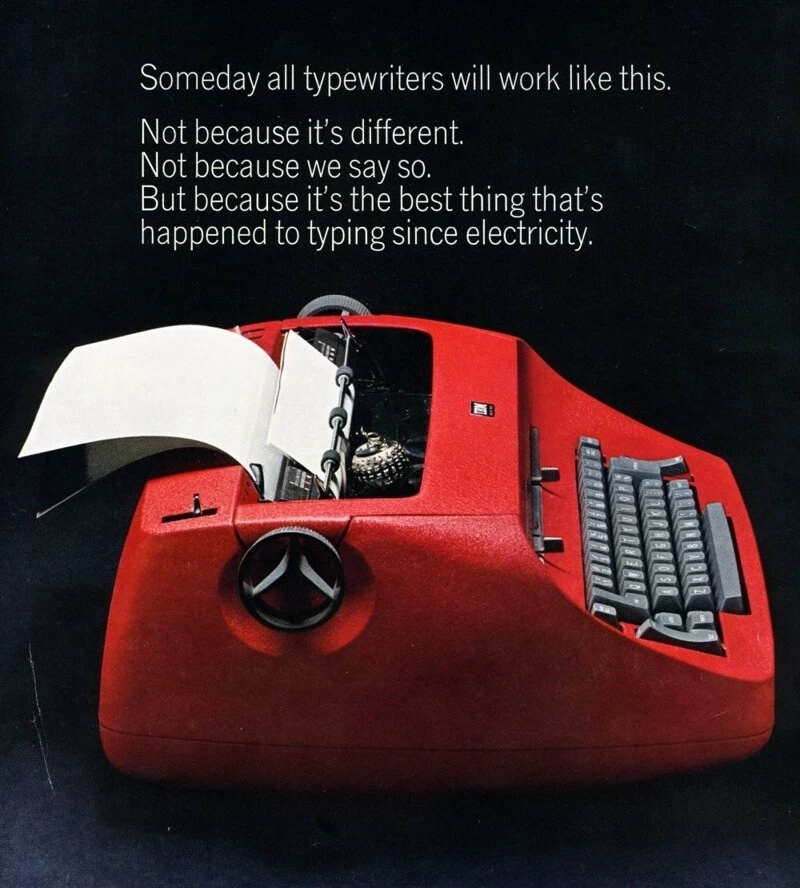
Cover of an official 1960s Selectric brochure. Historical document from the IBM Archives.
Pressing a key dictated the precise tilt and rotation needed. The ball selected the appropriate character, struck the inked ribbon, and advanced to the next position. This electromechanical system relied on a complex array of components to coordinate speed and timing.
Although the element appeared metallic, IBM actually molded it from plastic before adding a chrome finish. To remove burrs after molding, workers deburred the parts using crushed walnut shells, as harsher abrasives could damage the delicate shapes. Only then was the durable metallic plating applied.
Different fonts and symbol sets were now self-contained, interchangeable units. Typists could easily pop out one element, snap in another, and keep working on the same machine. IBM eventually offered versions for foreign alphabets, mathematical equations, and statistical notation. 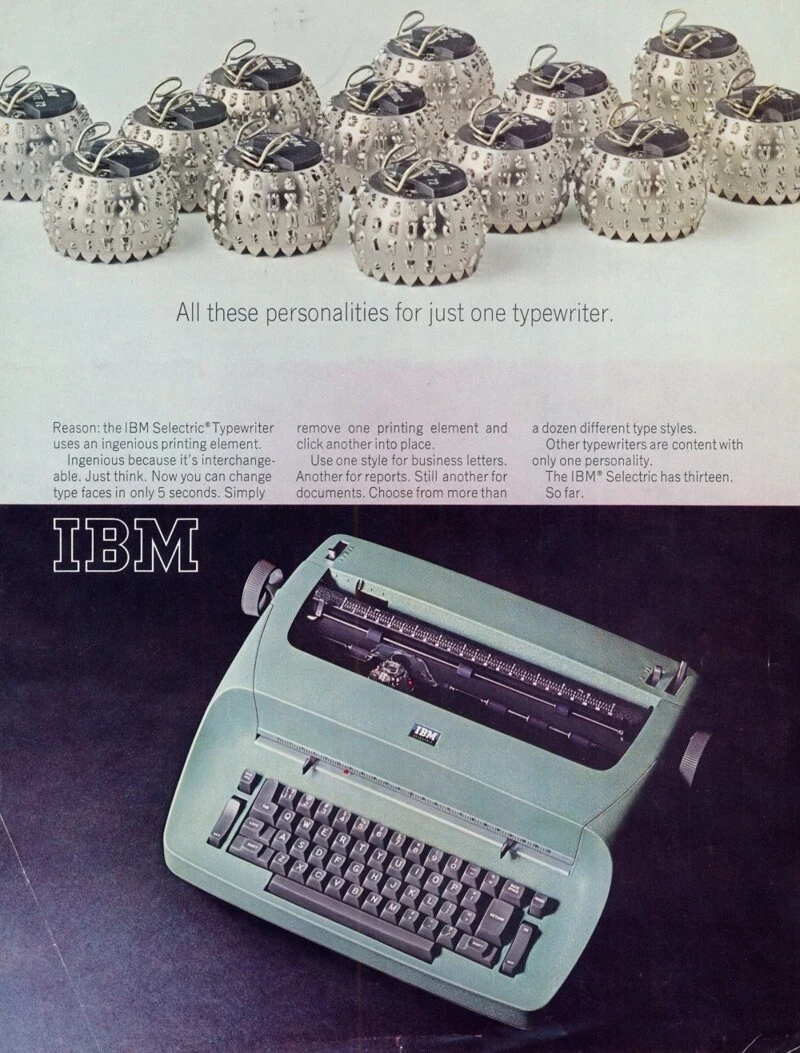
A 1961 page showcasing various font options available for a single machine. Historical document from the IBM Archives.
The concept of interchangeable type elements predated the Selectric by decades; the Computer History Museum points to the 1893 Blickensderfer typewriter as an early example. While IBM popularized the spherical element and made it iconic, it didn't invent interchangeable fonts from scratch.
The Selectric lineup spanned several generations, with the later Selectric III expanding to a 96-character element. Though the design and feature set evolved over time, the swappable typing element remained its defining hallmark.
In 1964, IBM introduced the Magnetic Tape Selectric Typewriter, which stored typed text on magnetic tape. These recordings could be reused for editing and reprinting, gradually transforming the familiar desktop typewriter into an early text-editing device.
Photo of typing elements: Ted Eytan, CC BY-SA 2.0 (unmodified). Historical brochure pages courtesy of the IBM Archives.