Masana Izawa, the “Poop Master,” and His All-Out “Excrement War” (6 photos)
Now more than ever, Mother Nature needs all the help she can get, and everyone can do their bit. Take Japanese native Masana Izawa, who has answered the call of nature—quite literally—strictly outdoors for 45 years. He flouts the laws of his country while revering the laws of the wild. He takes his mission deadly seriously, even declaring himself ready to wage an “excrement war” if authorities ever try to stop him from doing his business al fresco. 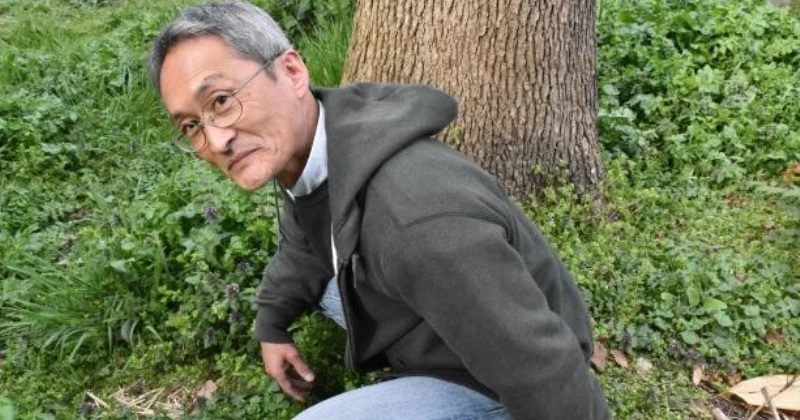
Izawa is one of the few who put the planet’s health above their own comfort and legal safety. On principle, the eco-activist relieves himself in the parks and public squares of his home prefecture of Ibaraki, seeing it as a way to return the Earth’s gifts back to where they came from.
Yet Izawa doesn’t simply drop trou in the bushes and walk away. He returns to the scene of the crime later on, camera in hand. He wants to make sure nature is taking its course, checking whether his deposit has blossomed with mold, fungi, and insect larvae. The sight fills him with genuine joy: to him, it’s proof that nature has gratefully accepted his humble offering. 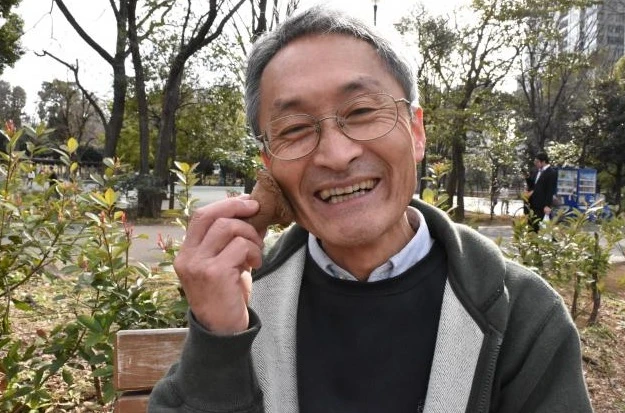
That’s a mushroom in his hand, not what you were thinking
On his computer’s hard drive, the eco-philosopher stores pictures of his “good deeds” in neat, dedicated folders, just like family albums, and proudly shows them to visiting reporters. He also loves discussing his “Way of the Pooping Samurai,” taking pride in having used a modern flush toilet only 14 times in the past 45 years.
Izawa stumbled upon his calling back in 1974. A curious young man at the time, he took an interest in local environmental protests sparked by the construction of a waste treatment plant. The facility polluted the neighborhood and choked the air with nauseating stenches for hundreds of yards around.
Around that period, Izawa picked up a book titled “Color Nature Guide: Mushrooms,” which revealed that the most efficient way to break down biological waste is through fungal decomposition. Microscopic fungi work slowly but with ruthless efficiency, breaking down everything from feces to decaying corpses. 
A photo generously provided to reporters by Izawa himself
His hometown’s environmental plight, combined with this eye-opening biology lesson, left an indelible mark on the 24-year-old. He decided to become a true ally of the earth. Ever since, he has had no use for sewage treatment plants—he prefers dealing with nature directly.
The activist calculates that over decades of eco-crusading, he has relieved himself in parks, groves, forests, and flowerbeds more than 15,000 times. Those 14 regrettable exceptions across his career were merely the price of modern urban living: whenever nature called on the subway, mid-flight, or in a shopping mall, he was forced to bend his strict code.
Izawa is more than just a rogue naturalist; he considers himself a scholar. He is penning a treatise on the culture of defecation, laying out a compelling, accessible case for his philosophy. He even goes by the title of “Soil Master” and the founder of a distinct philosophical movement (糞土師, Fundoshi). 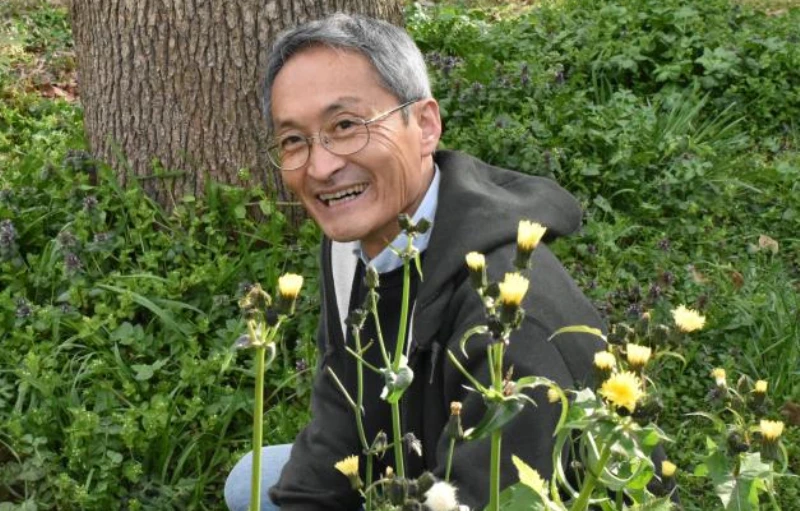
In 2017, a reporter posed a provocative scenario: what if millions of Japanese citizens followed his lead and began answering the call of nature wherever the spirit moved them, rather than in designated restrooms? The sage had an answer ready:
People ask me that all the time, and I did the math. Even if everyone used the exact same spot just once a year and went once a day, one person would need about 100 square meters. For the entire population of Japan, that’s 1.2 million hectares. Japan has roughly 25 million hectares of forest—more than twenty times that. Even if you rule out steep mountains and other unsuitable terrain, there’s still more than enough room to go around.
Armed with hard figures, Izawa shut down the journalist’s attempt to stir up a pointless debate. During the conversation, the eco-philosopher also touched upon the occupational hazards. As it turns out, following the path of the Fundoshi can be dangerous—and at times, downright lethal:
I’ve been stung by black hornets and bitten by leeches. Once, a troop of monkeys pelted me with stones, and another time, a wild boar walked right up to me. I’ve stared death in the face, too: mamushi pit vipers, Habu snakes, brown bears... and, of course, other humans. 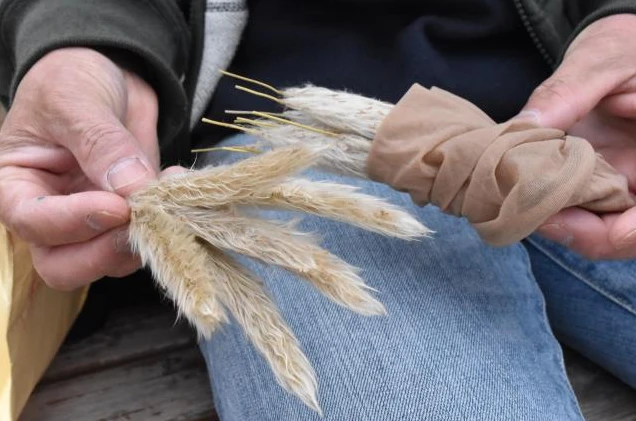
When it comes to backcountry hygiene, Izawa wrote the book
Passersby can certainly ruin a peaceful moment behind the bushes, but for a master who has stared down vipers and bears, awkward encounters don't faze him in the slightest:
The person caught red-handed feels embarrassed, but the person who stumbles upon them feels just as awkward. So whenever anyone walks by, I call out before they even get close: “Hey there, good afternoon!” They immediately think, “If this guy can cheerfully say hello while doing that, he’s bad news!”—and they hurry off. It’s pure psychological warfare, and the person with the stronger will and righteousness on their side always wins.
Izawa has had his share of run-ins with the law. Police patrols have detained him on several occasions, though he usually gets away with nominal fines and a stern lecture. Still, he knows a serious showdown with the legal system is always a possibility. The philosopher is ready for it, insisting he will never abandon his principles, even if he ends up in court or behind bars.
The law forbids defecating, urinating, spitting, and clearing your throat in public areas like parks and roads. If they ever arrest me, I’ll launch an “excrement war” right there in the courtroom. I’ll refuse to use the toilet and hold it all in. I plan to take that stand for as long as my body can endure.
Izawa turns 70 this year, but he remains energetic and optimistic. Life has dealt him some tough blows, but he is made of stern stuff and takes everything in stride. In 2013, his wife walked out on him, unable to share his unconventional lifestyle. Since then, he has learned to embrace solitude, dedicating his ample retirement free time to his favorite hobbies. 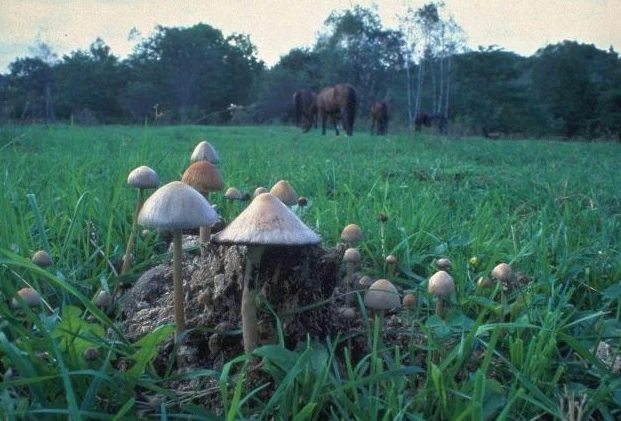
Photography has always been his greatest passion. On weekends, weather permitting, the founder of the Fundoshi philosophy grabs his camera and heads out to a friend’s farm in the countryside. There, he photographs mushrooms sprouting from piles of horse manure, grinning like a child with every successful shot. Izawa happily shares the images with anyone interested, posting them regularly on social media and specialized online forums.
Meanwhile, fellow countryman and photographer Nakamura draws inspiration from the polar opposite: he travels across Japan documenting public restrooms renowned for their striking architecture and interior design.