The Two Favorites Who Cost the King of England His Throne and Life (14 photos)
Edward II was the son of the formidable "Hammer of the Scots" and the father of Edward III, who launched the Hundred Years' War. Yet history remembers him not for his victories, but for a reign defined by scandal. The 20 years of his rule were dominated by two favorites: the Gascon knight Piers Gaveston and Hugh Despenser the Younger. To indulge them, the king feuded with his barons, humiliated his wife, and lavished away England's finest lands. It culminated in an event unprecedented in English history: the queen launched a rebellion and deposed her own husband. 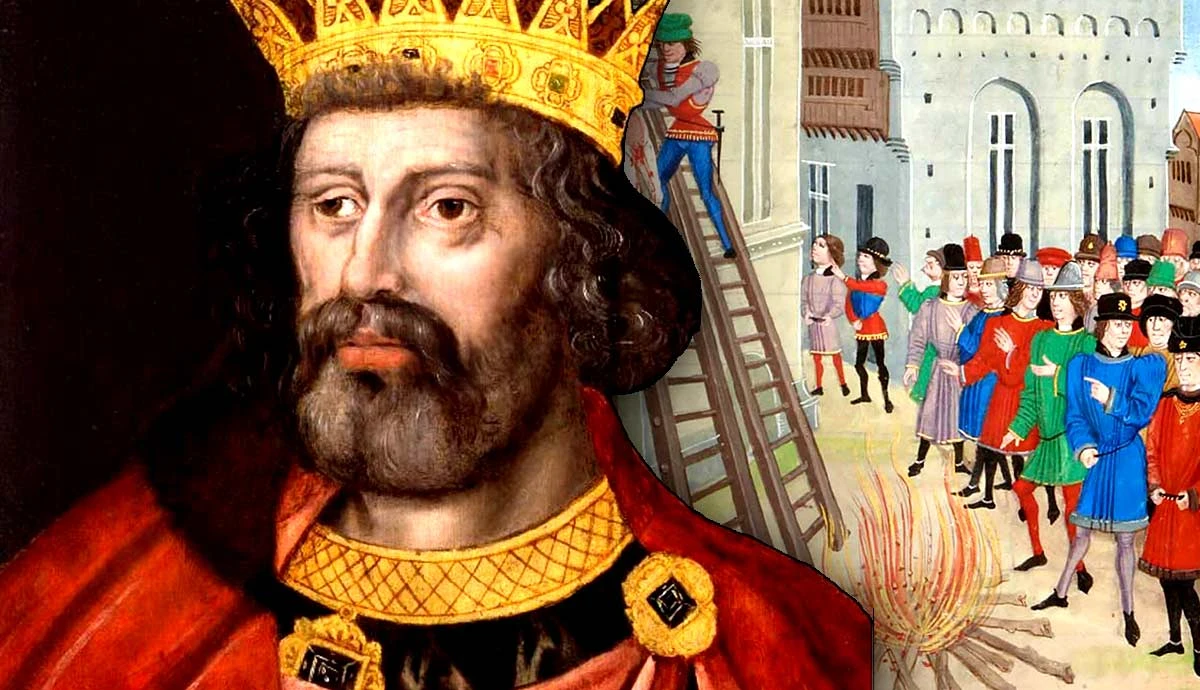
A Prince Unlike His Father
Edward I made a name for himself as a fierce warrior, conquering Wales and terrorizing the Scots. He expected no less from his heir. But the young prince turned out completely different. He preferred rowing, swimming, and theatrical performances. Chroniclers noted with astonishment that the heir to the throne happily dug ditches alongside common laborers.
In 1300, the king assigned a young knight named Piers Gaveston to his son's household. Gaveston hailed from Gascony, a French province then held by the English crown. The king hoped the dashing Gascon would turn his heir into a true knight. Things did not go according to plan. 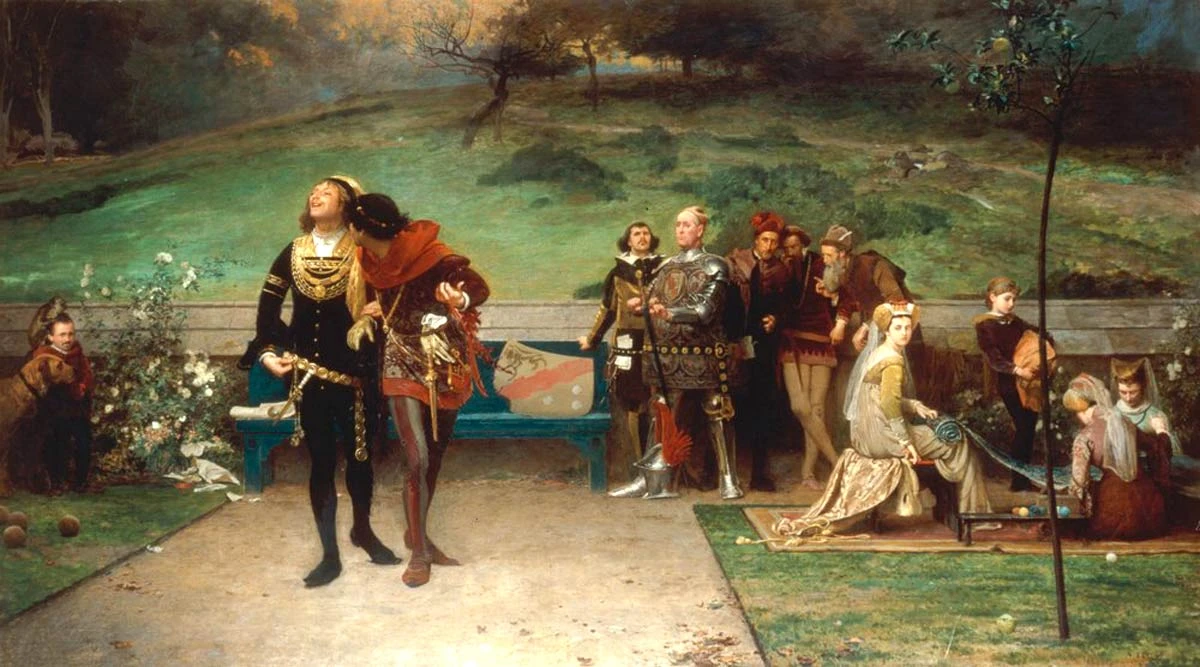
An 1872 painting by Marcus Stone: the king and his favorite are absorbed in each other while the courtiers look on from a distance
The prince and Gaveston became inseparable, with Edward calling his friend his brother. The Gascon was witty, excelled in tournaments, and openly mocked the high nobility. Soon, the prince asked his father to grant his friend an earldom in France. Legend has it that the king flew into a rage and tore out clumps of his son's hair.
In February 1307, Edward I banished Gaveston from England. However, the old king died just five months later. The new monarch, Edward II, immediately recalled his friend, created him Earl of Cornwall, and married him to his own niece—a title traditionally reserved exclusively for members of the royal family.
The Favorite Who Outshone the Bride
In January 1308, Edward married 12-year-old Isabella, daughter of King Philip IV of France (Philip the Fair). The king soon handed over his father-in-law's wedding gifts—jewels, rings, and warhorses—to Gaveston. While Edward had traveled to fetch his bride, the favorite governed England in his stead. A month later, the couple was crowned at Westminster Abbey. 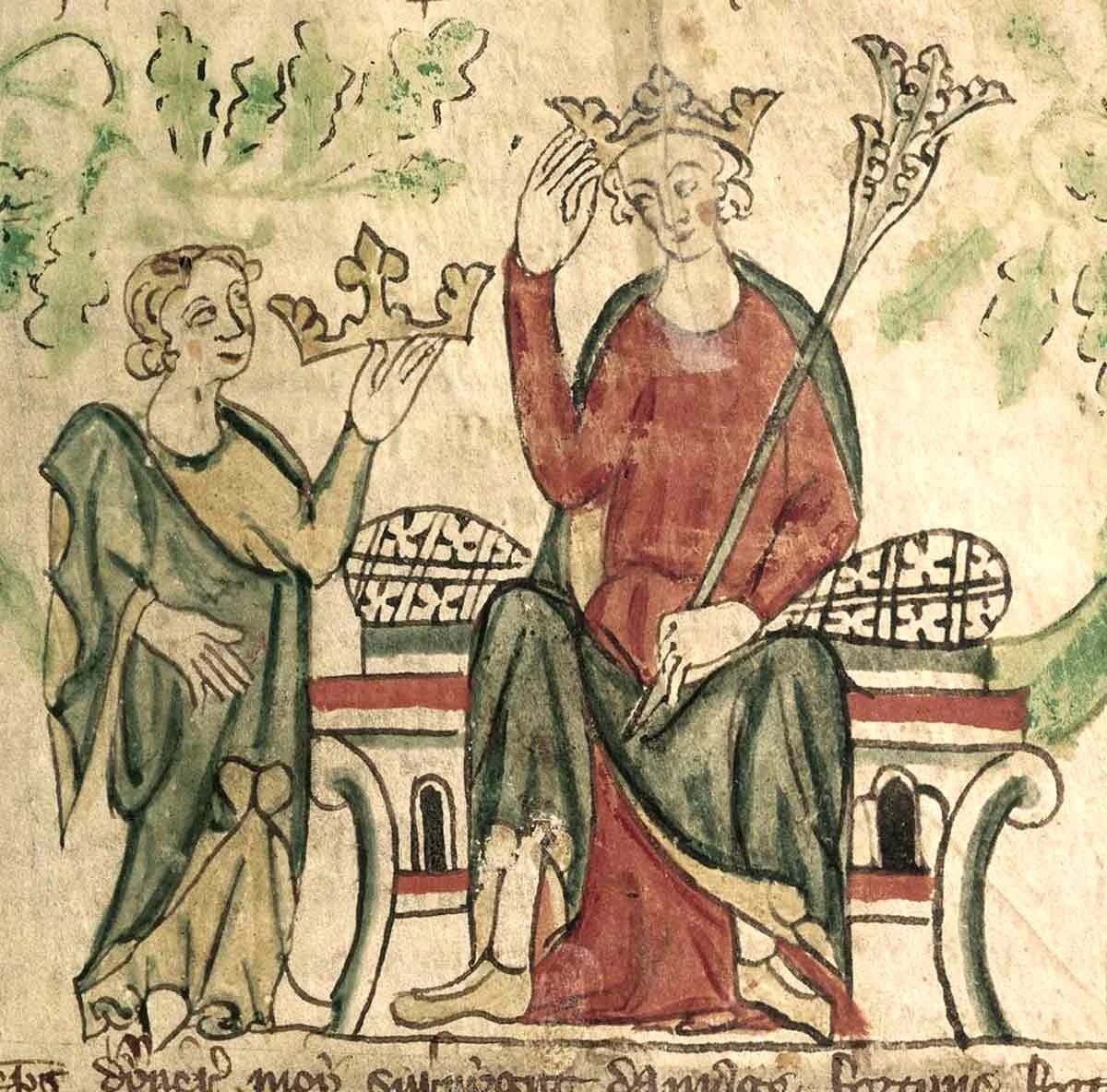
The coronation of Edward II portrayed in a medieval miniature. The queen was by no means the star of the celebration
During the ceremony, Gaveston carried the crown. Dressed in imperial purple embroidered with pearls, he looked more like a king than an earl. The feast hall walls were adorned with the coats of arms of Edward and Gaveston—conspicuously omitting those of the queen. Throughout the banquet, the king spoke exclusively to his favorite. Unsurprisingly, Isabella's royal French relatives returned home in a fury. 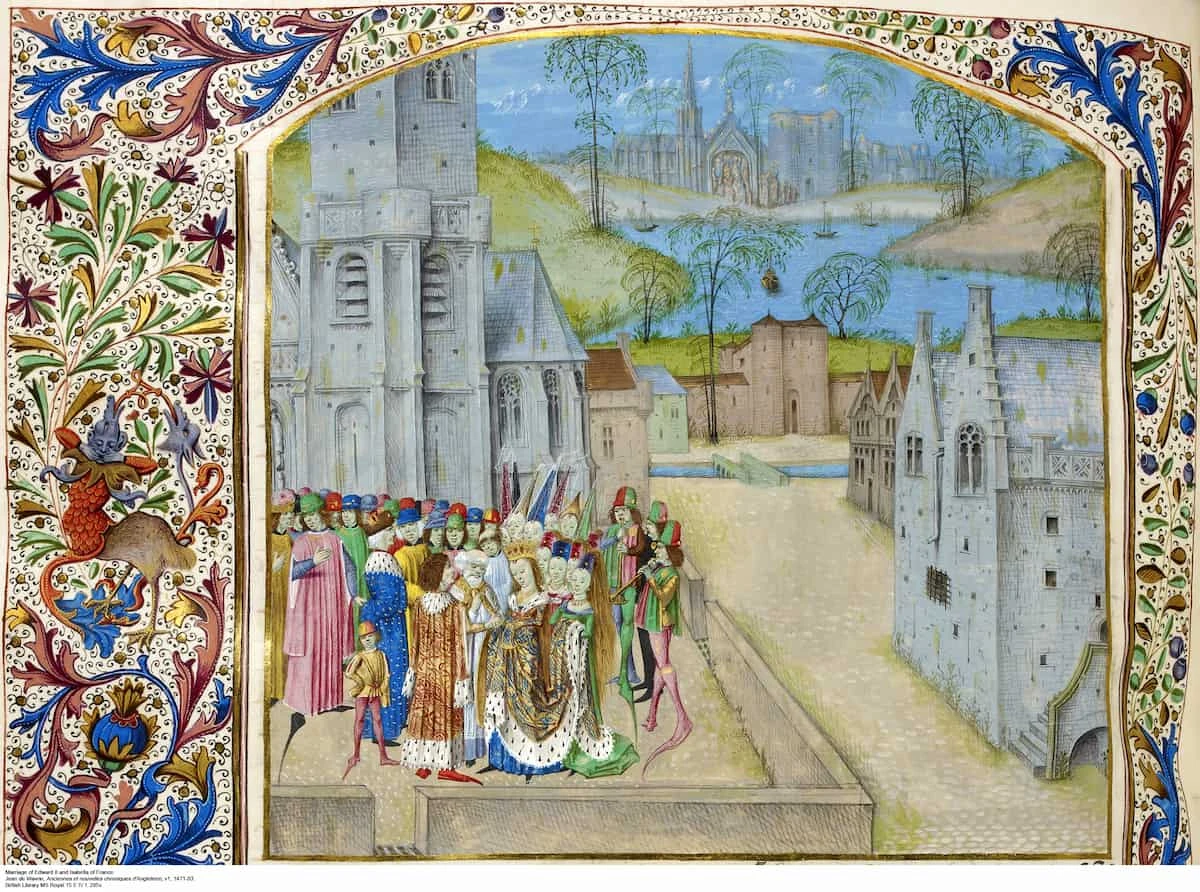
The wedding of Edward II and Isabella in the chronicle of Jean de Wavrin, c. 1475. The bride was only 12, and her husband almost instantly cast her aside for his favorite.
Many contemporaries and historians believed Edward and Gaveston were lovers, a topic that remains debated today. Some scholars argue they took vows of brotherhood as sworn brothers, a common practice among close allies in the Middle Ages.
England's "Second King"
A medieval king was expected to rule alongside his barons—the great landowners—consulting them and rewarding their service. But Edward broke with tradition. Land, wealth, and high office were showered upon Gaveston, and the king sought counsel from him alone. 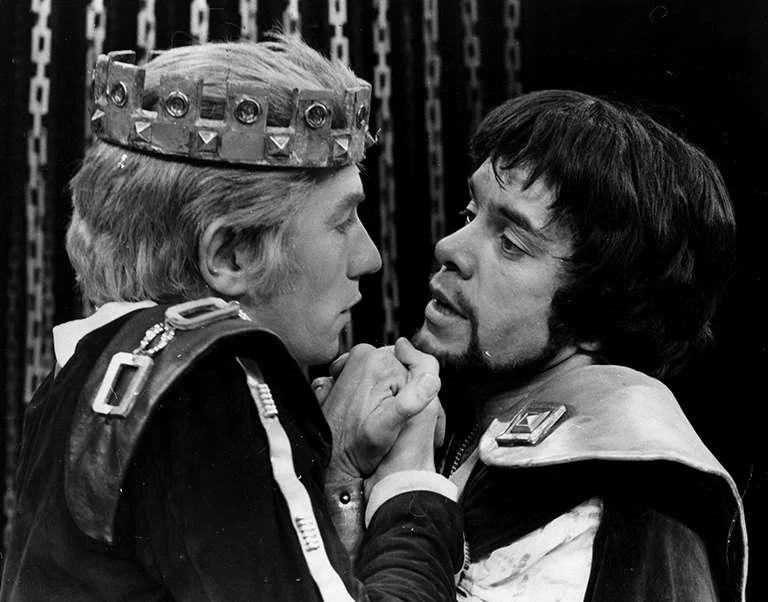
Ian McKellen as the King and James Laurenson as Gaveston in a production of Christopher Marlowe's play
Contemporaries grumbled that England now had two kings. Gaveston showed no restraint. At a tournament in Wallingford, his knights humiliated the retinues of several earls. To make matters worse, he gave noble magnates insulting nicknames: calling one "the Fiddler," another "the Black Dog," a third "Burstbelly," and a fourth "Joseph the Jew." The "Black Dog"—the Earl of Warwick—legendarily retorted: "Let him call me a hound; one day that hound will bite." 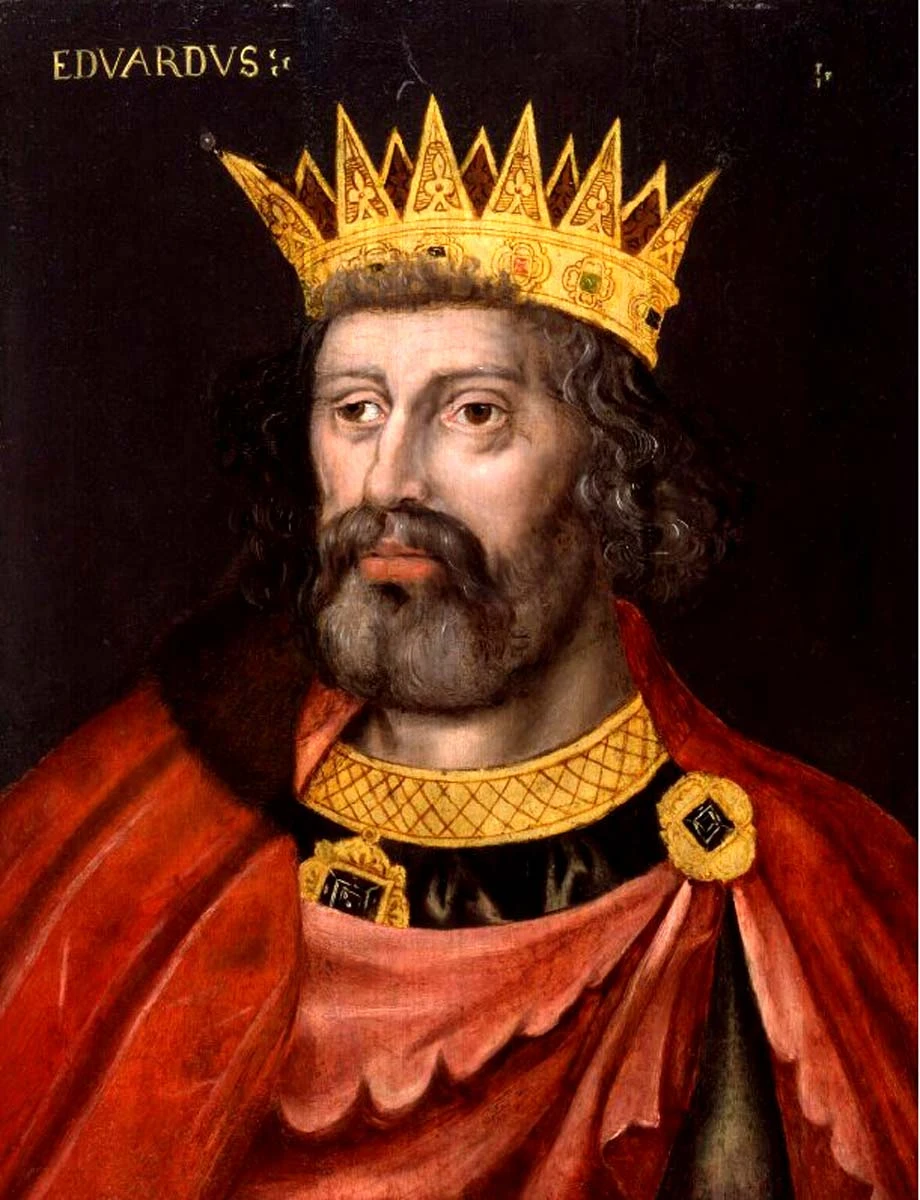
16th-century portrait of Edward II. Time and again, the king defied his own nobility for the sake of his favorite
Gaveston was banished three times, and three times the king brought him back. He was first exiled by Edward I, returning immediately after the old king's death. In 1308, the barons forced another exile, but Edward turned it into a promotion by appointing Gaveston Lord Lieutenant of Ireland. Within a year, Edward had recalled him to court. In 1311, the favorite was exiled yet again, this time to Flanders, but slipped back into England less than two months later.
In 1311, the barons presented the king with a set of demands known as the Ordinances. A specific clause targeted Gaveston, accusing him of misleading the monarch and giving corrupt counsel. Edward signed the document, only to recall his favorite anyway. The nobility's patience had finally reached its breaking point.
Execution on Blacklow Hill
In 1312, the barons took up arms and besieged Gaveston in a castle. He surrendered to the Earl of Pembroke, who gave his word that the prisoner's life would be spared. En route, however, Gaveston was seized by the Earl of Warwick—the "Black Dog" himself. On June 19, 1312, at Blacklow Hill, Gaveston was run through with swords and beheaded. The hound had bitten. 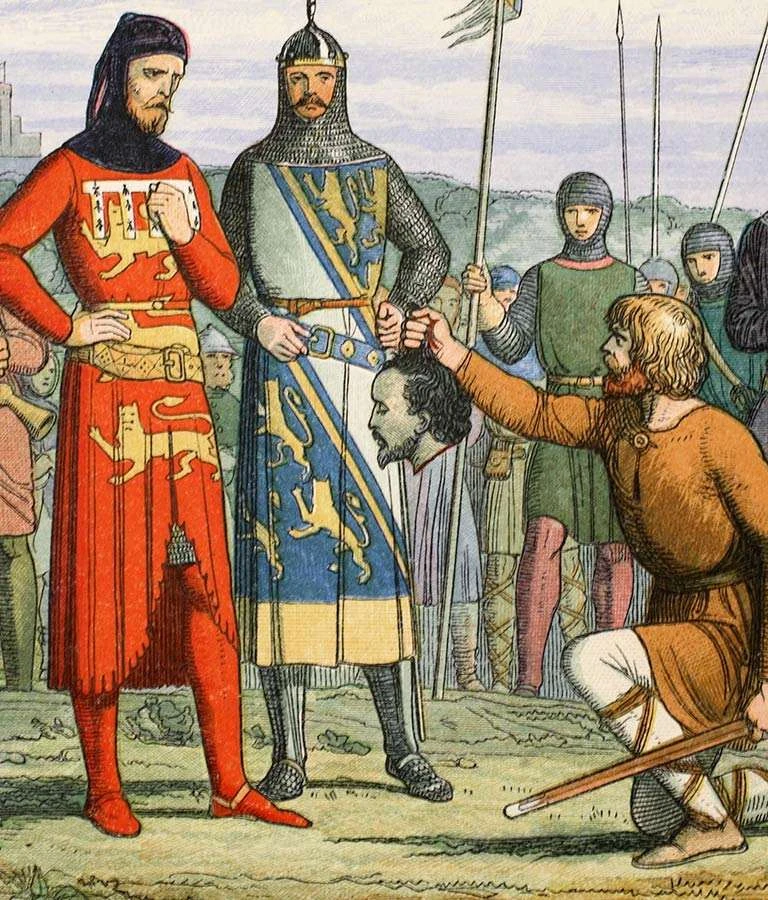
Gaveston's severed head presented to the Earl of Lancaster, as imagined by a 19th-century artist
Edward swore revenge, but hesitated to wage open war against his barons and reconciled with them a year later. Because Gaveston had been excommunicated, he could not be given a proper burial right away; the king kept his embalmed body for two and a half years. Gaveston was finally laid to rest in 1315.
Meanwhile, a joyous event occurred in the royal household. In November 1312, just five months after Gaveston's execution, Isabella gave birth to her firstborn—the future Edward III. The birth of an heir offered some solace to the grief-stricken king and strengthened the queen's position at court. The prince was born at Windsor Castle when Isabella was about 17. The couple would go on to have another son and two daughters.
A New Favorite, Worse Than the Last
The tragic saga of Gaveston taught the king nothing. By 1318, a new favorite had taken center stage: Hugh Despenser the Younger. His father, Hugh Despenser the Elder, was a loyal servant of the crown who enjoyed the king's trust. The son went even further when Edward appointed him royal Chamberlain. From then on, Despenser acted as gatekeeper, deciding who could gain access to the monarch.
Despenser was married to the king's niece, Eleanor de Clare. When her brother, the Earl of Gloucester, was killed in battle, his vast inheritance was divided among three sisters. Despenser thus acquired wealthy estates in the Welsh Marches—but his ambition knew no bounds. 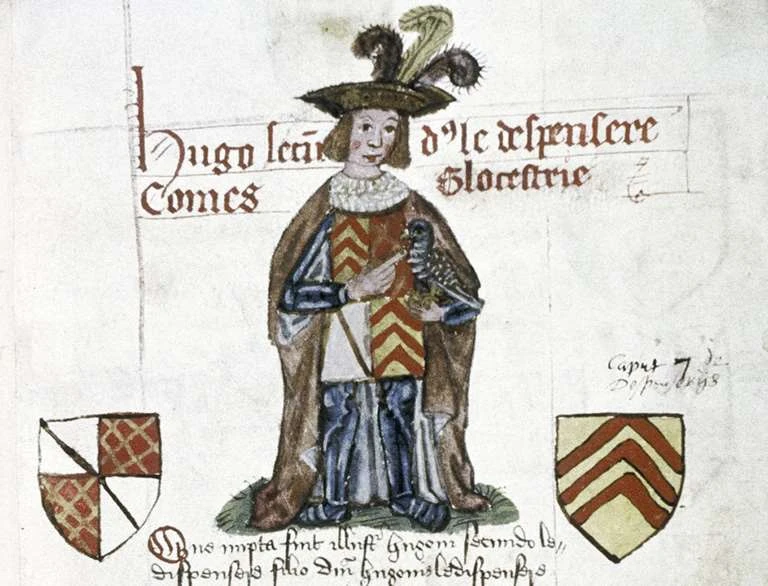
16th-century depiction of Hugh Despenser the Younger, drawn two centuries after his execution
Where Gaveston merely taunted the barons, Despenser systematically robbed them. He seized neighboring estates through intimidation and legal trickery. Prosecutors later claimed his henchmen broke the arms and legs of a defenseless widow, Lady Baret, until she surrendered her land.
Many historians believe the king and Despenser were also lovers. Together with his father, Hugh Despenser the Elder, the favorite effectively ruled the entire kingdom.
Piracy, Tower Escape, and Civil War
In 1321, the barons revolted once again, led by Roger Mortimer, a powerful Marcher lord. The rebels marched on London and forced the banishment of the Despensers. Despenser the Younger refused to accept defeat, turning to piracy and plundering merchant ships in the English Channel. 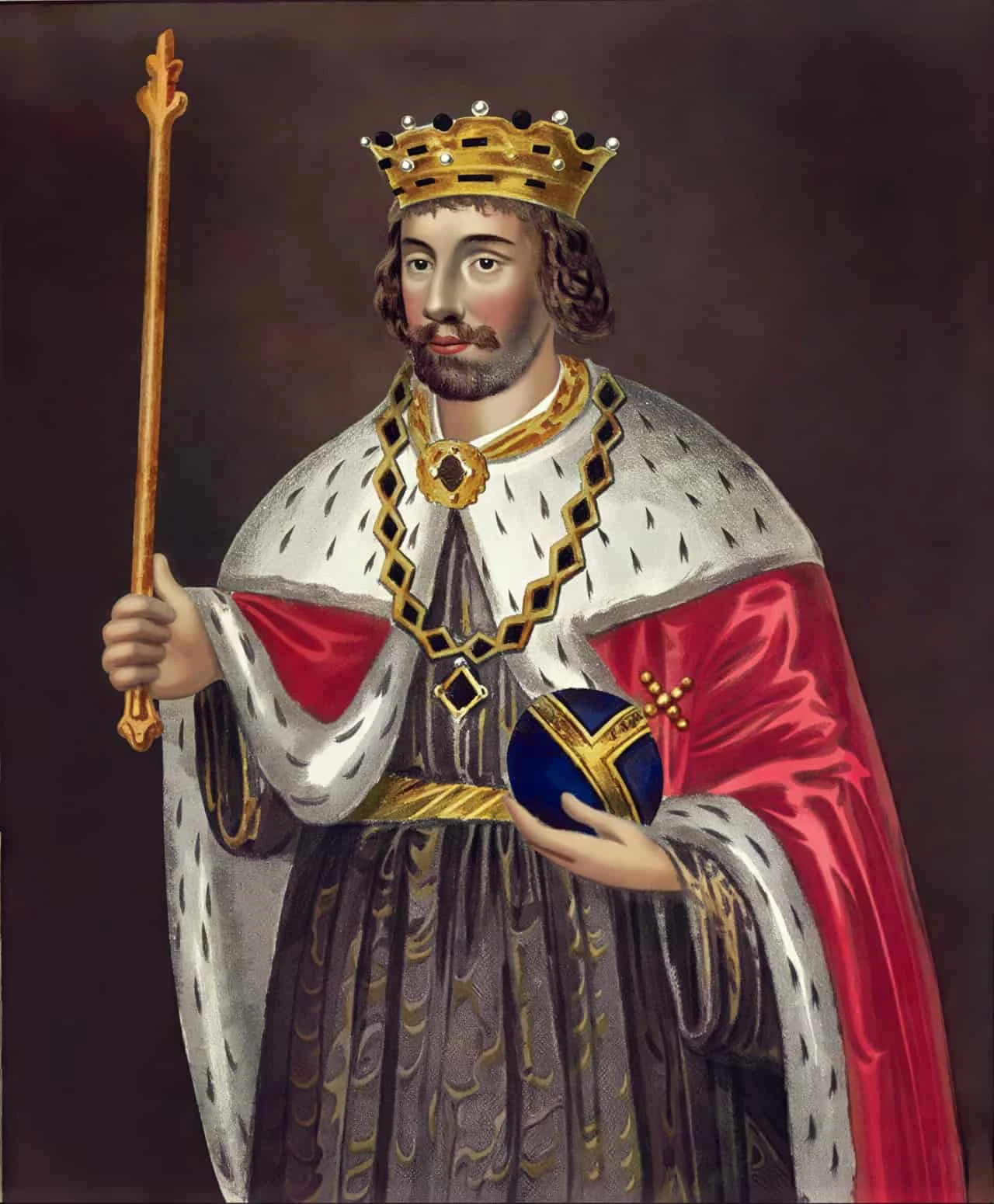
19th-century portrait of Edward II. Victory over the rebel barons was a rare military triumph in his reign
This time, the king fought back. In March 1322, his forces routed the rebels. The king's own cousin, the Earl of Lancaster, was executed outside his own castle walls.
Mortimer was imprisoned in the Tower of London, but staged a daring escape to France in 1323 after drugging his guards' wine. The Despensers returned to court more powerful than ever.
The Queen Against the King
Isabella was not one to forgive slights. In 1314, she had exposed the infidelity of her brothers' wives in the infamous Tour de Nesle affair. While she had tolerated Gaveston, Despenser viewed her as a dangerous rival.
When war broke out between England and France in 1324, Despenser convinced the king that his French-born queen was a security risk. Isabella was stripped of her lands, servants, and even her children, while Despenser's wife was placed in her household to monitor her every move. 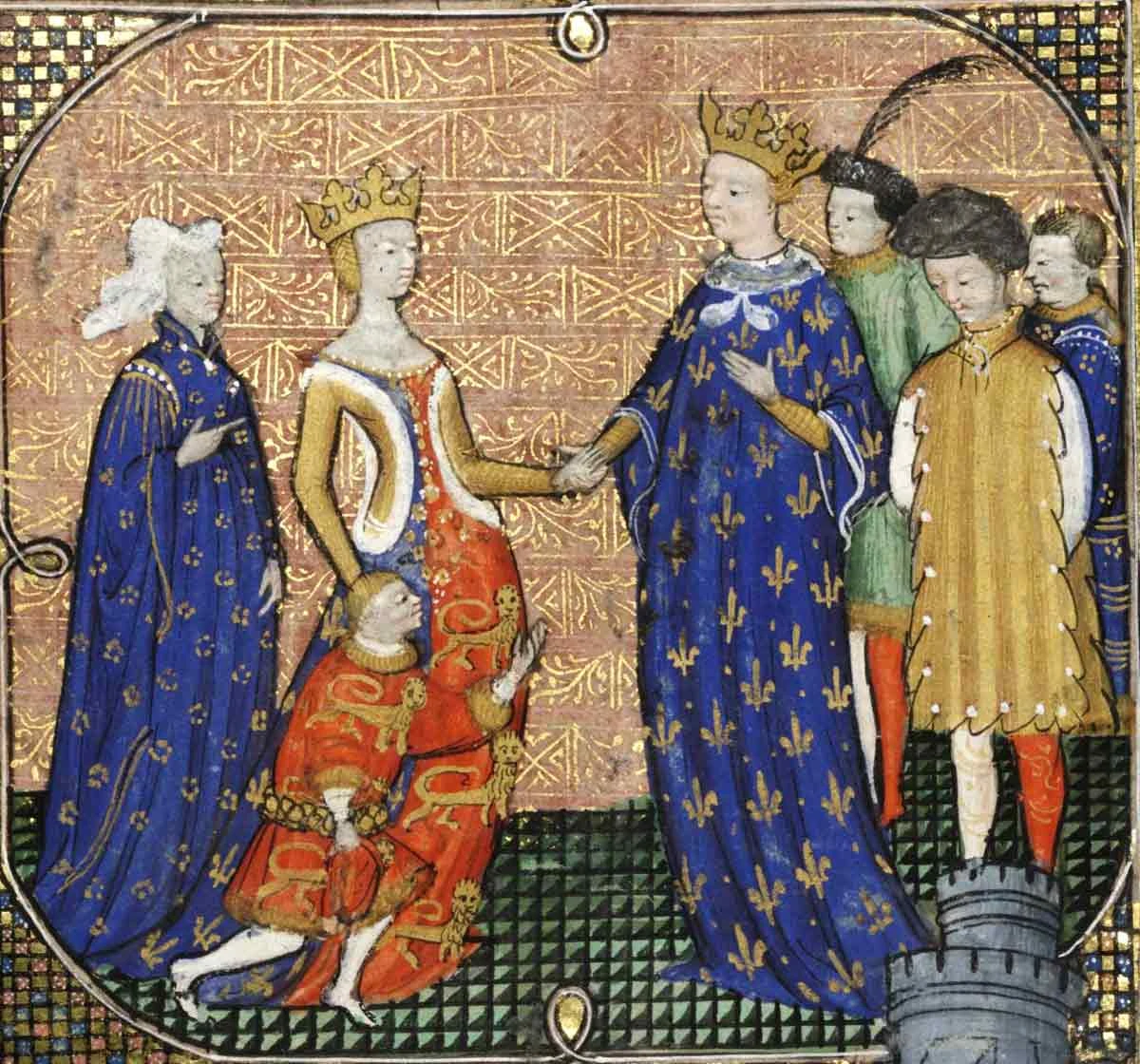
Isabella and the young prince at the court of her brother, King Charles IV of France. 15th-century miniature
In 1325, the king dispatched his wife to Paris to negotiate a peace treaty with France. Isabella succeeded, then requested that her eldest son join her. Once the young prince was safely at her side, the queen refused to return to England and put on mourning clothes, declaring:
"Marriage is a bond between a man and a woman. But someone has stepped between my husband and me. Until that third party is removed, I shall not return."
While in Paris, Isabella allied herself—and became romantically involved—with the exiled Roger Mortimer. Rumors of their affair soon reached England.
The Queen's Invasion
The queen's scandalous affair forced her brother to ask her to leave France. Isabella found an ally in the Count of Hainaut, ruler of a small county in modern-day Belgium. He provided ships and roughly 700 mercenaries. In return, the 13-year-old Prince Edward was betrothed to the count's daughter, Philippa—a political union that would blossom into one of the happiest marriages in English royal history.
In September 1326, Isabella, Mortimer, and the prince landed on the Suffolk coast. Though her invasion force was small, it met virtually no resistance; hatred for the Despensers was universal. Londoners rioted and lynched the king's treasurer, Bishop Stapledon, in the street. In October, Despenser the Elder was captured in Bristol and summarily hanged. 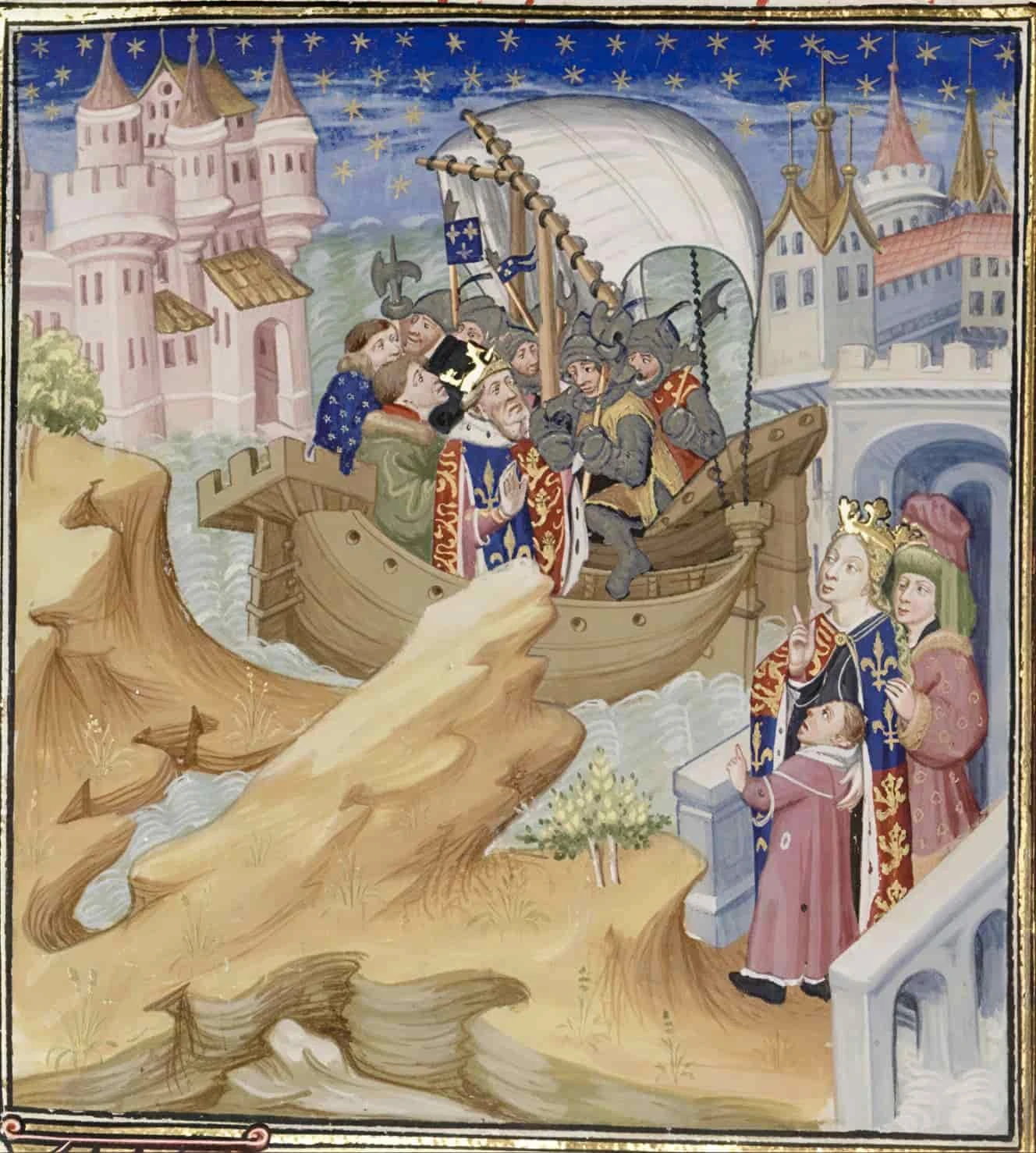
The capture of Edward II depicted in a 15th-century miniature. The king was captured in Wales, where he had fled alongside his favorite
The king and Despenser fled west, attempting to escape by sea, but headwinds drove their ship back to the Welsh coast. In November 1326, the fugitives were apprehended. En route to his trial, Despenser starved himself, hoping to die before he could be executed.
Despenser was crowned with a wreath of nettles, and Biblical verses condemning pride were inscribed on his skin. Dragged through the city streets, he was hanged from a 50-foot gallows, drawn, and quartered, with Isabella personally watching the execution. Despenser's head was mounted on London Bridge, while his severed limbs were displayed in England's four largest cities. 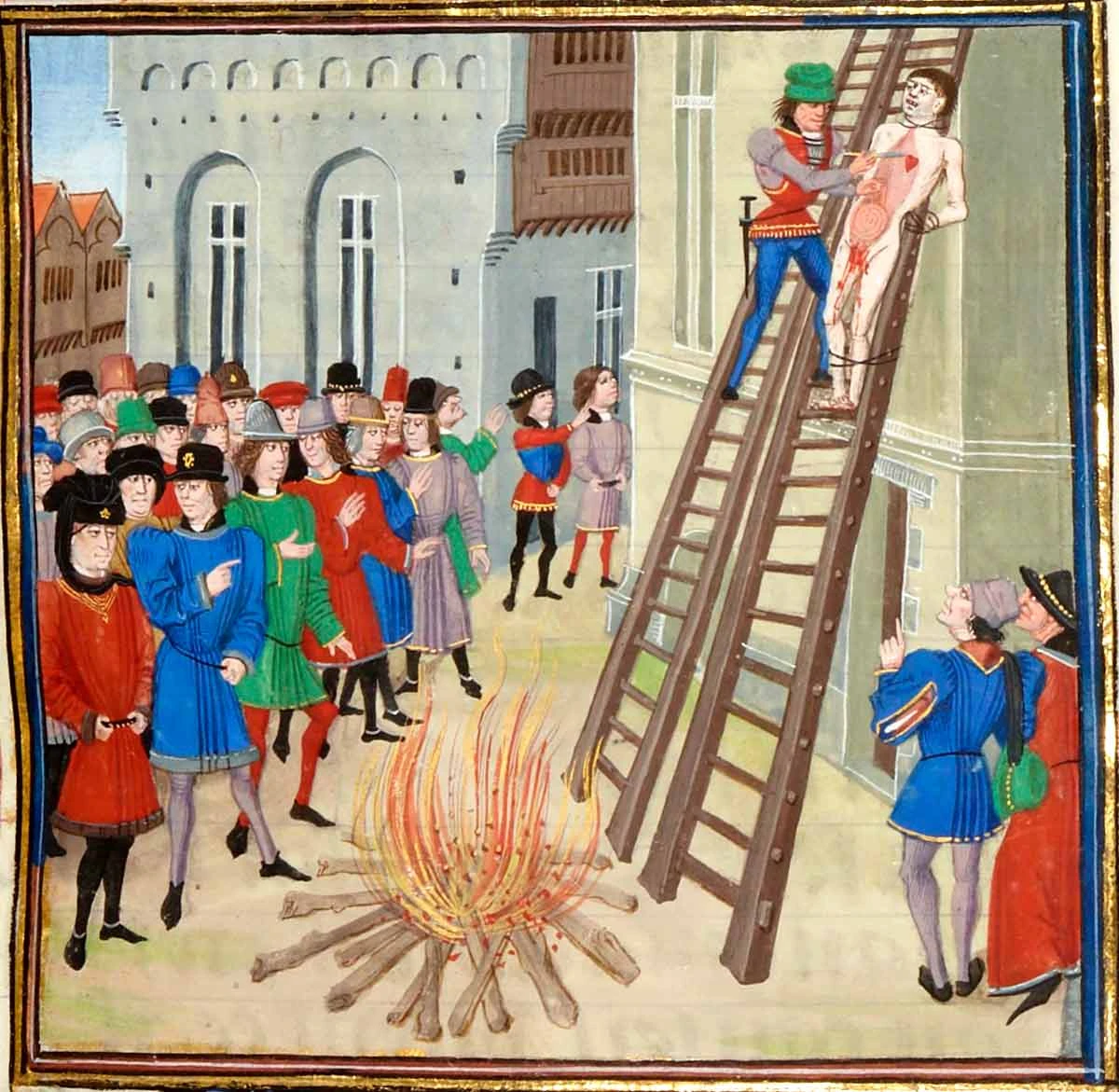
The execution of Hugh Despenser the Younger in a 15th-century miniature, illustrating the grim penalty for high treason in England
Hanging, drawing, and quartering was the prescribed punishment for high treason and remained on the books in England for over five centuries until its official abolition in 1870. For Isabella and Mortimer, destroying the favorite was only half the battle. The king remained, held under guard at Kenilworth Castle. The rebels faced a terrifying dilemma: killing an anointed monarch was unthinkable, yet leaving him on the throne was fatal.
The Mystery of Berkeley Castle
In January 1327, Edward II was forced to abdicate in favor of his 14-year-old son. Never before had an English king been stripped of his crown by his subjects—let alone at the instigation of his own wife.
Lacking the nerve to execute an anointed king publicly, they transferred the deposed monarch to Berkeley Castle. On September 21, 1327, Edward II was pronounced dead. It was widely suspected that Mortimer had ordered his murder. The most infamous gruesome tale claims Edward was killed with a red-hot spit to leave no visible marks, though this account arose years later and is regarded by many modern historians as myth. 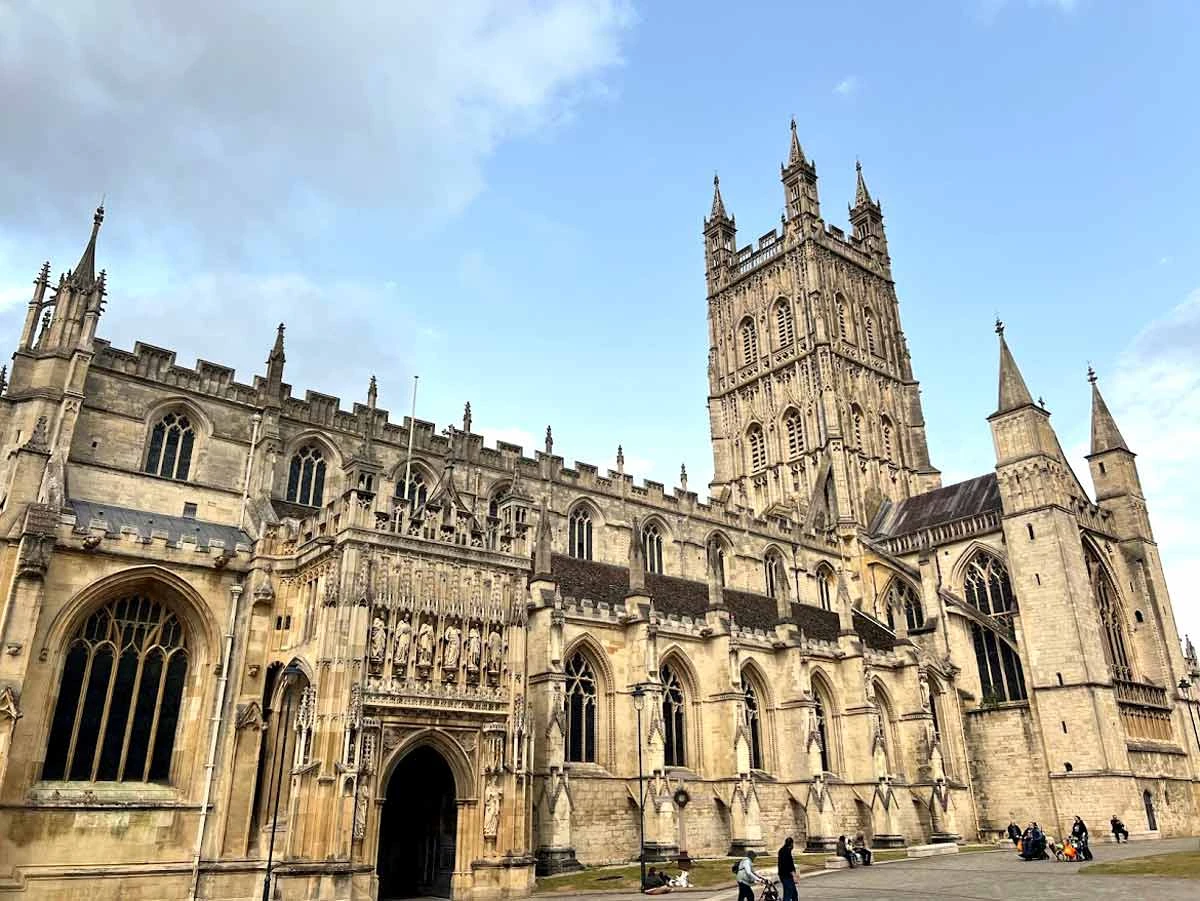
Edward II was buried in Gloucester Cathedral. His tomb became a popular pilgrimage site, and the donations left by pilgrims funded much of the cathedral's subsequent remodeling
An alternative theory persists. As early as 1330, the king's half-brother, the Earl of Kent, believed Edward was still alive and plotted to free him; Kent was executed for his trouble. It is likely Mortimer himself planted the rumors to trap potential plotters. Yet years later, Edward III received a mysterious letter from a papal notary claiming his father had escaped Berkeley and lived out his days in secret as a hermit in Italy.
Mortimer's Downfall
Mortimer ruled as regent for just three years. In 1330, the 17-year-old Edward III and a band of loyal companions slipped into Nottingham Castle through a secret tunnel and arrested him. Legend says Isabella pleaded, "Fair son, have pity on gentle Mortimer!" But her lover was dragged to the Tyburn Tree—London's notorious gallows—and hanged. 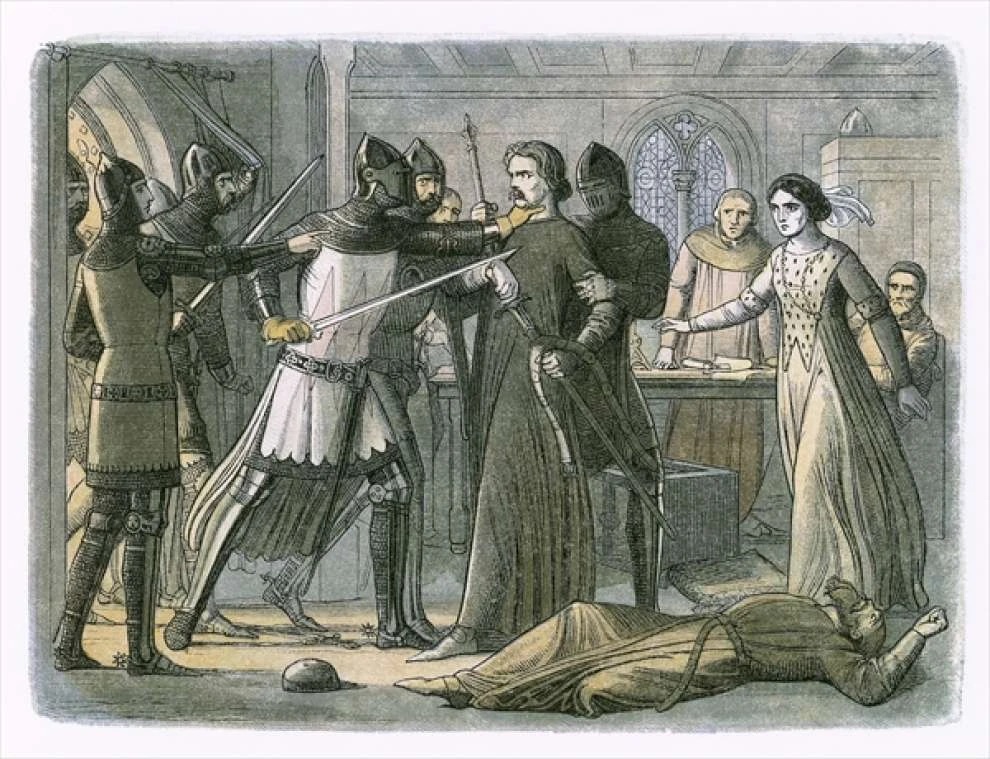
19th-century lithograph showing the arrest of Mortimer at Nottingham Castle. The young king was only 17
Edward spared his mother. Isabella lived until 1358 and was buried in her wedding dress, with Edward II's heart reportedly placed on her breast. Her dramatic life was later chronicled by Maurice Druon in his novel *The She-Wolf of France*. The famous sobriquet was not coined by Druon, however, but by the 18th-century poet Thomas Gray.
Who do you think bears the greatest blame for Edward II's downfall—the king himself, his favorites, or Queen Isabella?