If you pick up a ladybug, within a few seconds a drop of yellow, pungent-smelling liquid will appear on your finger. In fact, it just tried to poison you. The dose is just too small for you to notice. 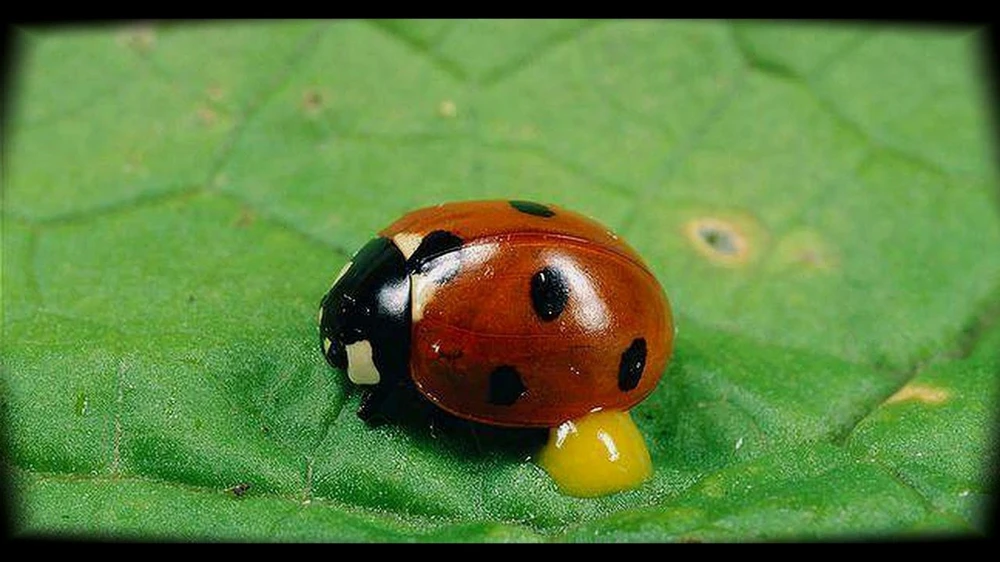
Sorry, I've been so patient...
The yellow liquid secreted by a disturbed ladybug is hemolymph, the equivalent of insect blood. It doesn't just flow from nowhere, but from the chitinous joints on its legs—the beetle literally "bleeds" of its own free will, at the right time and in the right place. This mechanism is called reflex bleeding. 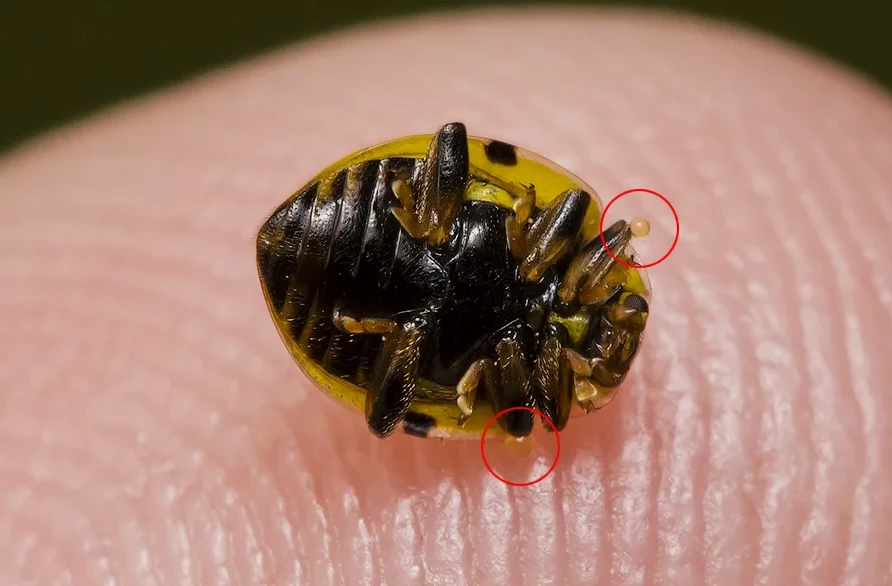
Essentially, the ladybug secretes poison from its knees, completely controlling the process.
The hemolymph contains cantharidin, a non-protein poison with a pungent odor. It is lethal to small mammals and birds. A single drop is safe for humans, but contact with mucous membranes causes a burning sensation and inflammation, and if cantharidin enters the digestive tract, serious poisoning is possible. The ladybug's bright red or yellow coloring is a classic natural warning: "I'm poisonous, don't eat me." 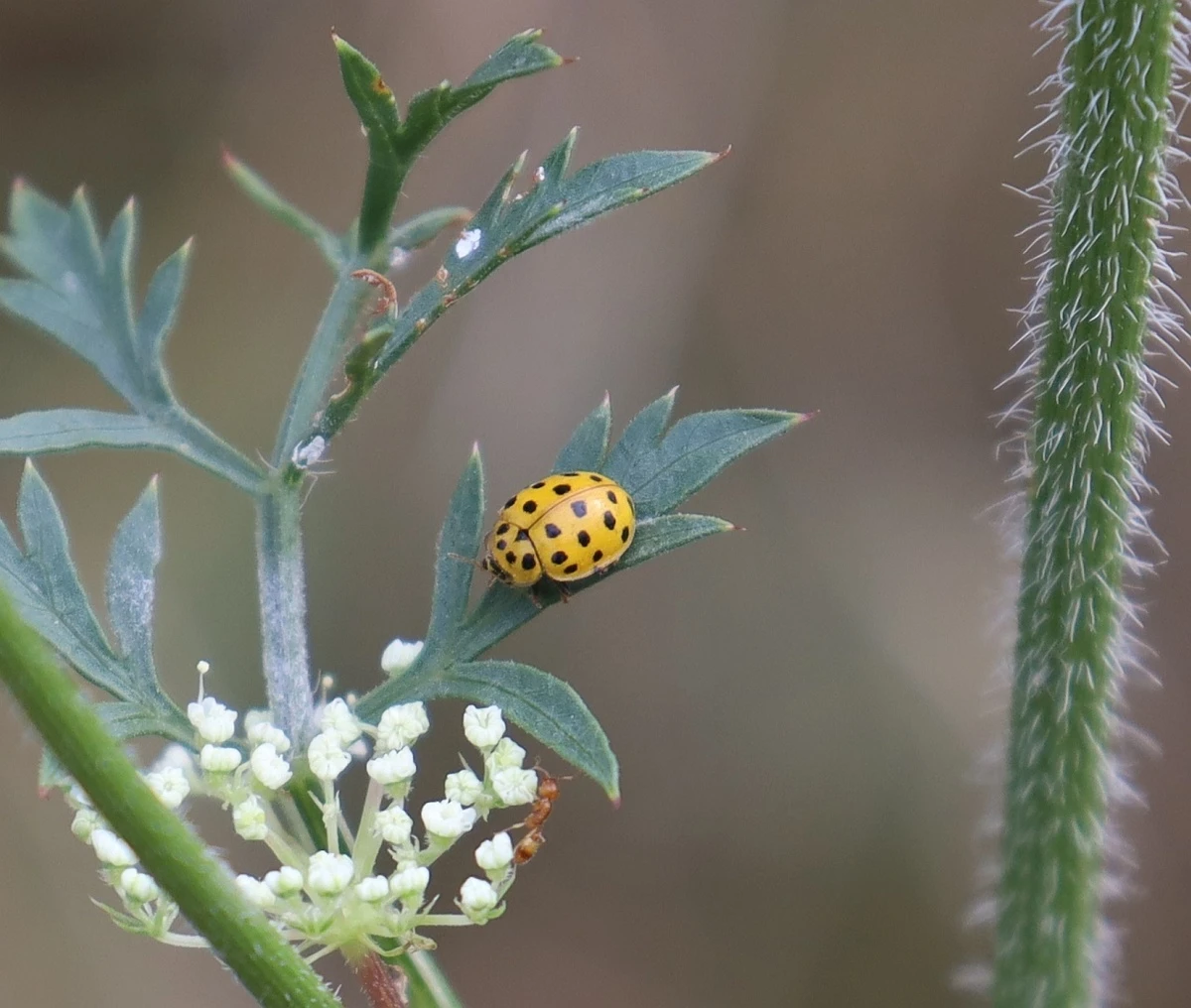
There are also yellow ladybugs, but they are a completely different species.
Now we will describe the full life cycle of a ladybug! The larvae are the biggest surprise for those who still think ladybugs are cute. They are black, bumpy, with orange spots, and resemble tiny alligators, a few millimeters long. A casual gardener, seeing a larva on a cucumber, often crushes it, mistaking it for a pest. This is a tragic mistake: the larva is the most voracious stage. In 2-4 weeks, it consumes up to 400 aphids, going through four molts. 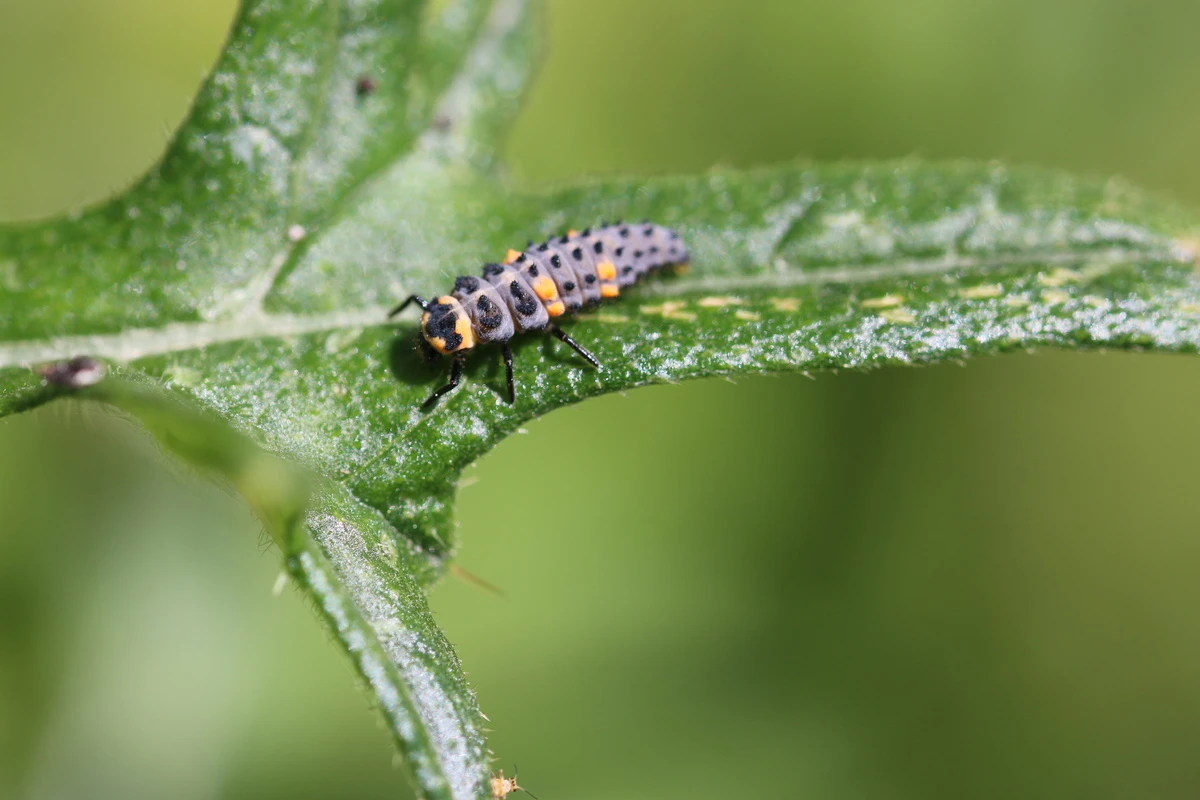
The young ones are always picking up who knows what...
Before pupation, the larva attaches itself to a leaf or stem and hardens. Then the skin on its back splits and slowly slides toward the tail. A milky-white pupa is revealed beneath. After 7-15 days, a pale, soft-shelled adult emerges. It's during the first few hours, while the shell is still soft, that the ladybug is most vulnerable. The bright color appears later, as the chitin hardens. 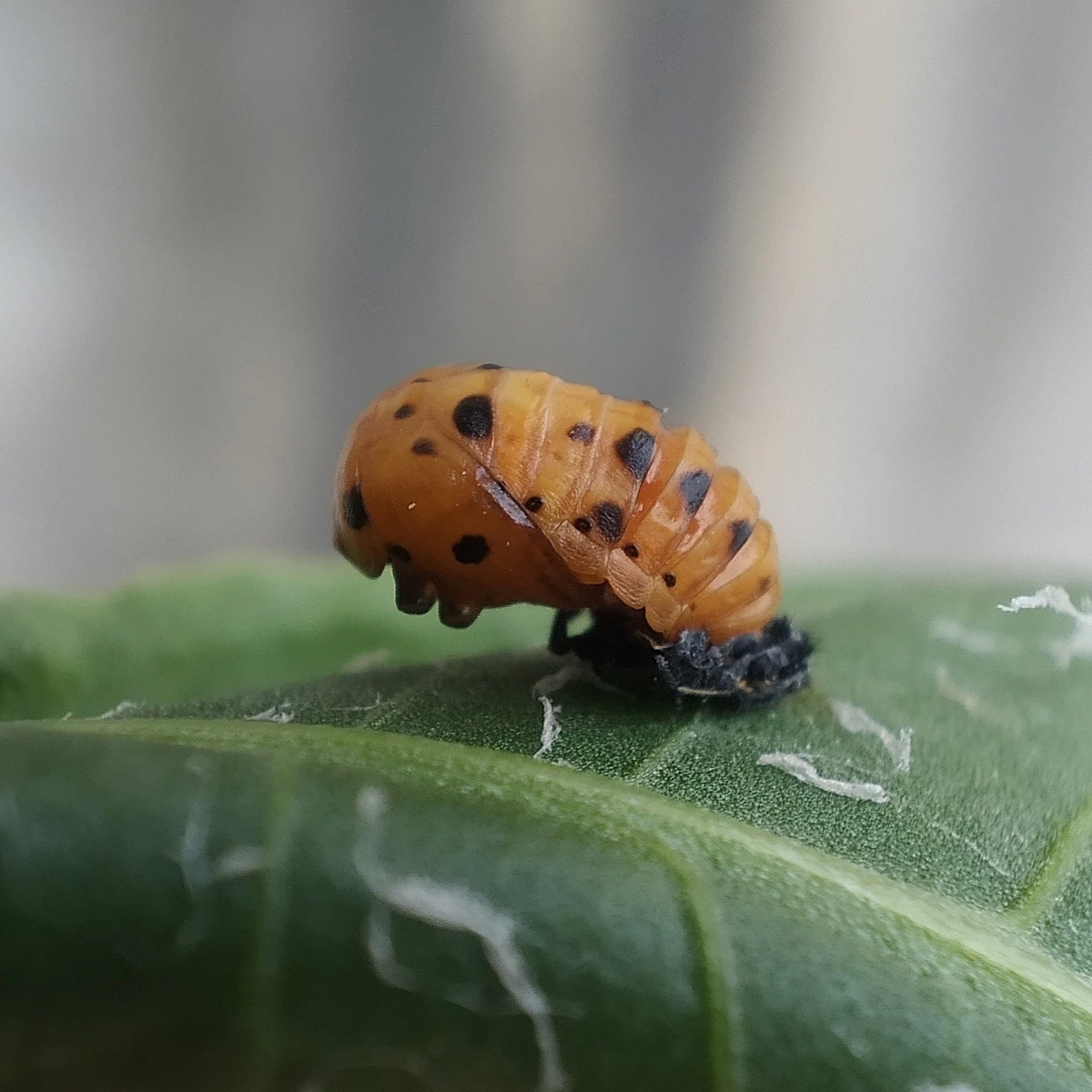
The pupa is eerily similar to Colorado potato beetle larvae... 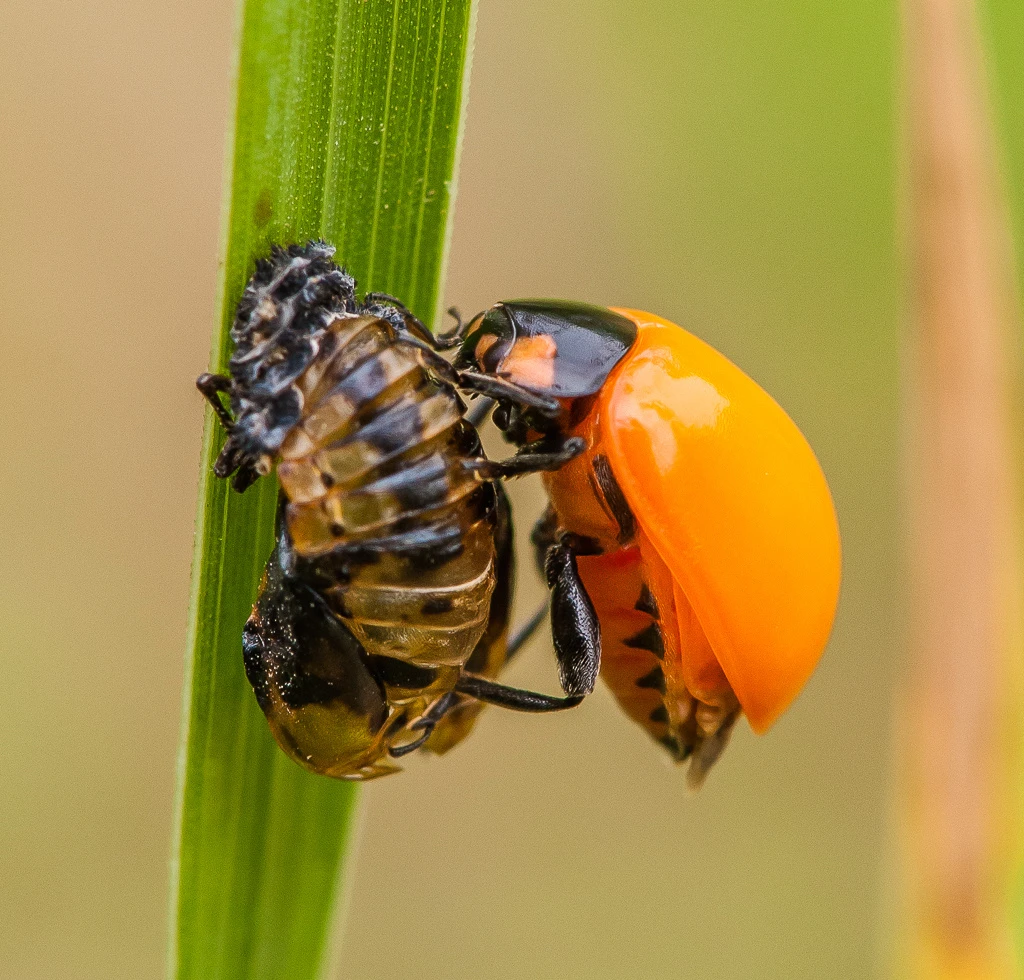
The adult has just hatched from the pupa.
Adults overwinter in bark crevices, under leaf litter, in clusters of several hundred or even thousands of beetles. Some species prefer human habitation: they climb into attics, under baseboards, and into cracks in window frames. They are the first insects to emerge in the spring, even before the snow melts. 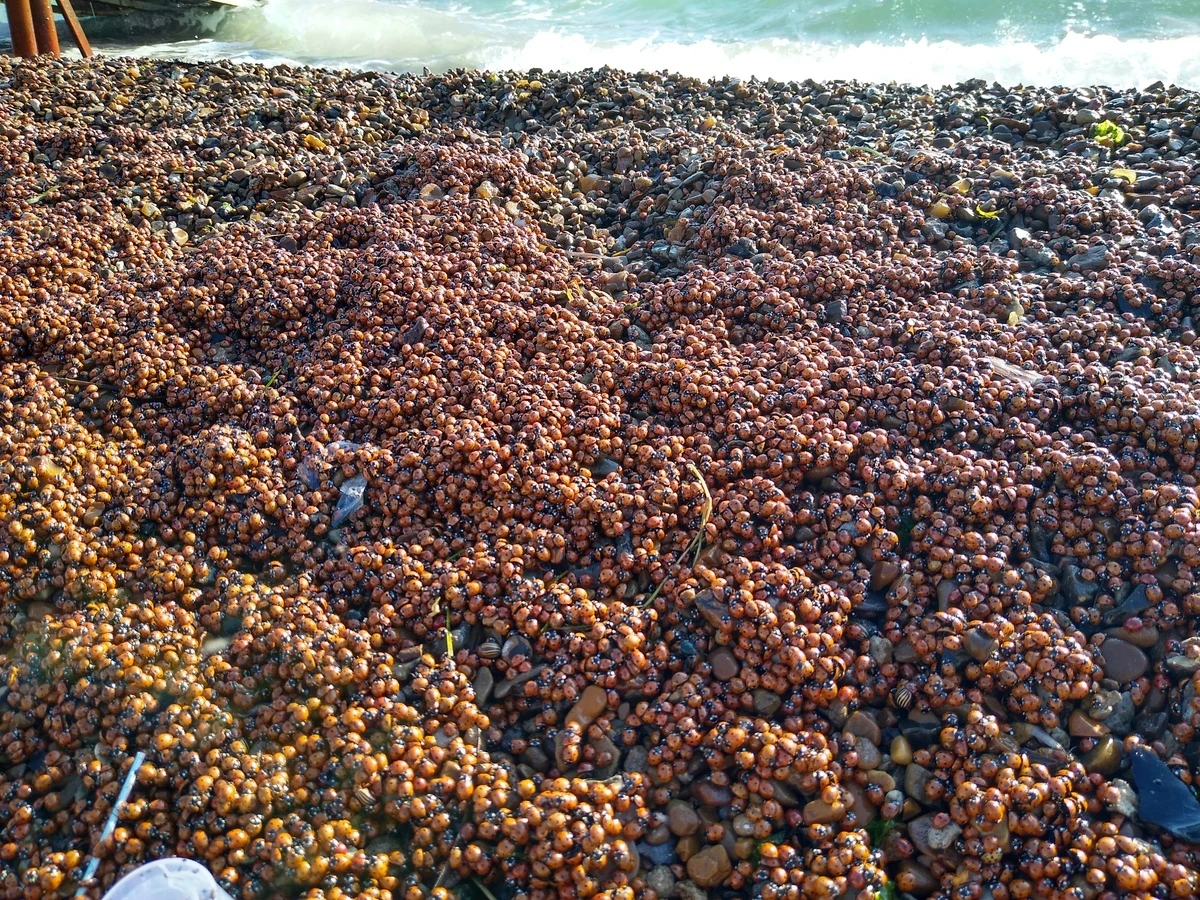
Odessa. Thousands of ladybugs seek shelter for the winter.
The ladybug family has colonized the entire planet, except for Antarctica and areas with permafrost. The seven-spotted ladybug (red with spots, the most common) is found even in Siberia and the Far East, although populations are less dense in harsh climates. The species distribution is uneven: the richest diversity is found in the Far East, where the climate is humid, vegetation is diverse, and there are many aphid species. 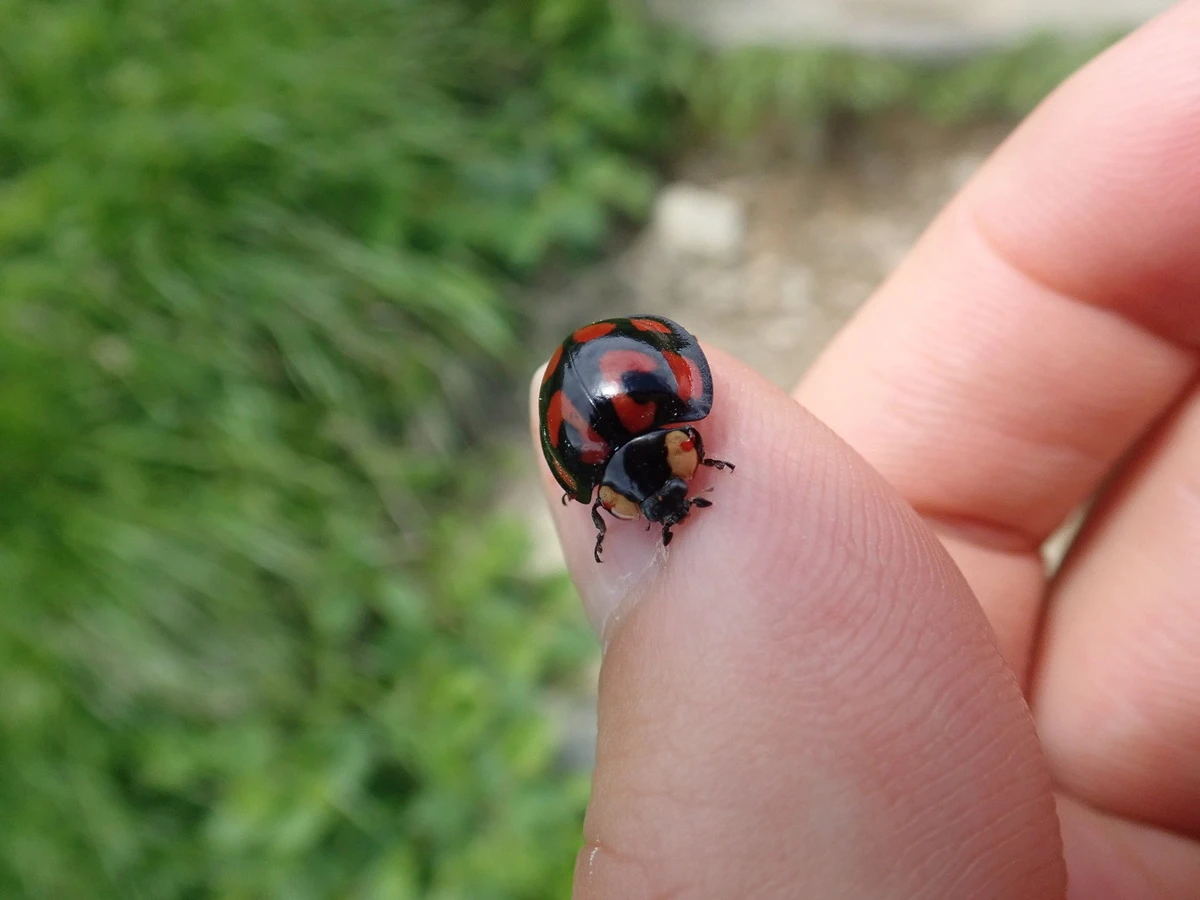
The aiolocaria is almost twice the size of a common ladybug, by the way!
The ladybug's main enemies are spiders and some birds. Most insectivorous birds quickly learn to avoid brightly colored beetles—just one bitter experience is enough. But some species, such as starlings, have learned to bypass this chemical defense: they rub the ladybug against a branch, removing the hemolymph, and only then eat it. Ladybug also has a special relationship with ants. Ants actively protect aphid colonies—they are their "herd," a source of sweet honeydew. Therefore, they attack anyone who encroaches on the aphids, including ladybirds. Large ladybird species can defeat the ants thanks to their hard shells and hemolymph. Smaller species are forced to seek out aphid colonies without ant protection. 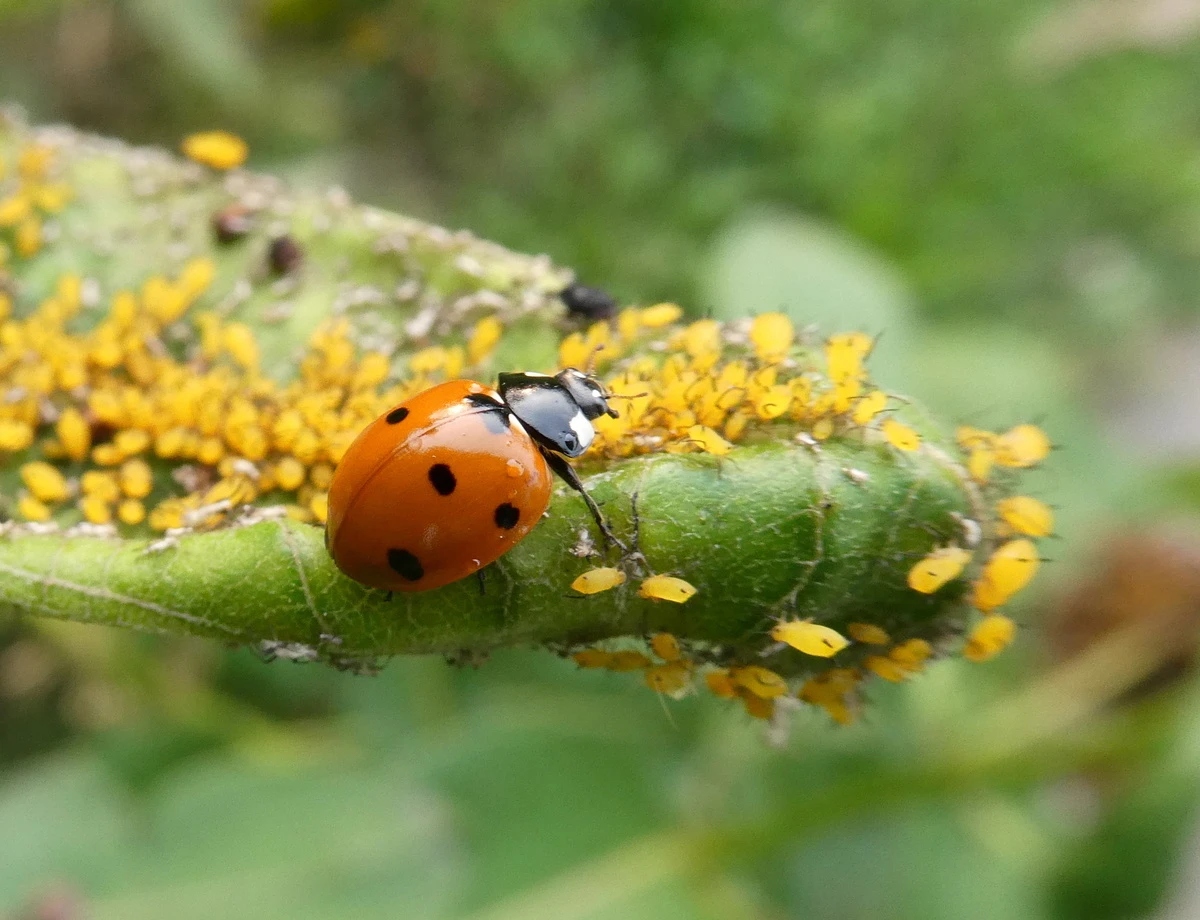
When you accidentally spill a bag of chips ((
In general, ladybugs are great friends for humans. And for gardeners, they're an essential and welcome neighbor, because all they do is eat aphids all day long. So now I'll tell you how to attract ladybugs to your garden! It's possible—and much easier than it seems. Ladybugs don't need any care; they'll find your garden themselves if you provide them with the right conditions. 1. Leave a "wild corner." A small area with unmown grass, nettles, and umbelliferous plants (dill, caraway, parsnip) is the ideal place to overwinter and lay eggs. This is where ladybugs hide in the fall and emerge in the spring. 2. Sow attractive plants. Tansy, marigolds, fennel, yarrow, and cosmos all secrete nectar and pollen, which adult ladybugs eat when aphids are scarce. They also attract aphids—and therefore, aphids. 3. Avoid using insecticides, especially systemic ones, which accumulate in plants. A ladybug that eats poisoned aphids dies along with them. Contact insecticides kill the beetles directly. 4. Set up a "house." A small wooden block with 6-8 mm diameter holes drilled into it, or a bundle of hollow bamboo stems, placed in a warm, wind-protected location, provides a ready-made wintering ground for ladybugs. Place it at a height of 1-1.5 meters, in a sunny location. 5. Don't touch the "scary larvae." The main mistake is destroying the larvae, which are mistaken for pests. Remember: the black "crocodile" with orange dots on your currants is a future ladybug, already at work and devouring pests en masse. 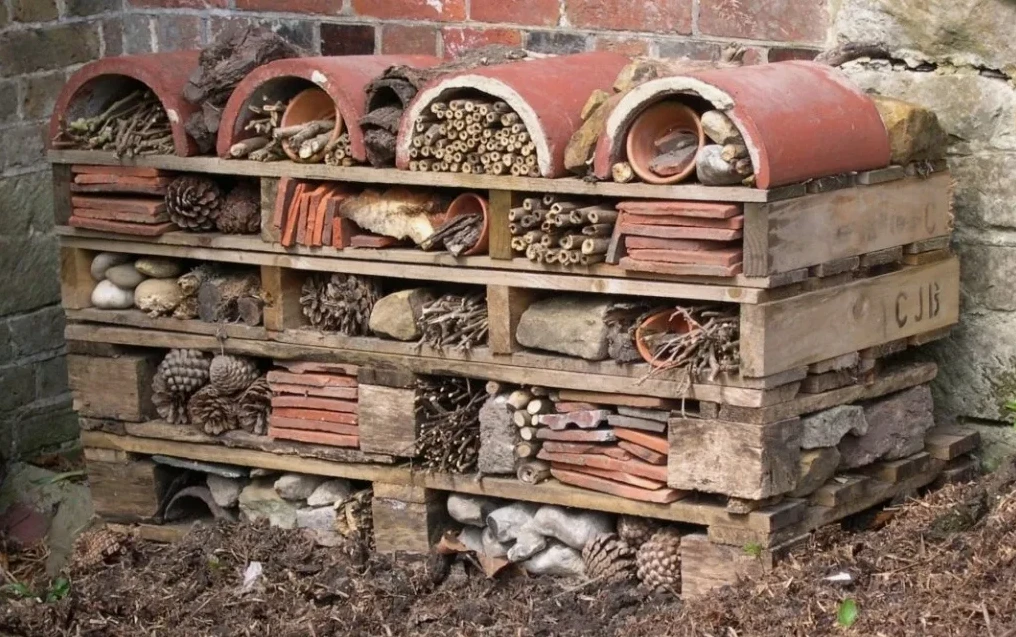
This is what an ideal wintering home for ladybugs would look like.
Ladybugs have been around for about 60 million years. They've spread throughout the world, holding back plant pests everywhere. They're truly heroic little bugs that deserve respect. Even I, the author of this article, found them a real help last summer. One morning, I noticed hundreds of black aphid spots appearing on my favorite plant, and I didn't know what to do... But luckily, I didn't even have to Google it. That same evening, a ladybug flew into my window. Without thinking twice, I simply placed it on a flower and went to bed. By the morning, there weren't a SINGLE aphid on the plant. I was stunned and respected the cow even more. 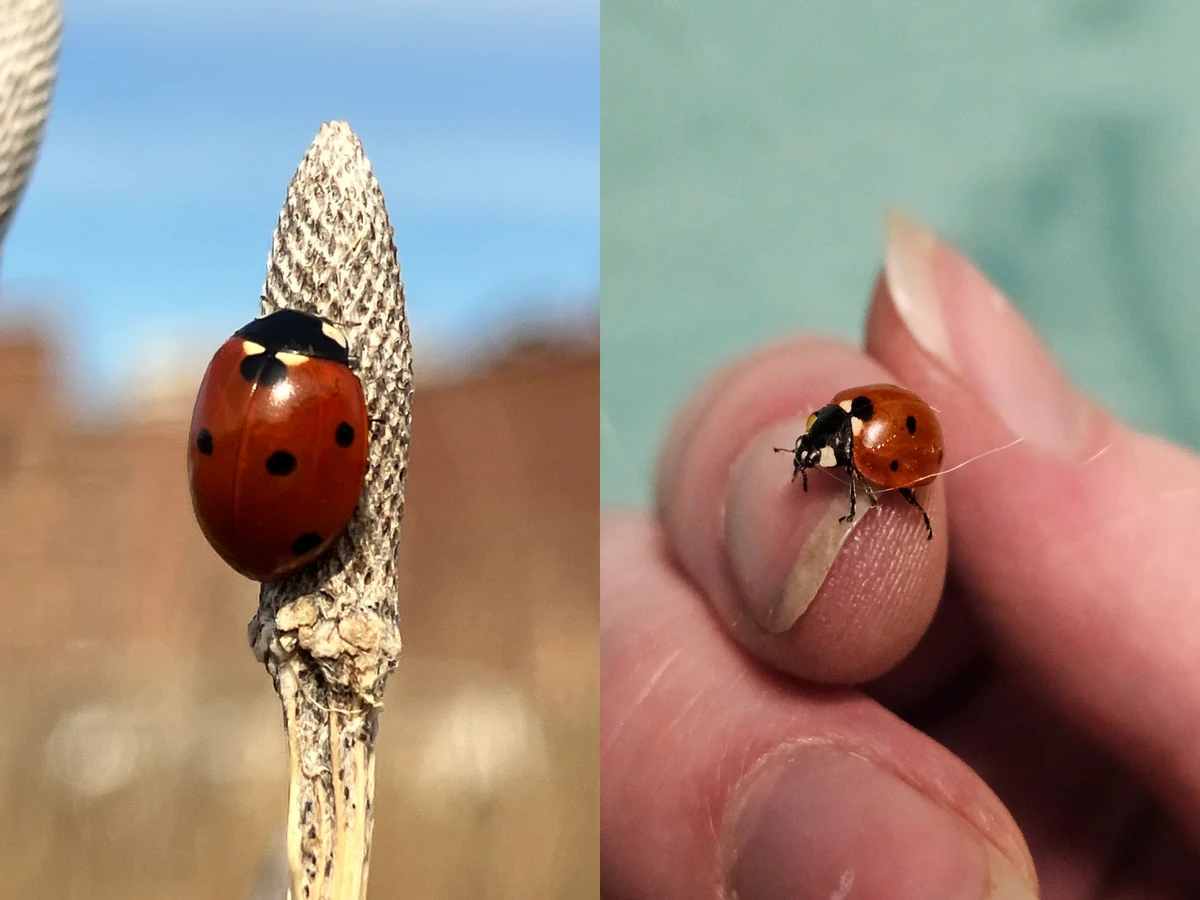
Okay, bye everyone, I'm going to get some bread.
Add your comment
You might be interested in:












Ladybug Poisonous Blood and Eternal Hunger (8 photos)
How a ladybug takes off
Spectacular blue ladybug (7 photos)
Unusual role of a ladybug: a hunter of aphids and mites

Turkish Tulum cheese.

From the life of pet skunks

Dolphin collective drug addiction
Close-up portrait: macro photography of insects (17 photos)

Protective film Removing it with a power screwdriver

Precision carpentry

When a child plays hide-and-seek at a professional level

Athlete in Bavarian dress flies over a lake on a hydrofoil

Looks like it's time to buy WinRAR

How to hang wallpaper neatly

Man sets up bedroom camera and discovers the reason for his

Super dads who swoop in to save the day

The Terminator's tears: Figure decides to scrap its old
