Yes. Those born blind do dream, but these aren't the "pictures" most of us are accustomed to, but dreams composed of sounds, tactile sensations, spatial movements, smells, and emotions. 
What is a dream?
When sighted people hear the word "dream," they automatically imagine a scene or plot unfolding as a visual image, sometimes indistinguishable from reality. But from a scientific perspective, a dream doesn't necessarily have to be visual. A dream is a "controlled hallucination," a brain-generated experience based on memories, sensations, and expectations, without external stimulus. Therefore, a more accurate way to phrase the question is: do congenitally blind people experience visual images in dreams comparable to those of sighted people?
What the research shows
One of the most cited studies from 1999 analyzed hundreds of dreams in blind adults and found that in people blind from birth or very early childhood, visual components of dreams are virtually absent, while references to touch, taste, smell, and hearing are abundant.
A systematic review of studies on this topic, published in 2023, came to a similar conclusion: those blind from birth do not exhibit stable "visual" impressions, except in cases where the individual is not completely blind but has residual vision (distinguishing light/dark, seeing large outlines or movement).
If the blindness is acquired
If a person was sighted, for example, as a child, the brain has accumulated visual representations of the surrounding world, and visual elements may then persist in dreams (albeit modified over time).
This contrast, observed between those congenitally blind and those who become blind over time, is regularly noted in sleep neuroscience research.
The Phenomenon of "Visual Dreams" in Congenitally Blind People
Some modern studies describe cases in which people with congenital blindness report "visual content" in their dreams. Objective testing of these claims using electroencephalography* (EEG) and dream sketches has shown that congenitally blind people experience not a visual experience in the traditional sense, but a spatial model created from data obtained through functioning sensory organs. 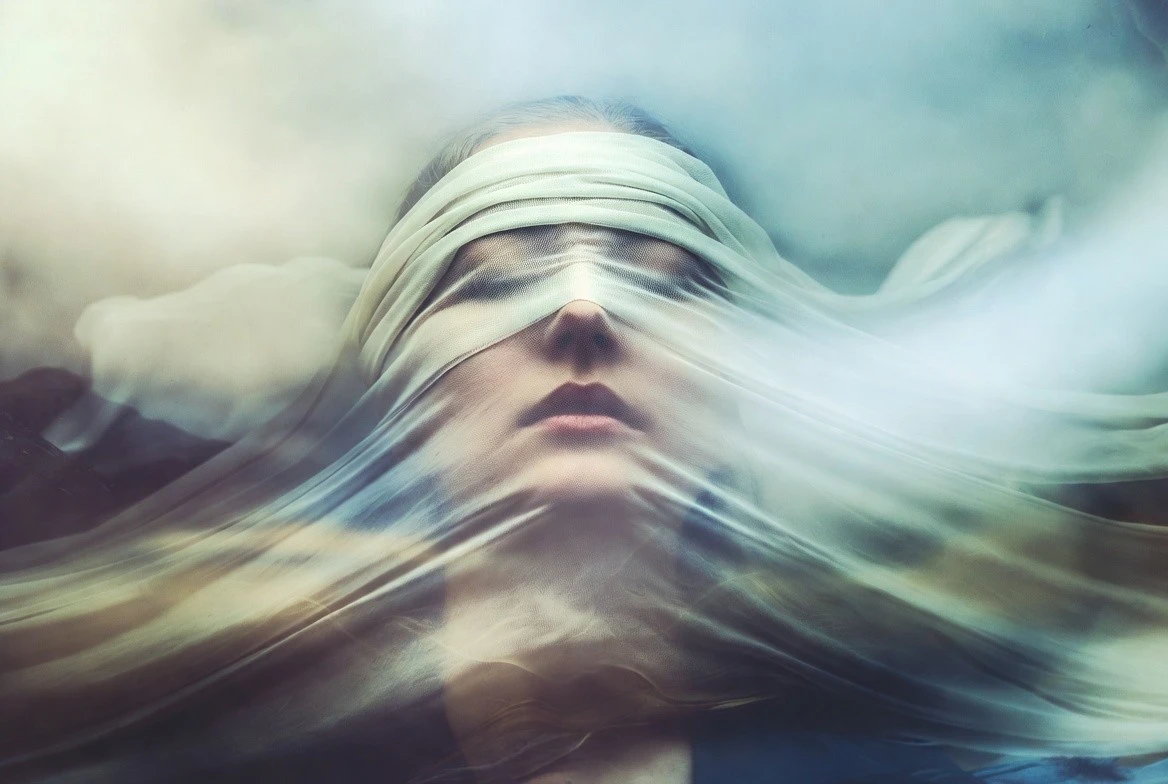
*Electroencephalography is a safe, non-invasive method for studying the functional state of the brain by recording its electrical activity through electrodes placed on the scalp.
For example, a person blind from birth may "see" a distant flash in a dream, and then feel heat. This pattern may be based on memories associated with a walk on a hot summer day, when the sun was fiercely "blazing."
Scientists emphasize that the word "see" in such studies requires careful interpretation to avoid misleading interpretations.
So, the conclusion: people blind from birth do not see "pictures" in their dreams, but instead experience vivid auditory, tactile, and gustatory "controlled hallucinations."
Add your comment
You might be interested in:














Persistence in achieving a goal

Not everyone is having fun on the amusement ride

A biker prevented a hit-and-run driver from escaping

Absolute perfection

The cutest lunch delivery ever

17 Photos That Will Stop You in Your Tracks (18 Photos)

Young women, Dancing and George Michael: nothing superfluous

A steam locomotive for "big boys"

What Would Happen to a Human on Every Planet in the Solar
