About 2-3 million years ago, the common ancestor of these birds ended up on an island, where it eventually gave rise to nearly two dozen species, each with distinct diets and behaviors. 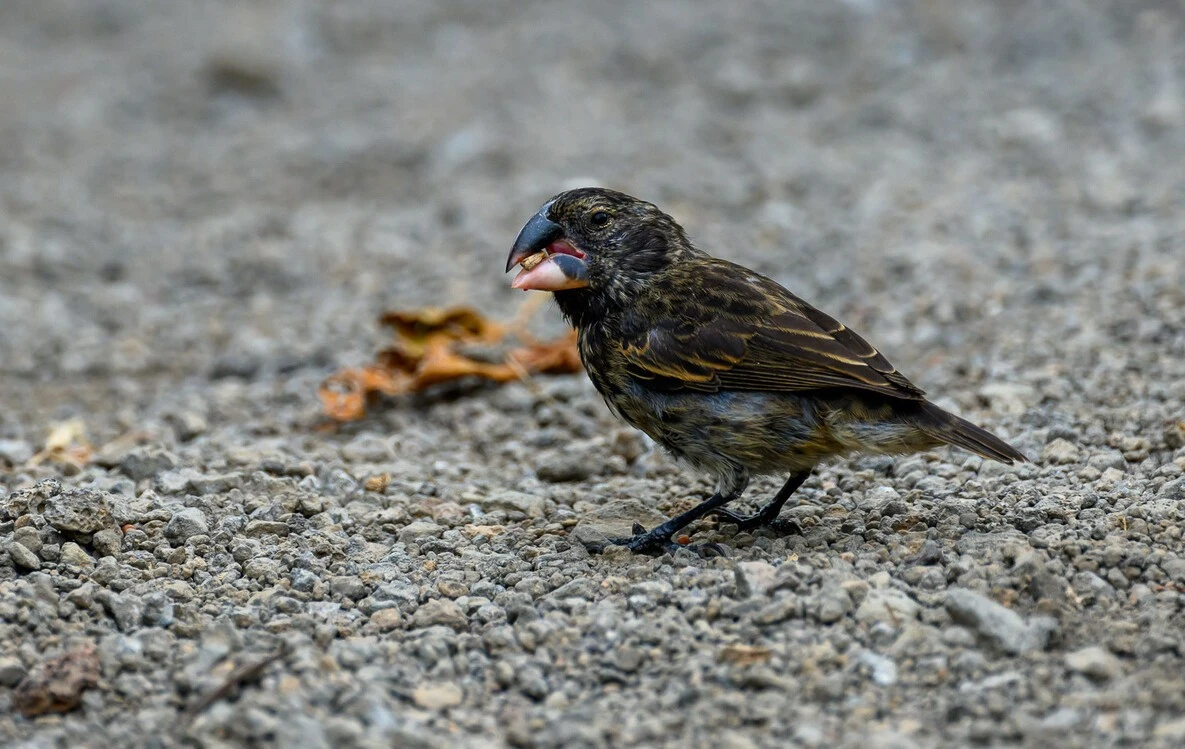
Yes, I'm a finch. No, I don't like jokes about noses.
This story began quite a long time ago, 2-3 million years ago. A couple of ordinary finches lived on the west coast of South America. But then a local cataclysm occurs – a storm, a hurricane, or an earthquake – and the finches find themselves stranded on an island 1,000 kilometers from home. Returning back is impossible, meaning a bird-like Robinson Crusoe experience is inevitable.
Fortunately, the finches were of different sexes, so they had other things to do besides acclimate and adapt to the local food. And so, within a few centuries, the offspring of the finches had created a stable population that populated the entire island. And then life became difficult for the young: where to build nests? What to eat? So they flew to neighboring islands, fortunately the distance between them is small, from 5 to 50 kilometers. Any finch can fly it in just an hour! 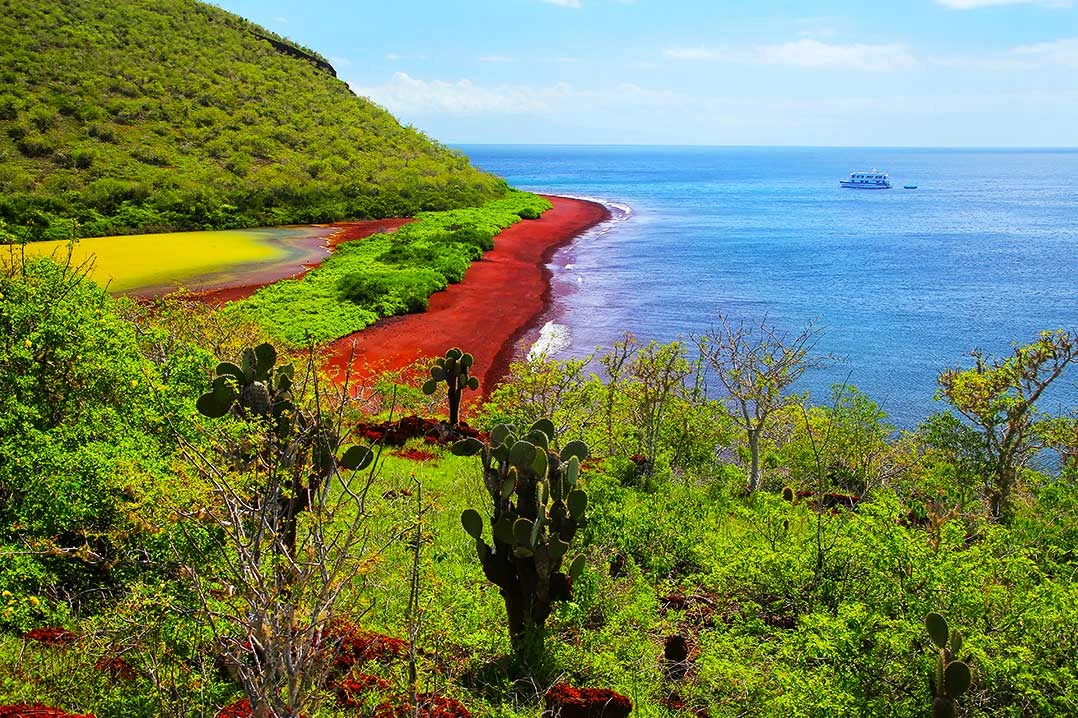
Most of the Galapagos Islands is covered in rich and beautiful jungle. 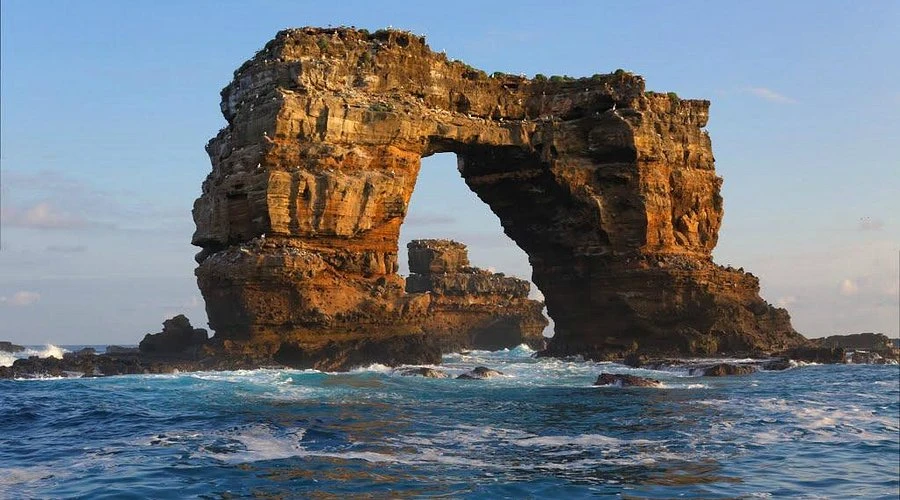
But some islands look extremely harsh. This is Darwin Island, with an area of 1 square kilometer. And yes, finches live here too.
A couple more millennia, and even the smallest and most inhospitable islands were inhabited; there was simply nowhere to expand the population further. So the finches had to change their strategy. They began to capture new ecological niches and adapt to the unique conditions of each island. 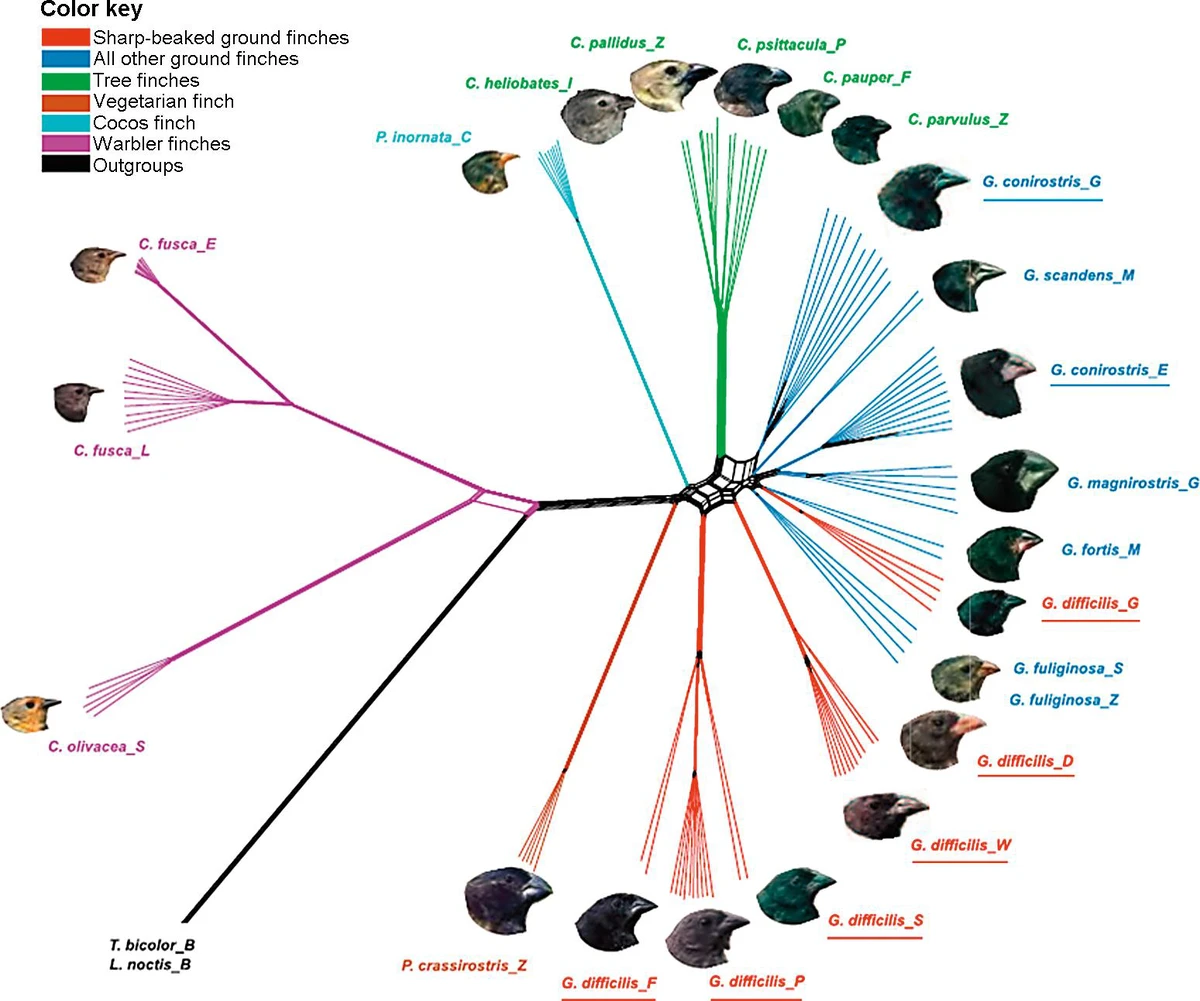
The evolutionary tree of finches looks something like this. But even now, we're not entirely sure we've got it all right.
Another half a million to a million years, and one species splits into three. Ground finches, with their broad, conical beaks, have transitioned to an almost exclusively plant-based diet. They easily crack hard seed coats and have adapted to feeding on the pulp of cacti, which is not very tasty or edible for others. 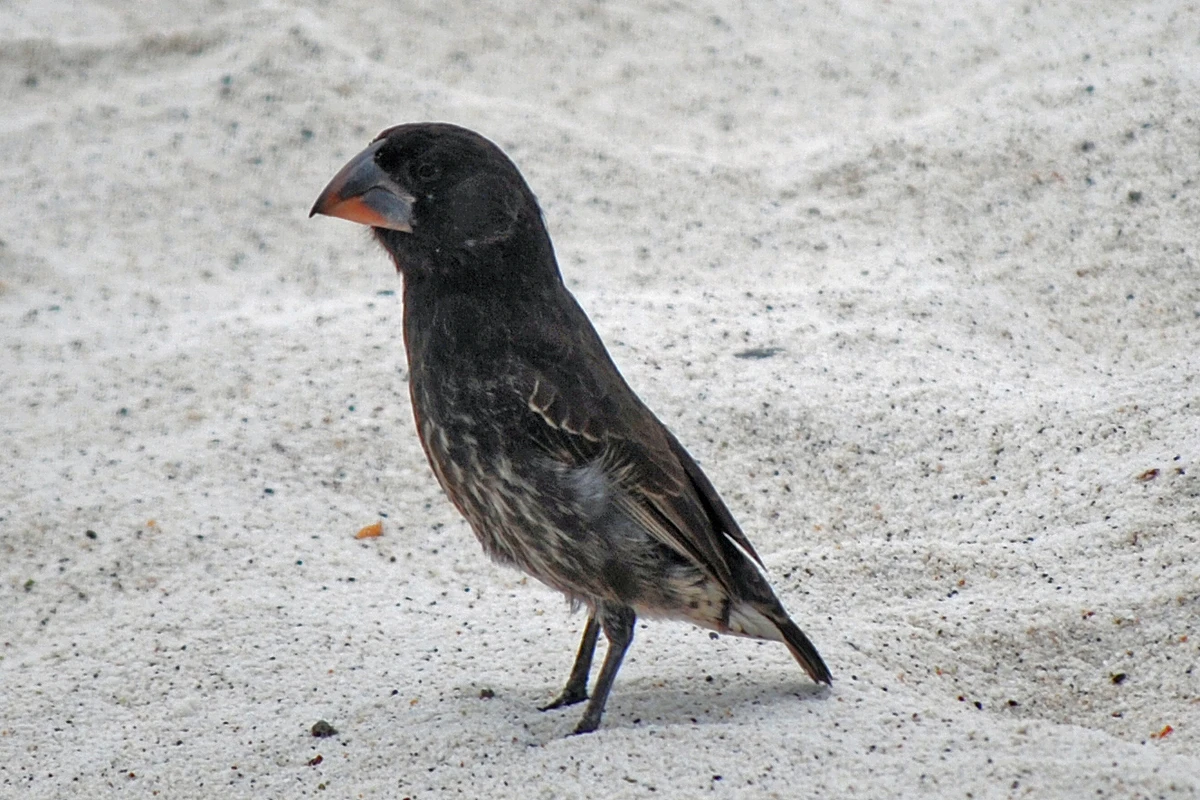
This bread slicer deserves respect. 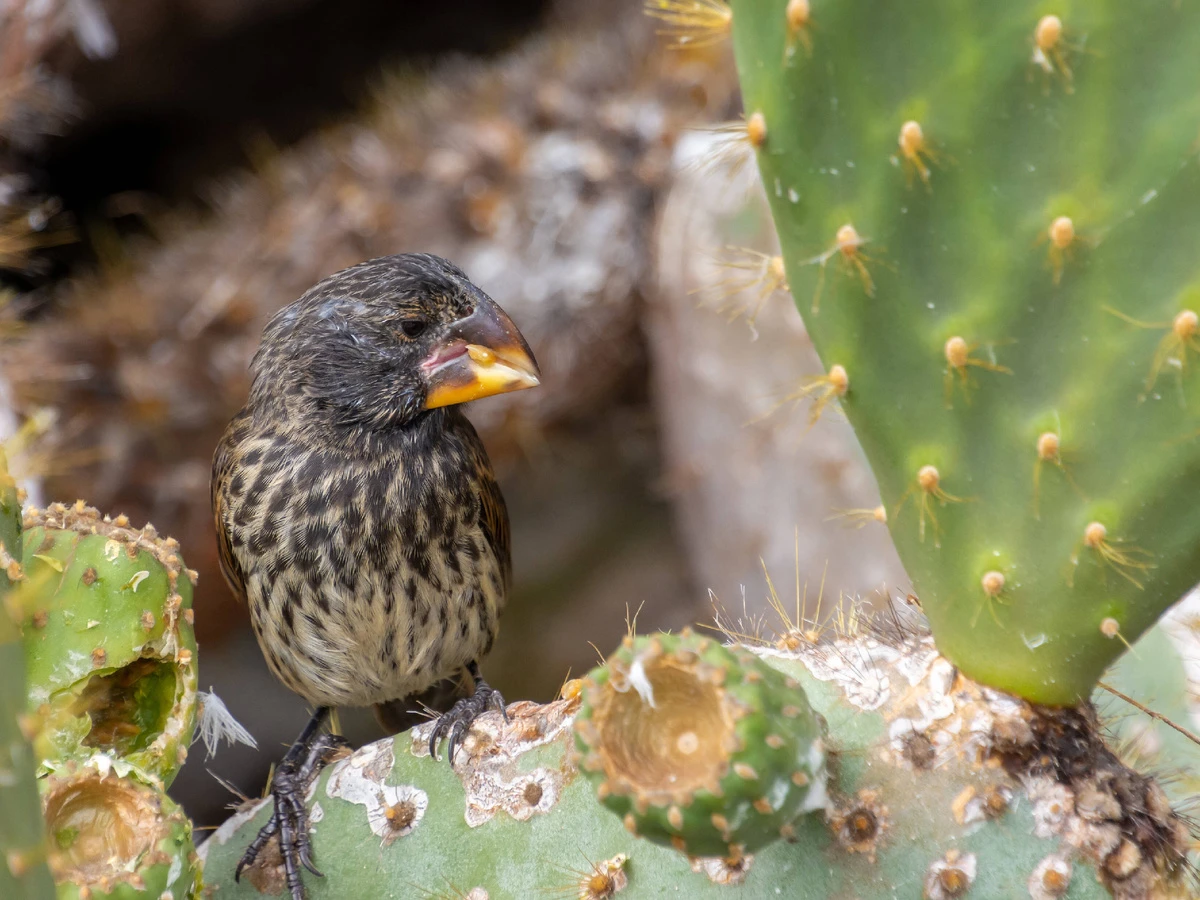
Oh my God, what a disgusting thing this proper diet is...
Tree finches' beaks, longer and narrower, are perfect for turning over pebbles and splitting bark. They feed almost exclusively on invertebrates, mainly bark beetles. 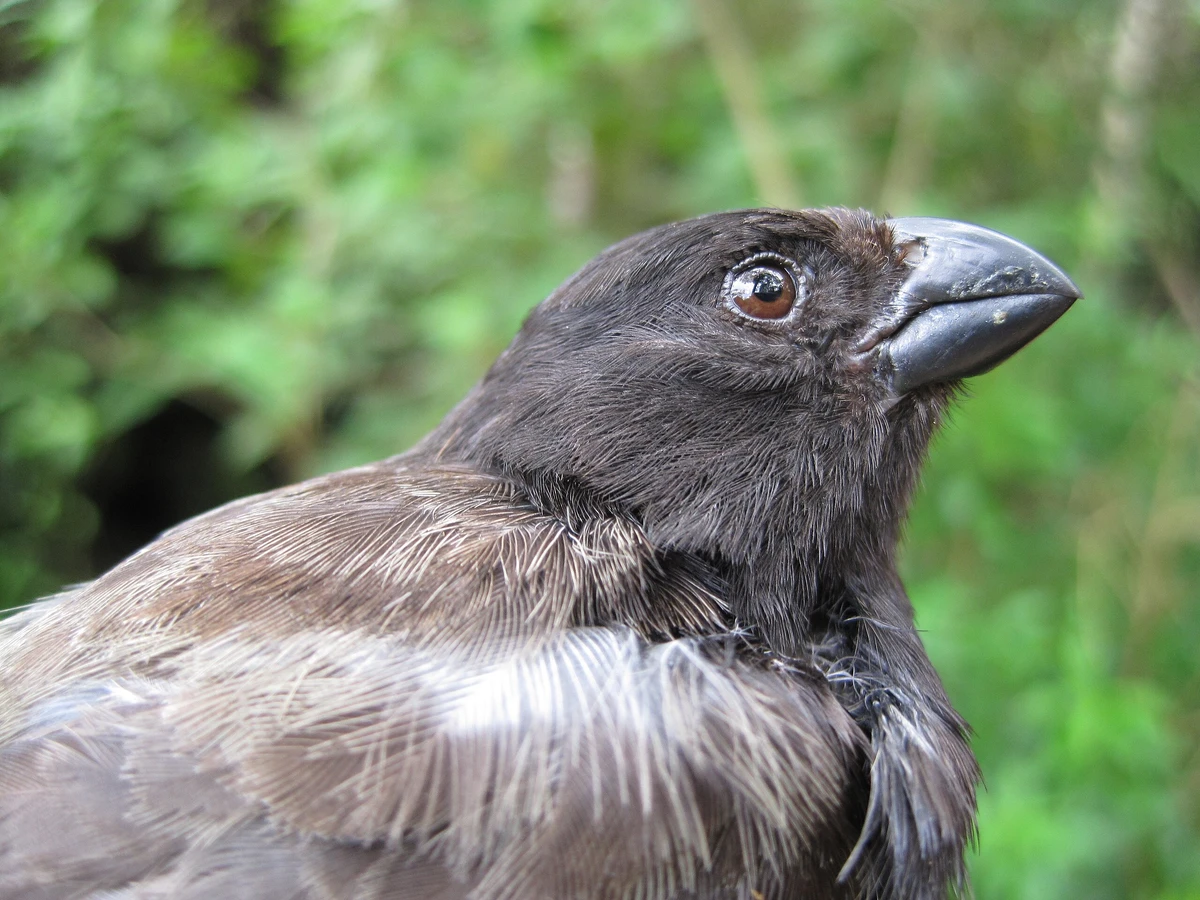
Tree finches are sometimes called woodpecker finches. They simply love to pound their beaks on dead trees.
Warbler finches, however, occupy an intermediate niche. Their thin, short beaks allow these birds to be generalists. In winter, they feed on soft fruits and seeds, and in summer, they switch to insects that live on the surface of wood, not inside it. 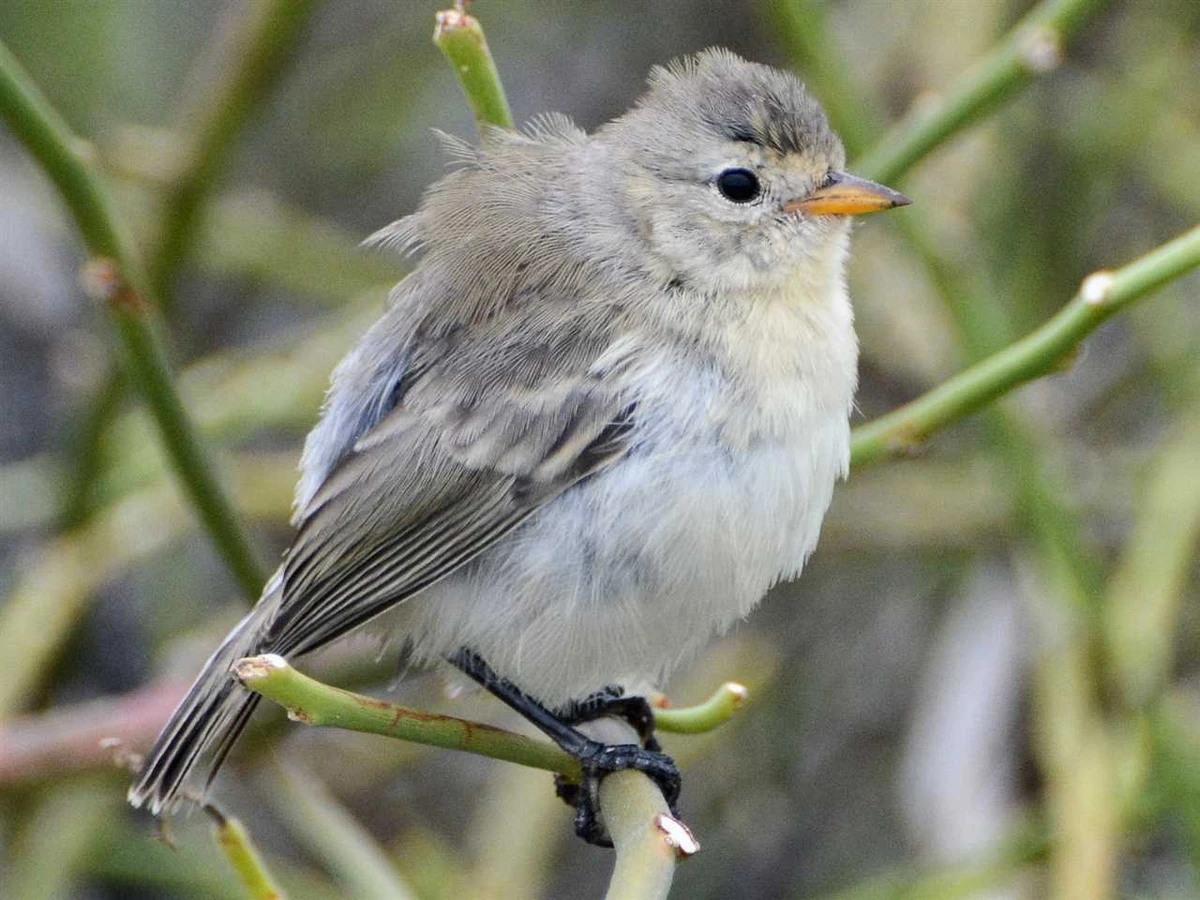
What's this cute little sparrow??? (Sablefinch)
But their evolution didn't stop there. Each species began to diversify into new, even more specialized species with their own unique characteristics. The small ground finch, for example, has become friends with Galapagos tortoises and iguanas. Now, a significant portion of its diet consists of the parasites of these reptiles. 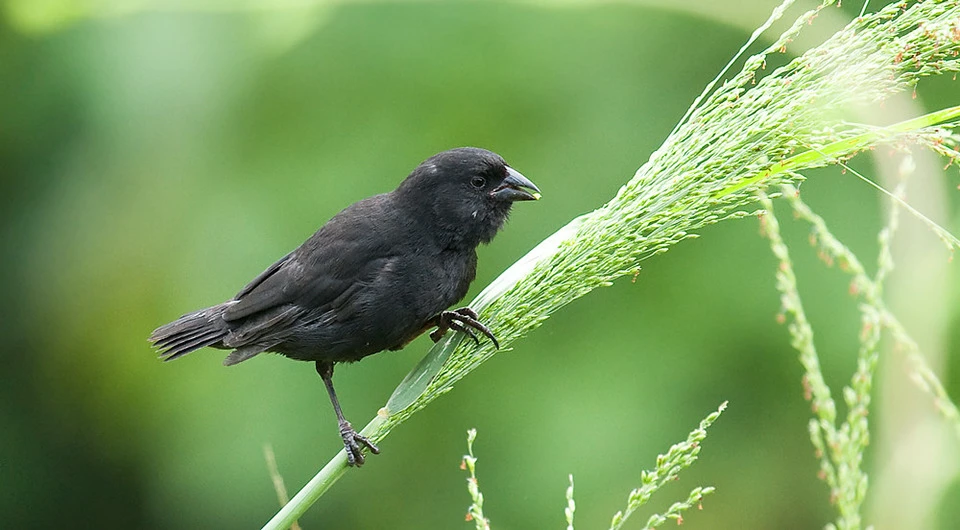
A small ground finch in all its glory. 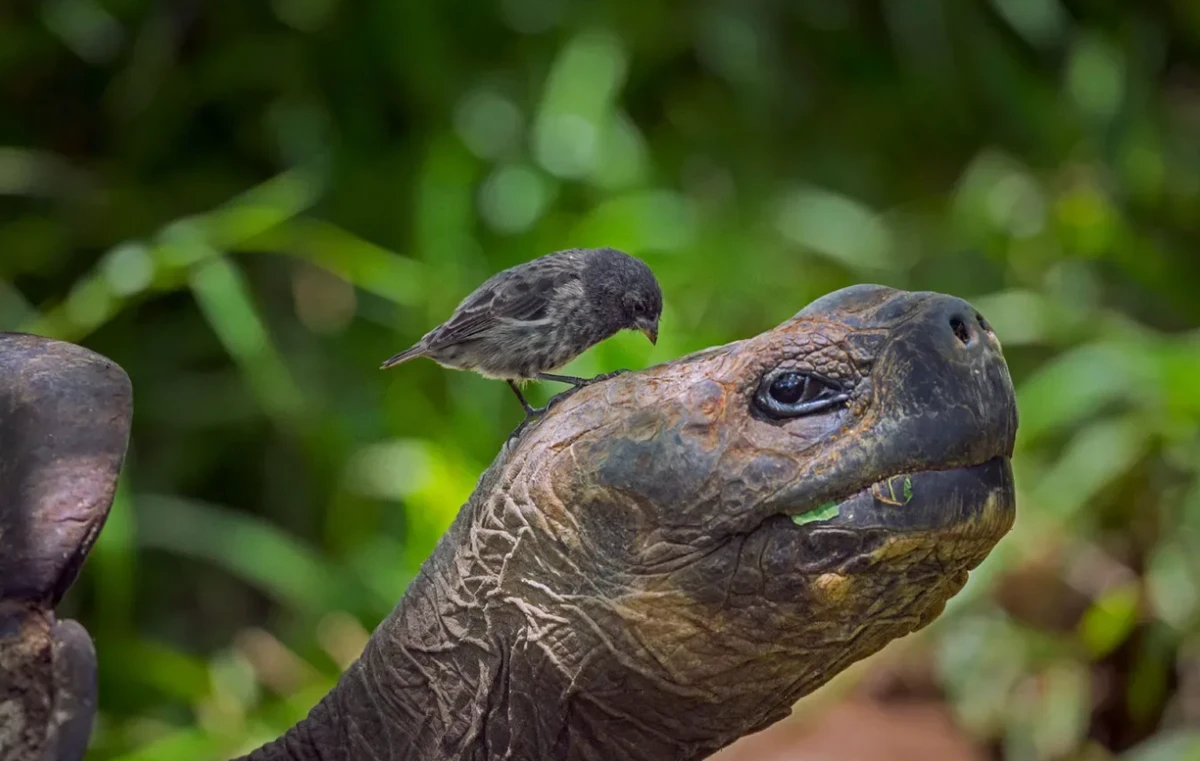
The vampire finch deserves special mention, as it exemplifies extreme and very rapid adaptation to harsh conditions. These birds live only on Wolf and Darwin Islands – the rockiest and most inhospitable islands of the archipelago. There are no sources of fresh water, so the birds are perpetually dependent on rainfall. And on the blood of other birds. To survive during the dry season, they are forced to attack nesting seabirds, inflict wounds, and drink their blood. 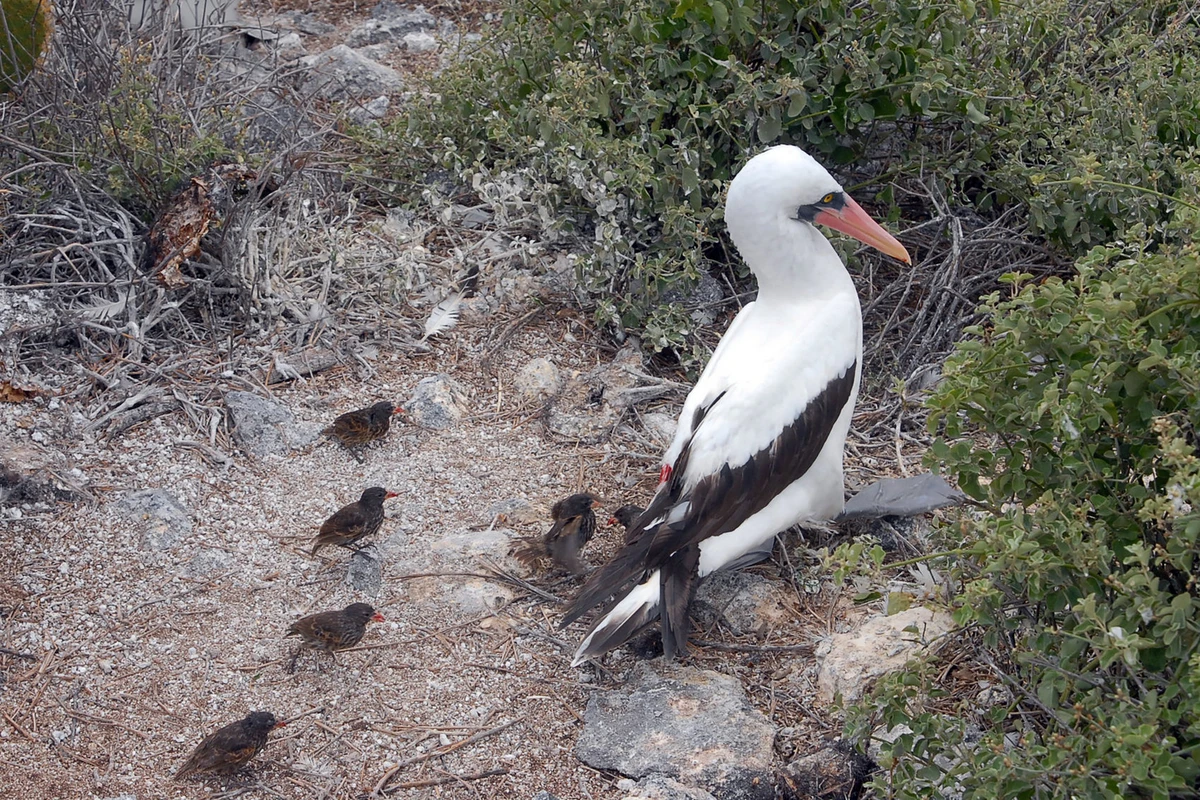
Finches at a watering hole.
But the finch story didn't end there. In the 19th century, the research ship HMS Beagle brought a then-little-known scientist, Charles Darwin, to the islands. The ship stayed there for only five weeks, but that was enough. Darwin discovered 14 species of finches, each with its own unique features, yet incredibly similar to one another—as if they were close relatives. Even then, he suspected that they all descended from a single pair of finches. 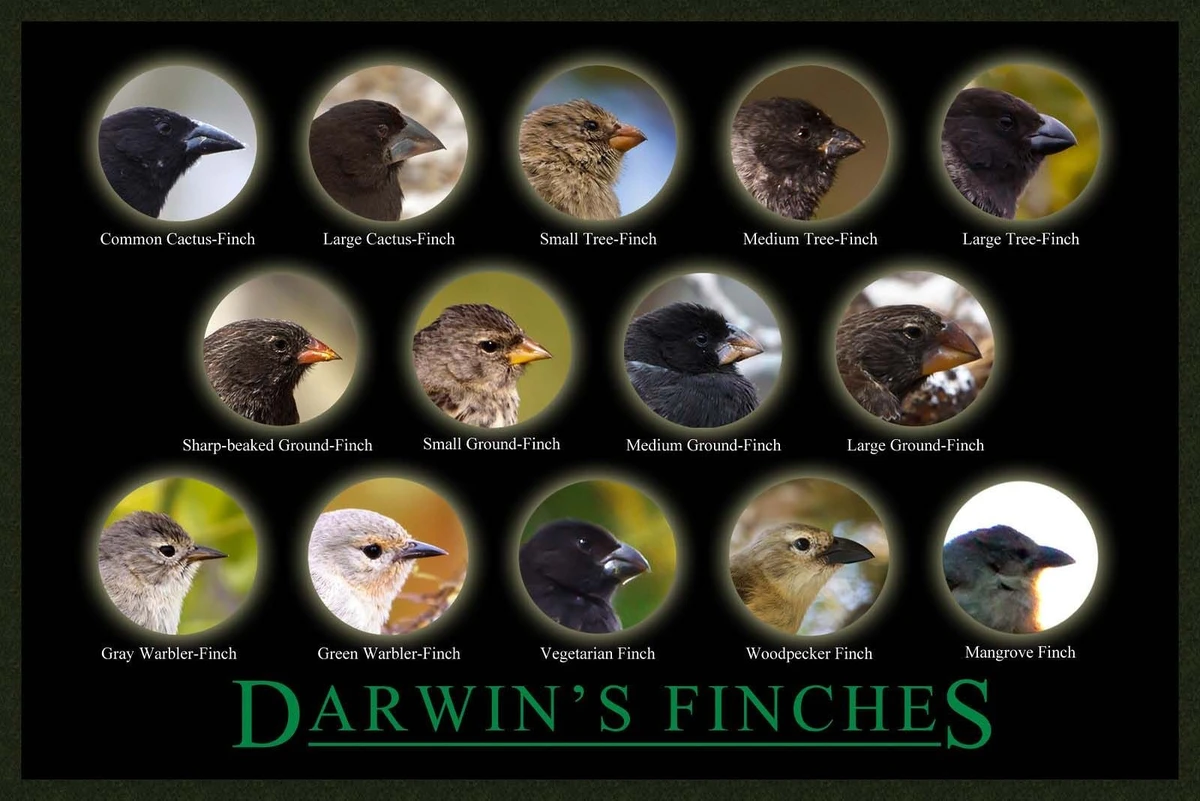
Darwin then discovered 14 species of finches. We now know there are 18 of them.
The discovery of this unique species complex was an unexpected confirmation of his ideas about evolution and played a major role in the writing of "On the Origin of Species," a monumental work that laid the foundations for modern views on evolution. The Galapagos finches have since been called Darwin's finches, in honor of their unexpectedly powerful influence on modern science.
Add your comment
You might be interested in:










Rescuers transported 136 Galapagos tortoises to the island
On the Spanish island of Tenerife, African snails keep
15 animals that have existed on Earth much longer than

A hunting lodge on a bare desert island - and who is being

Lonely house on an Icelandic island
Incredibly smart roosters have captured the Hawaiian island
Krizhani birds of the Andes (8 photos + 1 video)

17 Photos That Will Stop You in Your Tracks (18 Photos)

Behind the Camera on 'Back to the Future' (45 Photos)

What Would Happen to a Human on Every Planet in the Solar

Stunning Views of the Martian Horizon from 400 Kilometers

20+ Fascinating Photos of Rare and Unusual Sightings (40

50 Incredible Treasures People Rescued From the Trash (51

22 Examples of Pure Design Genius That Deserve a Huge

Hard to Believe Your Eyes: 20 Unreal Photos With

The Sexual Customs of the Vikings: Why an Older Partner Was
