The shrimp riders of the Oostduinkerke (10 photos + 1 video)
On the western edge of Belgium's short coastline, about twenty kilometers east of Dunkirk, France, lies the town of Oostduinkerke. Here, a few fishermen practice an unusual method of fishing. Instead of boats, they take to the sea on horseback. 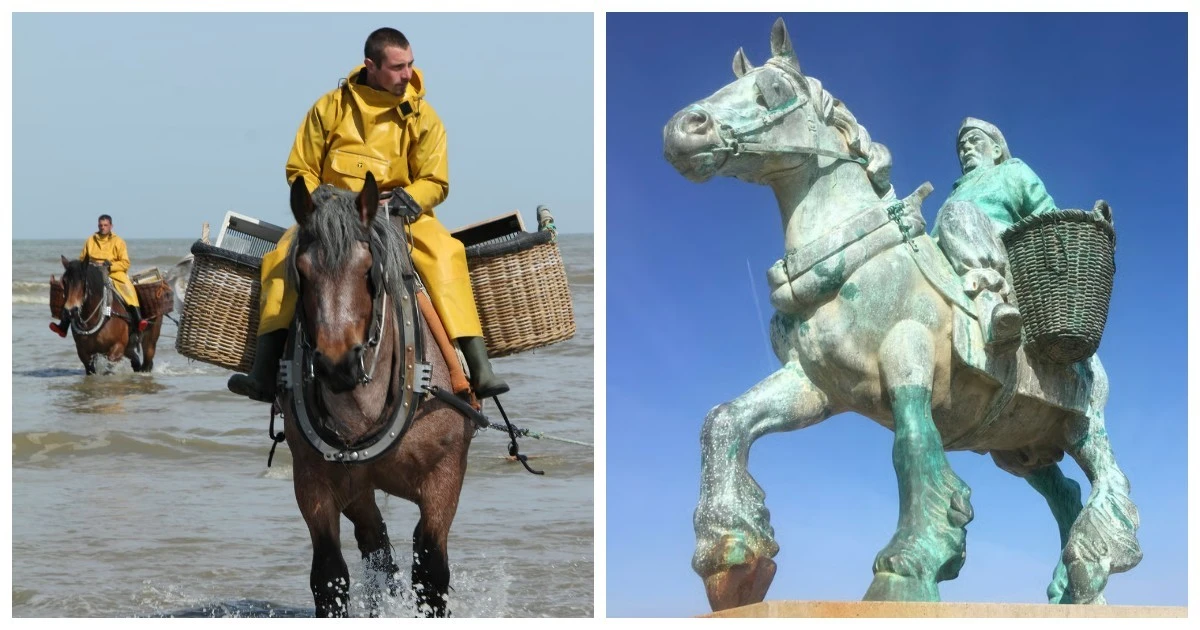
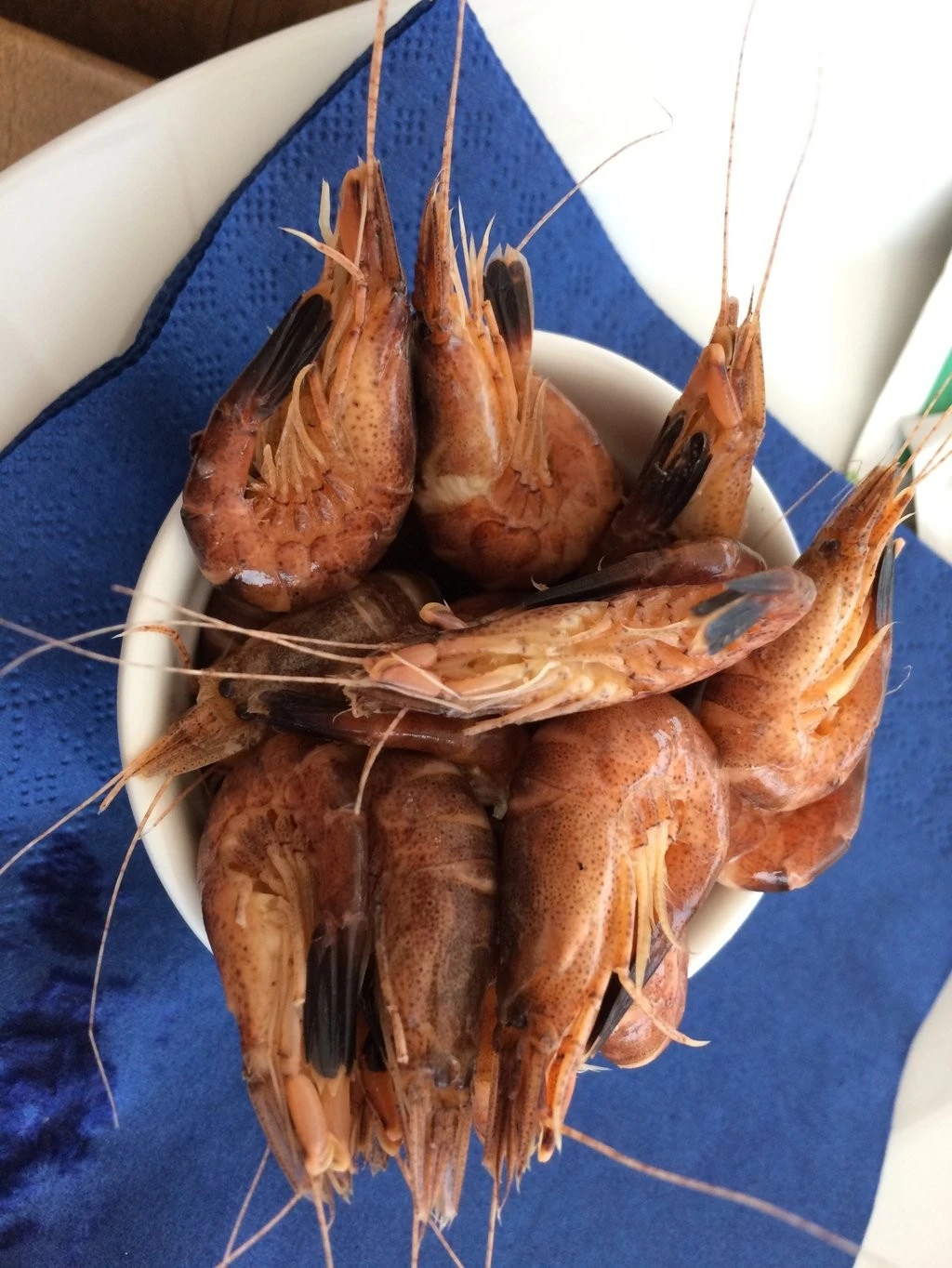
These horsemen hunt a special type of shrimp—Crangon crangon, also known as grey shrimp—found in the southern North Sea and considered a delicacy in Belgium. Five centuries ago, shrimp fishing on horseback was practiced along the entire North Sea coast from France to the Netherlands and even in the south of England. 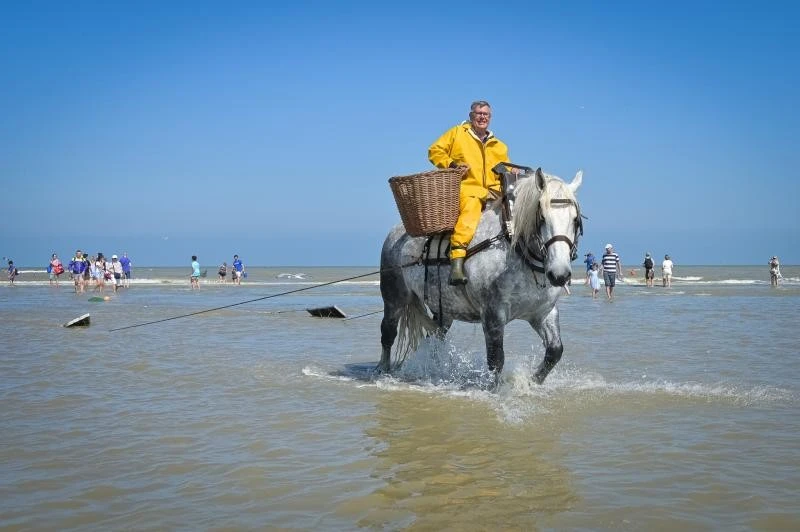
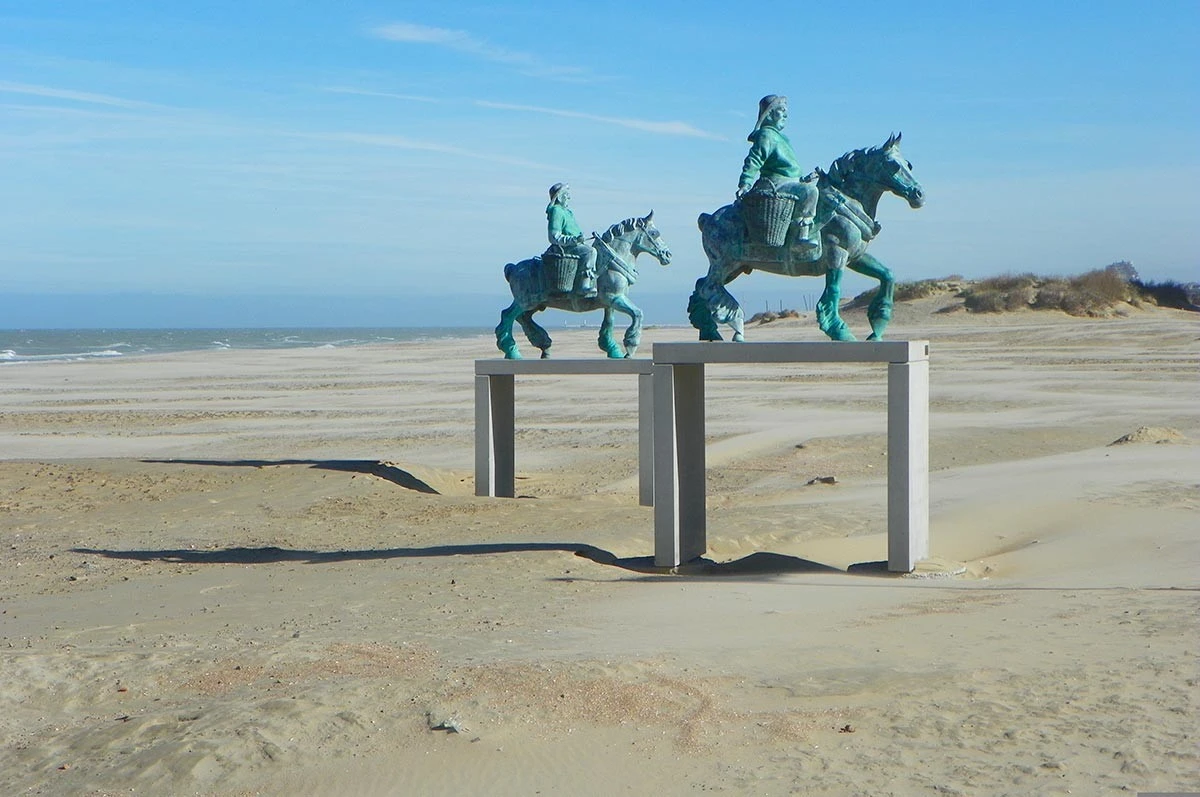
Today, this tradition survives only on a few kilometers of coastline in Oostduinkerke. What was once a full-fledged profession is now merely a hobby—a performance put on for tourists by the last remaining horseback fishermen. 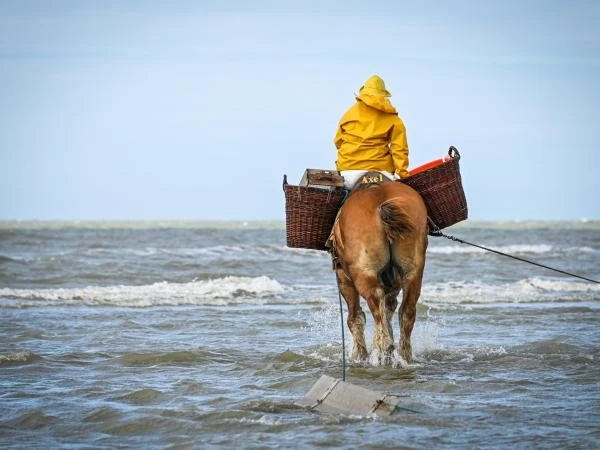
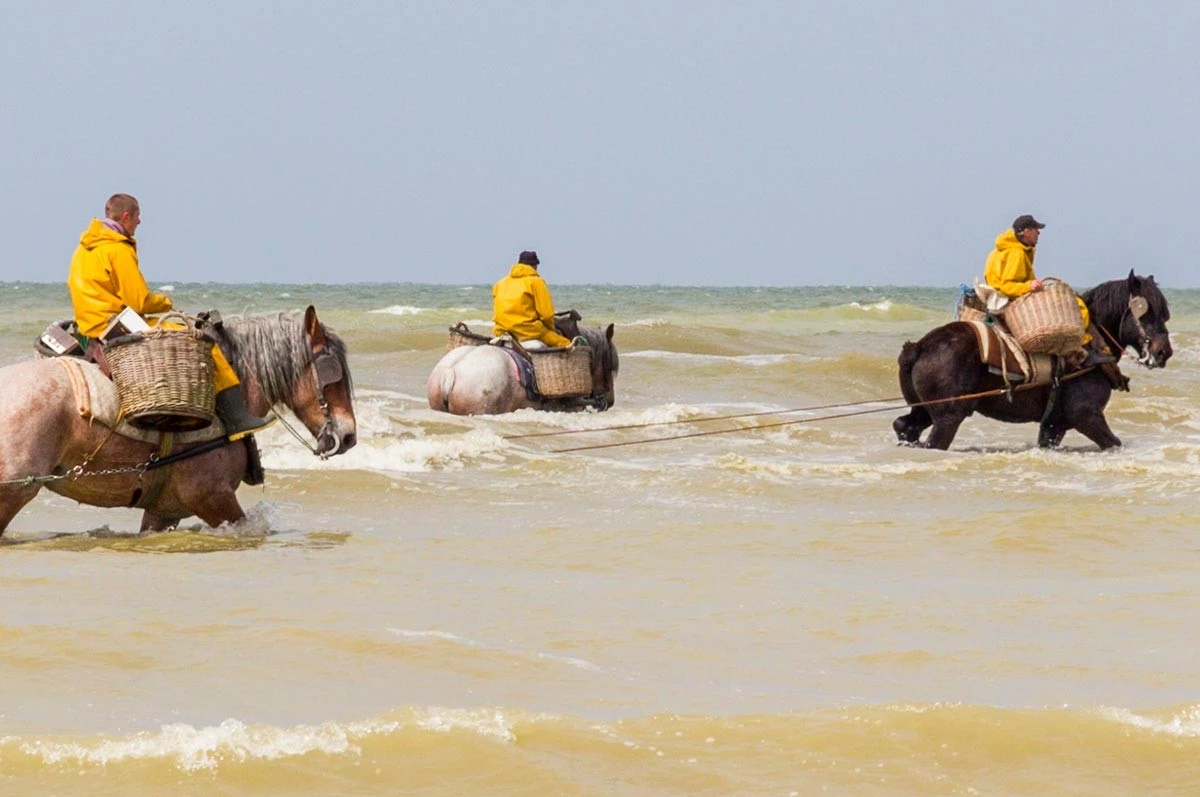
Fishing takes place during the warmer months, when the sea is free of ice. Shortly before low tide, when the water has receded but not completely, fishermen in bright yellow waterproof coats and high rubber boots mount their horses and move along the shoreline, dragging large nets behind them to scoop up shrimp and other fish.
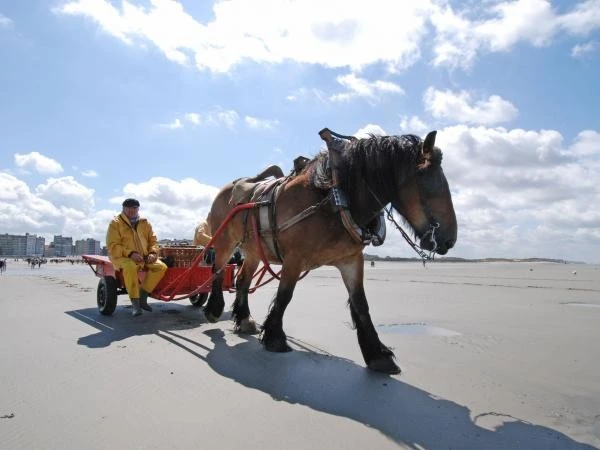
Walking through the water, belly-deep, dragging a net behind them, is extremely hard work, even for Brabancons—Belgian draft horses renowned for their immense strength. Therefore, fishermen and their horses regularly return to shore for short rests. During this time, they shake out their catch, throw crabs and unwanted fish back into the sea, and collect the shrimp in two baskets suspended on the sides of the horse. 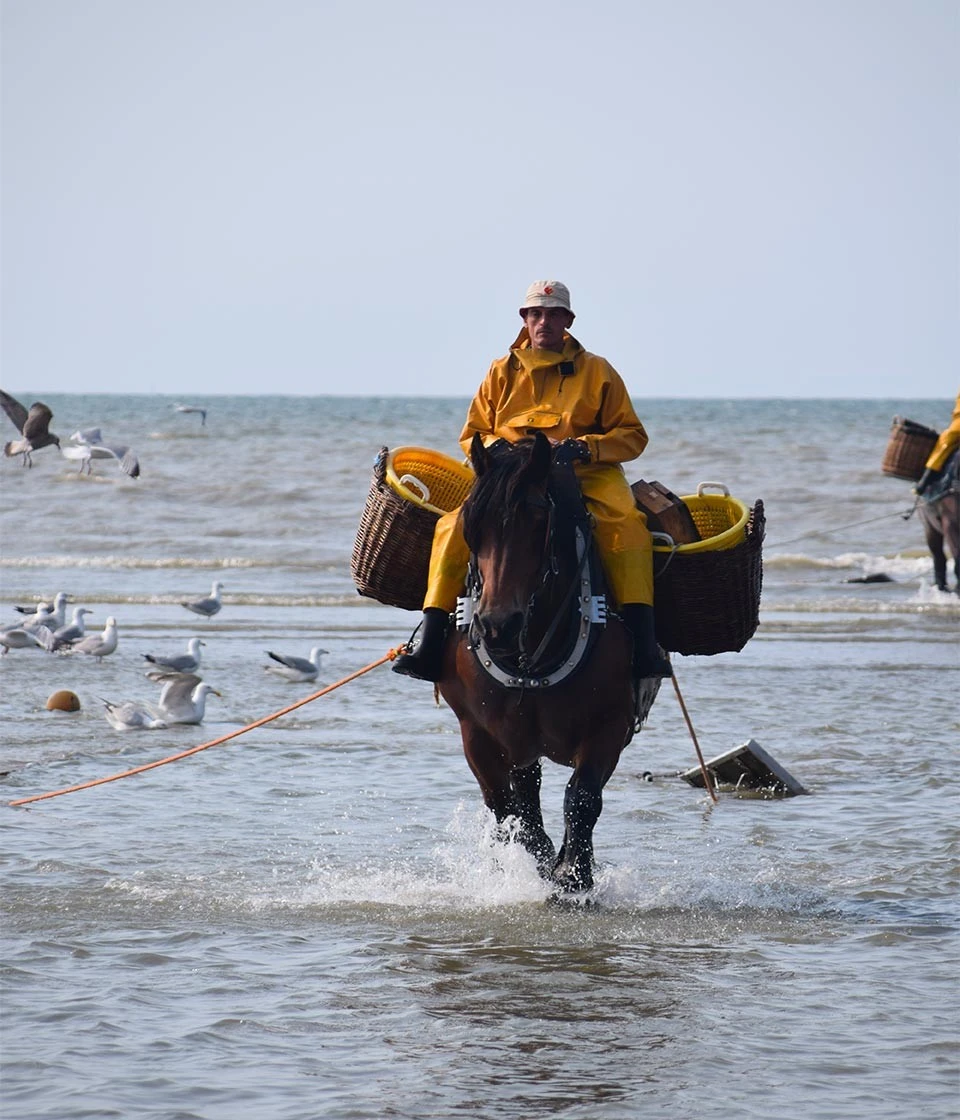
Five hundred years ago, this was the only way to catch shrimp. But with commercialization and growing demand, fishermen began to venture further out to sea, rather than wait for the shrimp to come to them with the tide. Even at the beginning of the 20th century, shrimp fishing on horseback was a common sight along the entire North Sea coast. 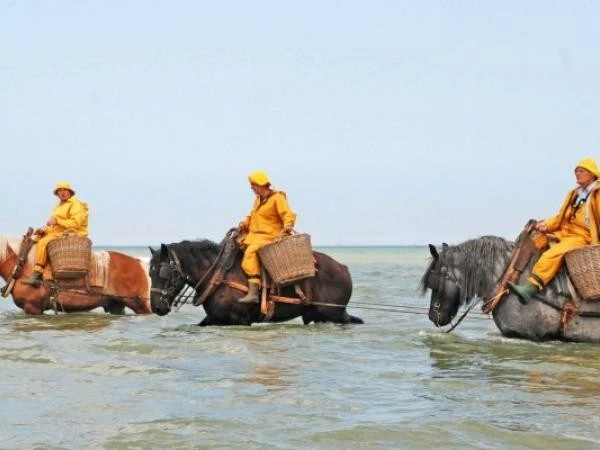
Now, only about a dozen families in Oostduinkerke remain the guardians of this unique culture. They are not professional fishermen – some work in construction, others are farmers. Horses, fishing, and the sea are their sole passion.
The reason the tradition has survived in Oostduinkerke is primarily due to its wide, breakwater-free beach, ideal for shrimp fishing. 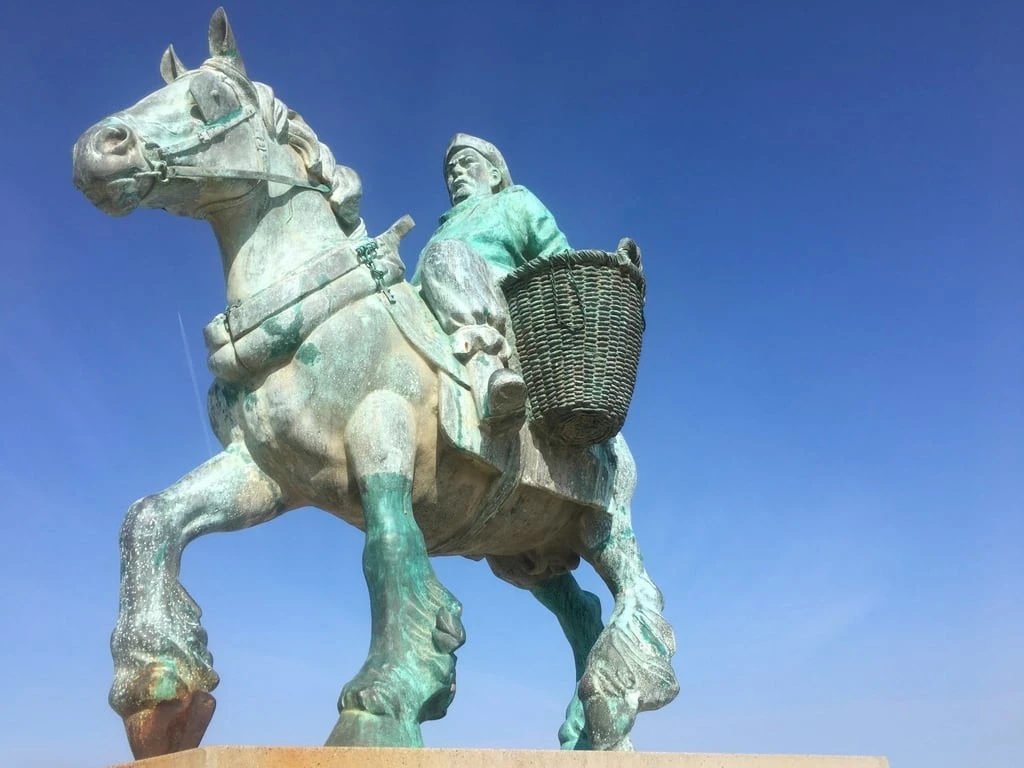
Horse-mounted shrimp fishing is so rare that UNESCO has inscribed it on the Representative List of the Intangible Cultural Heritage of Humanity.