Porcupine: a deadly beast that few people know about (14 photos)
The porcupine has the agility of a cat, the grace of a potato, and a sack of quills to boot. It can stuff a dog with hundreds of spines in a second, but it regularly falls out of trees because it's so clumsy and nearsighted. This strange oddity makes it simultaneously one of the most dangerous and most grotesque animals in the world. 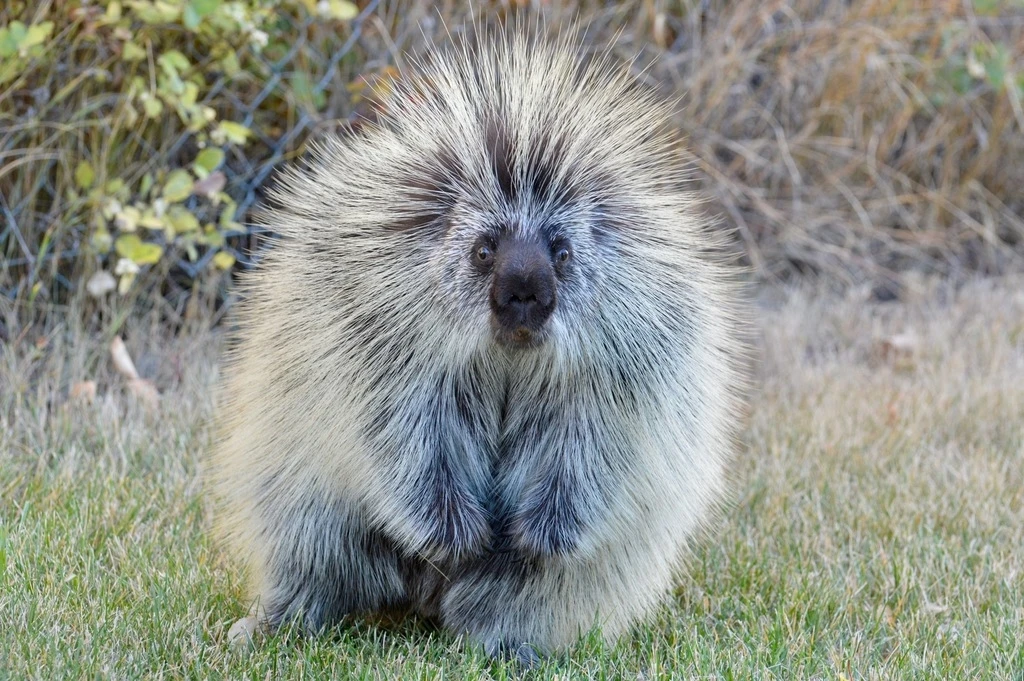
He just fell asleep with a wet head.
The porcupine, or North American porcupine, is twice as big in real life as it appears in photos. An adult male porcupine grows up to 120 centimeters from nose to tail and weighs 18 kilograms—the size of a medium-sized dog. 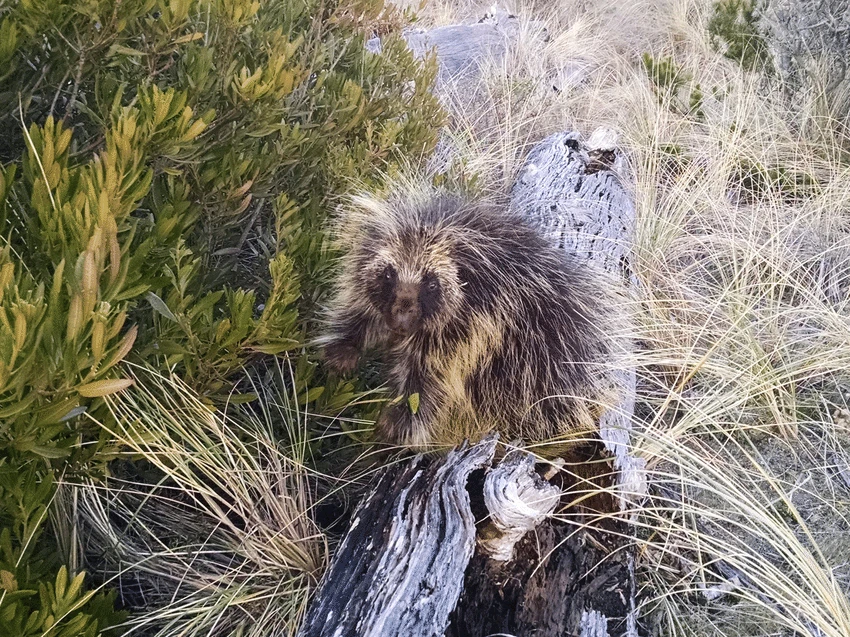
What I look like toward the end of the work week.
Its face is round, almost cartoonish: small eyes and a large, black, shiny nose make it look comical and harmless. And how fluffy it is, too! But behind this cuteness lies a powerful defense mechanism made up of 30,000 needles. Beneath its thick fur, the porcupine's back and tail are covered in stiff, sharp spines. They break free at the slightest touch, treacherously and permanently lodge themselves in the enemy's skin. 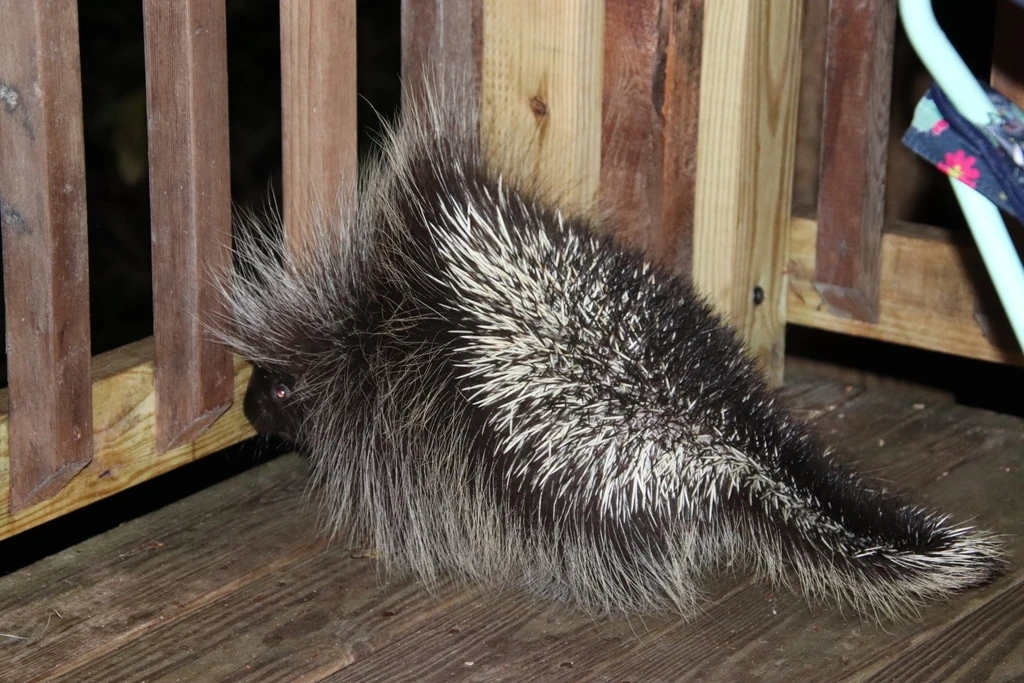
Petitting one the wrong way is dangerous to health.
Porcupines can be found throughout North America, with the exception of the hot Mexican deserts and cold northern latitudes. These animals are extremely undemanding of environmental conditions. They will thrive in almost any landscape: forests, semi-deserts, thickets of brush near a river, cliffs, city parks, and even someone's garden. 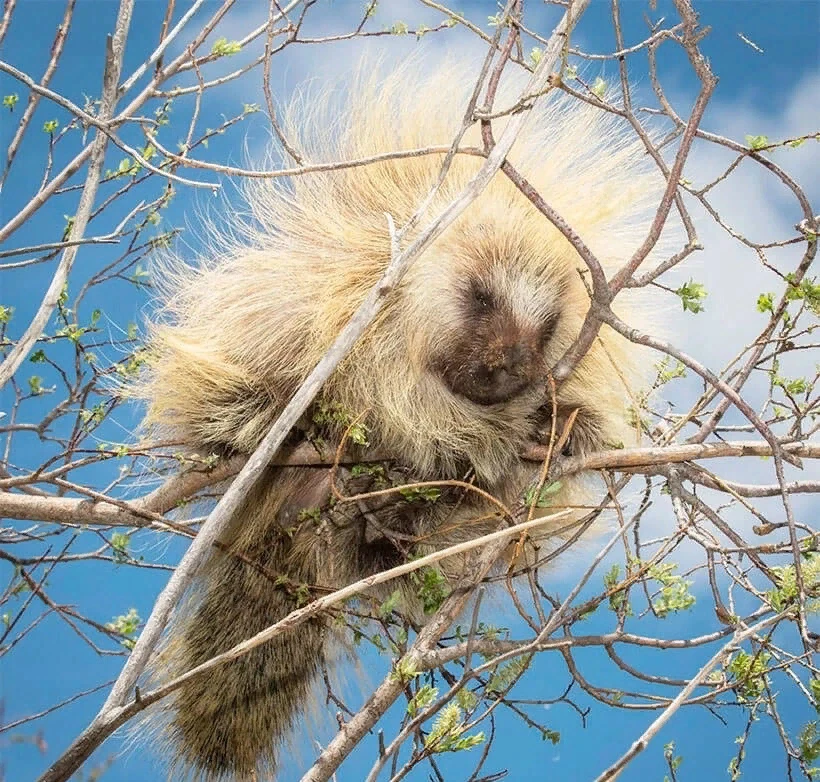
I wonder what shampoo I need to get hair like a porcupine's?
If there are plants there, the animal can survive. It will gnaw on bark, chew on grass, or collect fallen seeds and fruits. It's preferable for spruce and pine trees to grow in the intended habitat, but this isn't a requirement. The animal rests in Verkhoturin and hides from enemies. 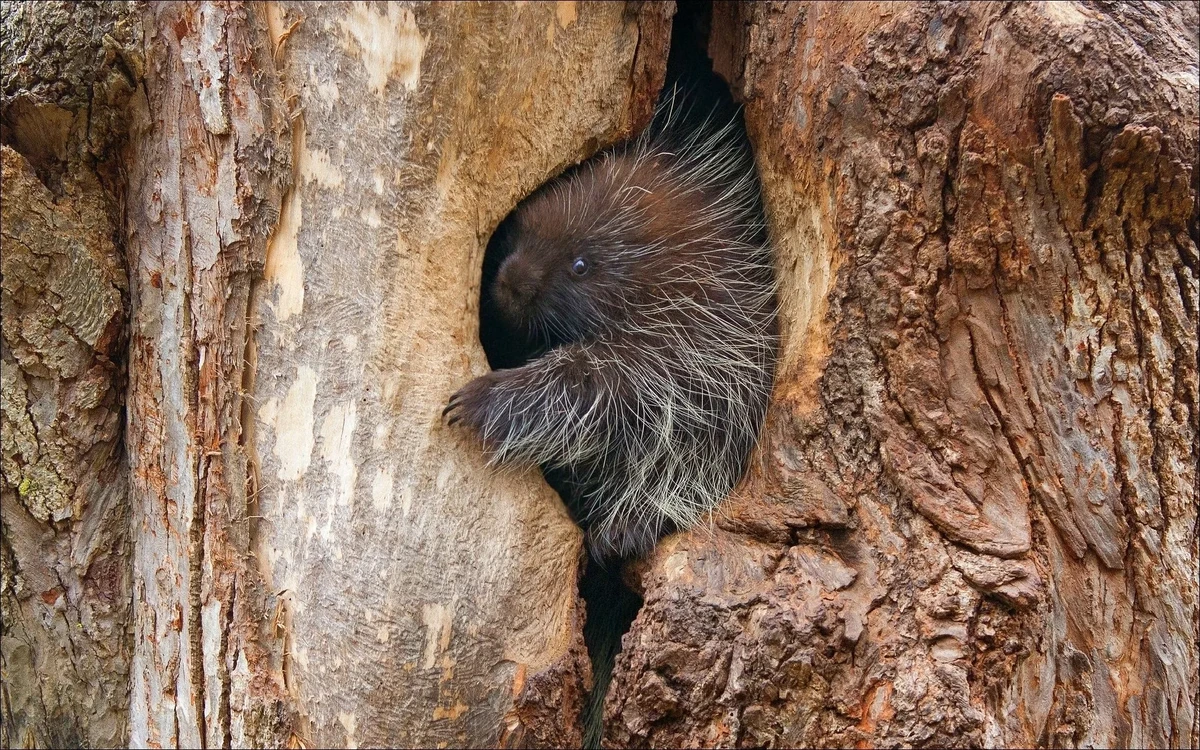
If you stare into a hollow for too long, the hollow will stare back at you.
By the way, about the falls—it's absolutely true! The animals are so clumsy and slow that they often fall upside down. And when they fall, they sometimes land on their backs, meaning on their own spines. Do they draw any conclusions from this? Definitely not. If the porcupine doesn't fall to its death (and that sometimes happens), it will climb back into the tree canopy. 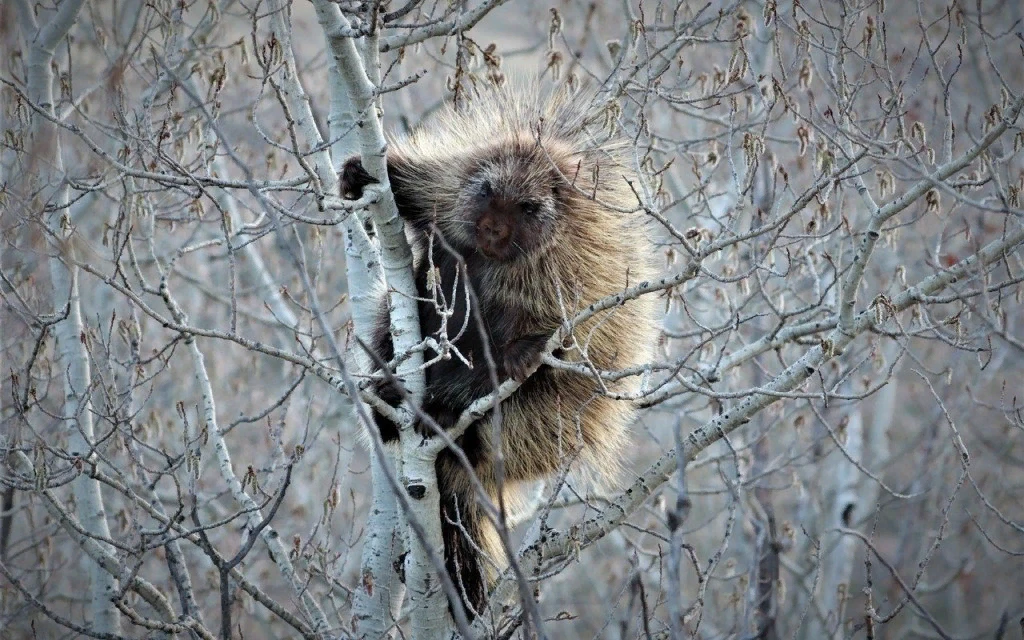
An apple doesn't fall far from the tree. And neither does the porcupine.
So nature took pity on these charming klutzes and developed a special antibacterial treatment for porcupine spines. Each quill is coated with a thin layer of bactericidal acids that prevent bacteria from growing at the site of the porcupine's injection. However, this only works on the porcupine itself. For all other animals, its quills pose a serious danger—even fatal. But why is this? 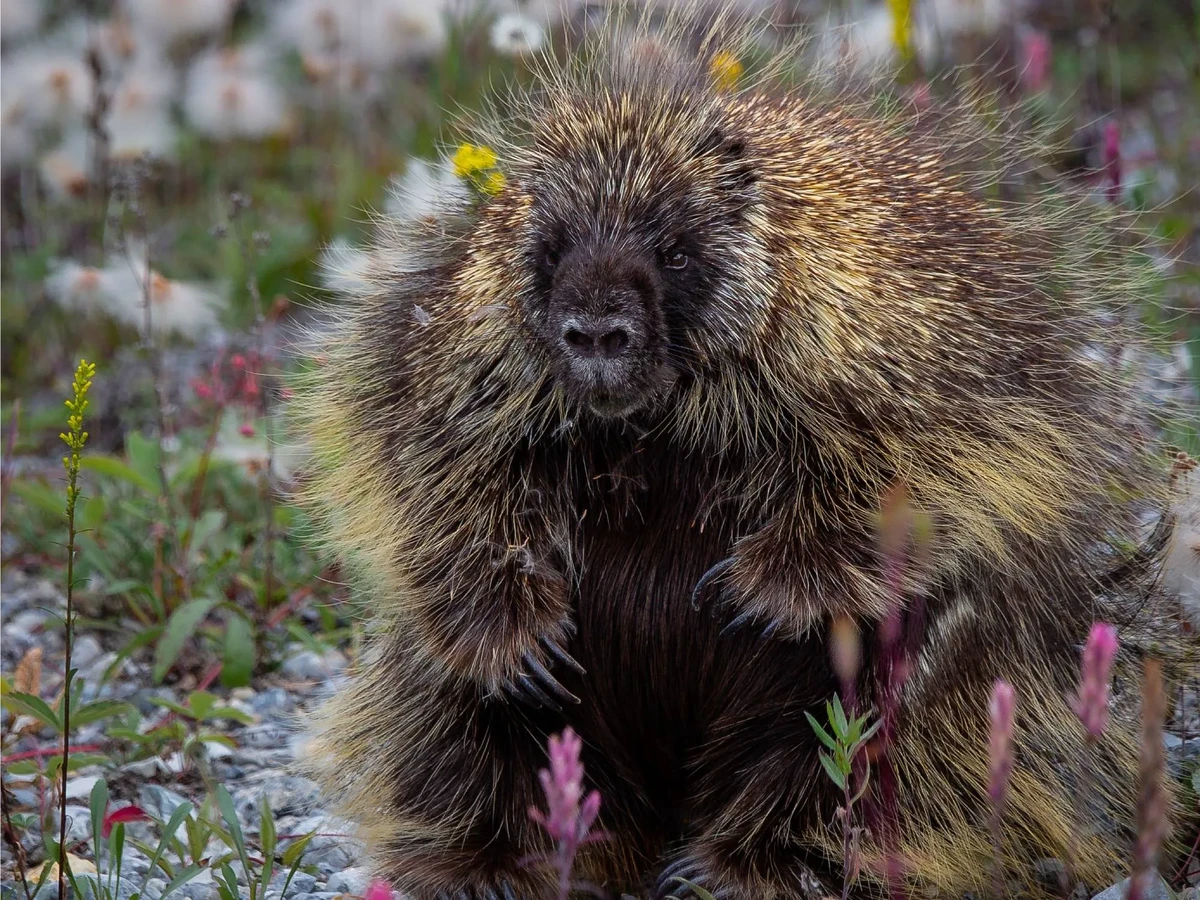
Perhaps the cutest deadly animal in the world!
First of all, when a needle gets stuck in someone's curious face, a whole bunch of other stuff gets in there, in addition to the antibacterial treatment. Microorganisms from the porcupine's skin, dust, dirt, and all sorts of bacteria from the environment. The thin protective film simply isn't enough to inactivate all this nastiness. Therefore, severe inflammation, swelling, and pus accumulate at the injection site. As long as the thorn is still in place, the wound will be very painful. Depending on the location of the injury, the animal will be unable to move, eat, or drink normally. 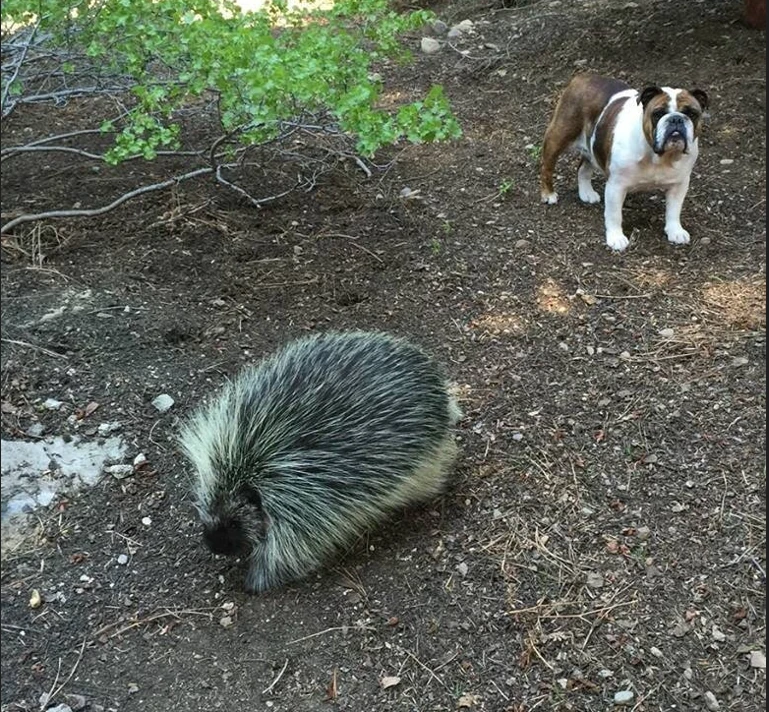
Master, let's go home already! Please, I'm scared around this strange creature!
Domestic dogs often suffer from porcupine spines. But porcupines themselves don't attack first; they're too slow and calm to attack. While a domestic dog might be treated by a veterinarian, for a wild predator, numerous quills in its face almost always mean death by starvation. 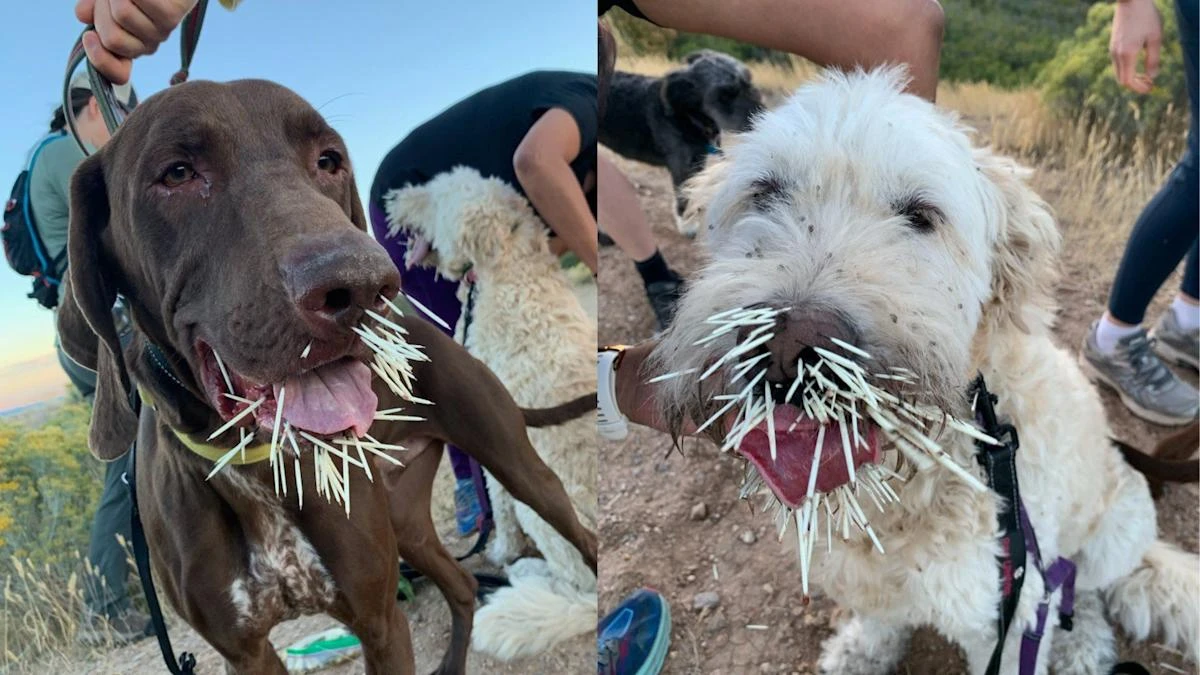
The curious Varvara's nose was pierced with needles by the porcupine.
Secondly, porcupine quills aren't as simple as they seem. You can't simply pull them out: each one is covered in tiny barbs curved backwards, like a harpoon. Once they pierce the skin, they penetrate deeper and deeper with each movement, migrating into muscles and even internal organs. There are known cases of quills entering a paw and exiting into the lungs or even the brain! Therefore, American veterinarians advise against removing porcupine quills yourself—you could miss something or break a tip, and then it's all over. 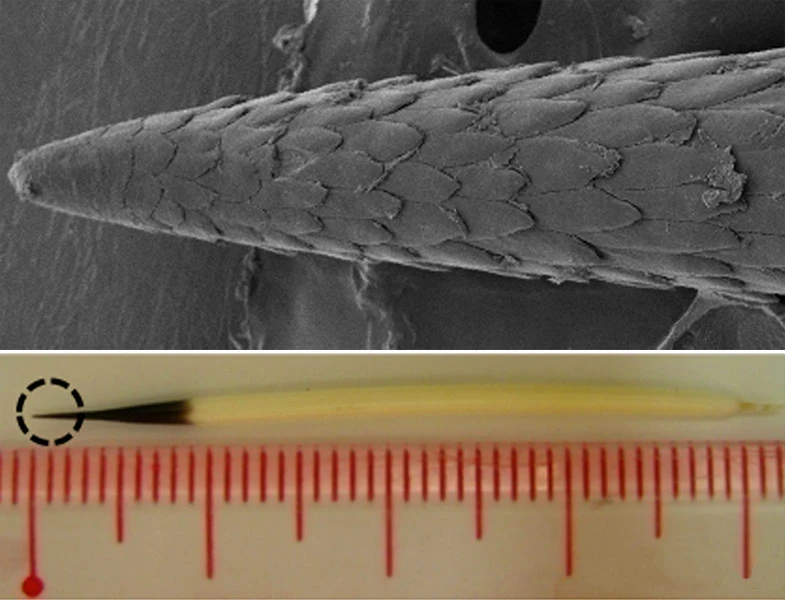
Since quills are modified hairs, their structure is very similar.
Despite the mortal danger, martens, cougars, wolverines, and bears still dare to attack porcupines. The main strategy is to flip the animal over and bite its soft, unprotected belly. This doesn't always work. People also sometimes hunt porcupines. Native people historically used their meat for food, and made jewelry from their skin and spines. Because they are slow, porcupines are easy to find. Furthermore, many American states allow open hunting. These rodents are considered pests due to their tendency to chew the bark of fruit trees and damage human belongings. 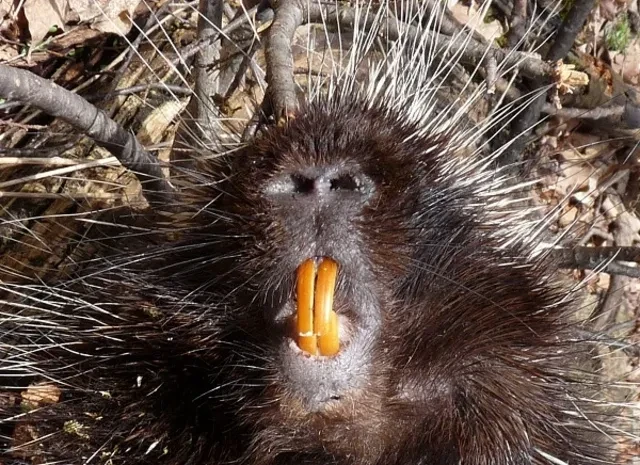
A little reminder that a porcupine is a rodent. Its teeth are orange due to excess iron in the enamel. This makes the incisors extremely strong.
Gloves, boots, paddles, and other tools are usually soaked with sweat and salt, which the animals adore. Experienced hikers know that if you leave your belongings outside the tent, they will inevitably be bitten in the morning. The animals also venture onto highways in winter and lick the salt used to de-iced the roads. This is why porcupines often get into accidents, but this, like falling out of a tree, doesn't teach the animals anything. 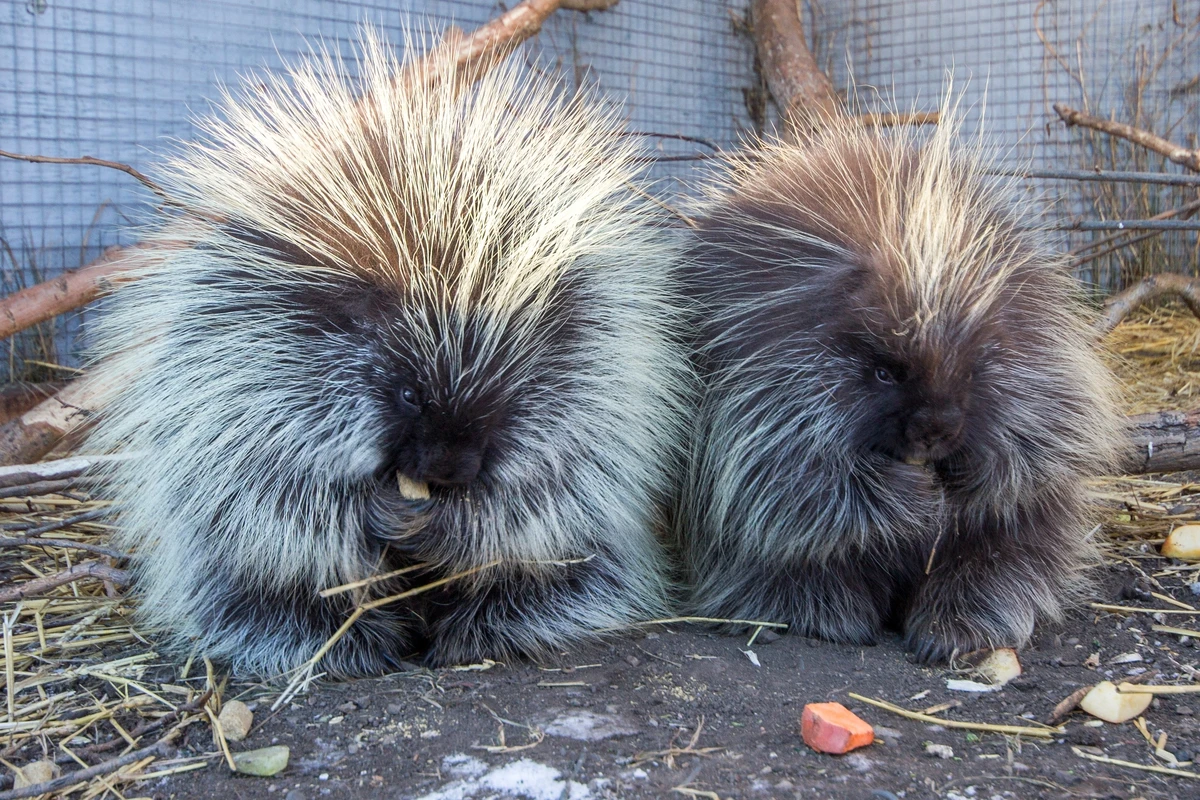
Porcupines love parkour. They're not very good at it, though.
Porcupine reproduction is also slow and sedate—like their entire lives. In the fall, females mark their territory, and males, drawn by the scent, spar for the right to become fathers. After mating, each goes their separate ways. The expectant single mother doesn't claim child support and raises her only cub on her own. 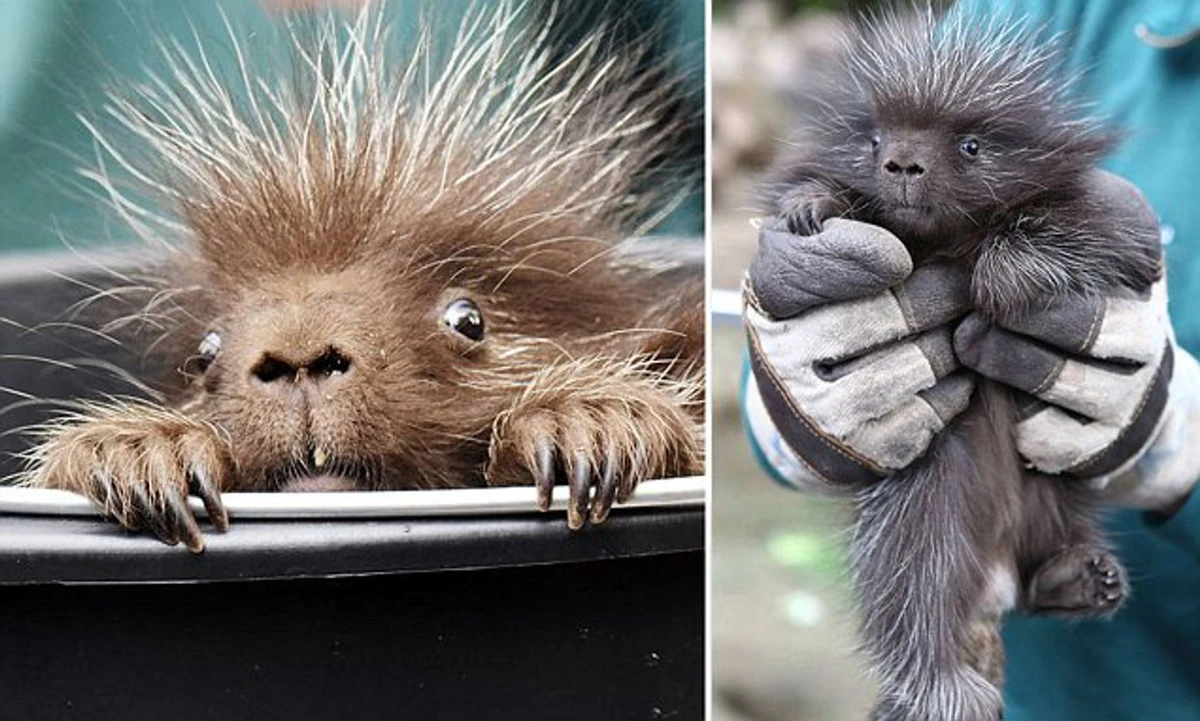
Porcupine gestation lasts six months—an incredibly long time for rodents. But the baby porcupine is born fully prepared for life, sighted, and even with teeth.
By the first month of life, it learns to forage for food and climb trees independently, and by the fourth month, it leaves its mother forever. Moreover, it takes a full two years for a young porcupine to become a parent. For a rodent, this is an unbearably long time. They usually sire their young as soon as they begin living on their own, but porcupines prefer to stand on their own feet first. 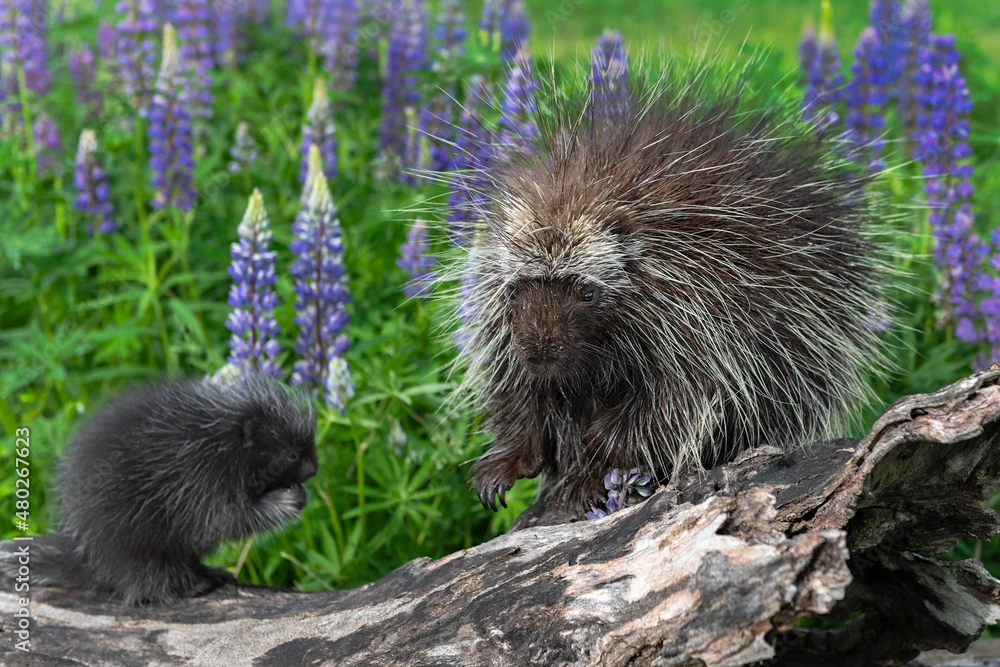
As a child, this is exactly how I imagined the Domovoi in the village.
And it would seem that the porcupine is inferior on all counts: hunting them is completely legal, locals don't like them, they get hit by cars, fall from trees and die, and they reproduce slowly. Such an animal simply has to be at the top of the list of those in danger of extinction! But there is no threat to this species today. Moreover, they are now expanding their range further south. Apparently, 30,000 needles are the deciding factor.