Sandwich: This bird breaks the stereotypes about bird behavior (12 photos)
This bird doesn't build nests. It raises its young underground. Meet the sand martin. As its name suggests, it nests on riverbanks. 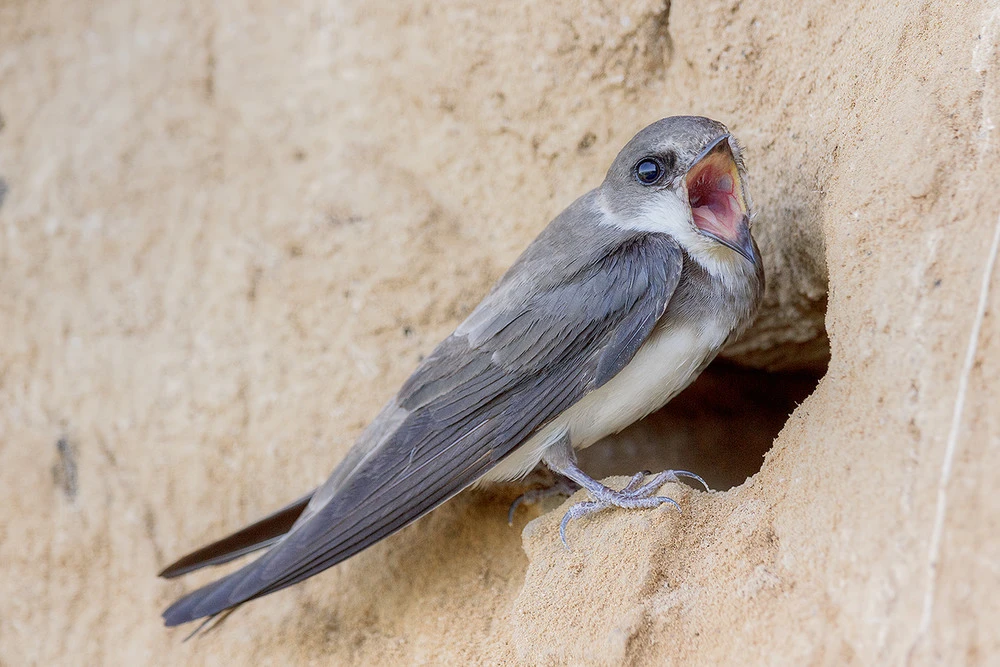
For "ordinary" birds, this option is problematic—riverside areas rarely abound with lush vegetation. But sand martins have a simple solution: instead of building elegant structures from sticks and branches, they brutally knead clay and eat dirt. 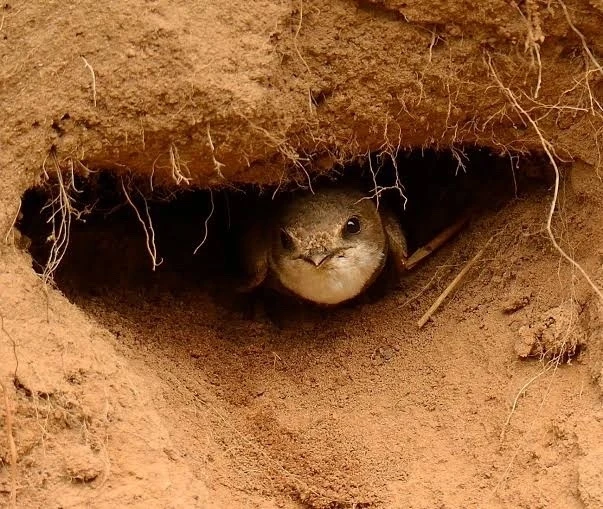
When someone knocks on the door, but you're afraid to go to the peephole. After all, you're only 30 years old and Mom's not home.
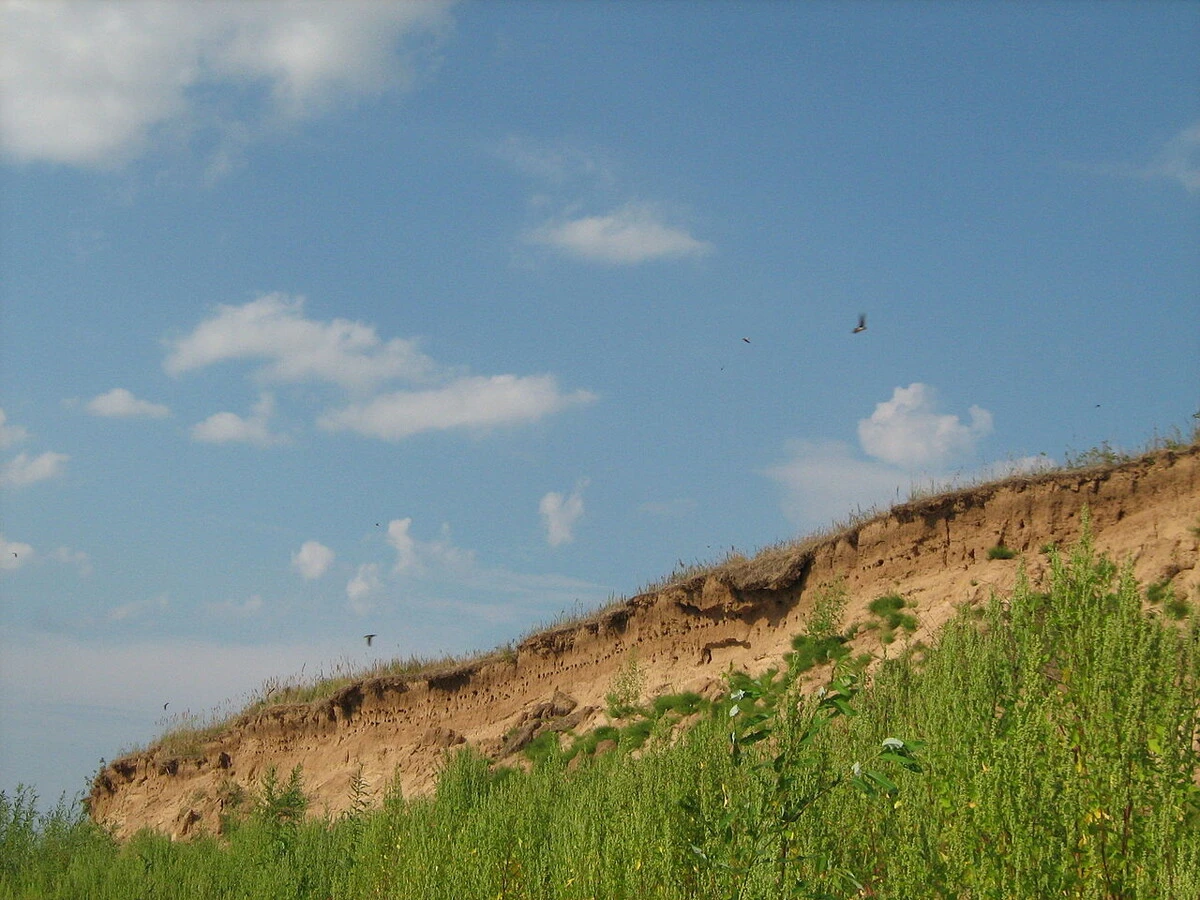
Using their beaks and feet, swallows dig burrows up to 1.2 meters deep. This, roughly speaking, is 10 times larger than the sand martin itself—the bird reaches 12-14 cm in length! And the number of such burrows is in the hundreds, even thousands! Slopes dotted with these industrious birds stretch for an average of 800-1000 meters. That's roughly the size of 8-9 Khrushchev-era apartment buildings built side by side. And if you combine several colonies into a single "settlement," you'll get an entire metropolis up to 10 km long! 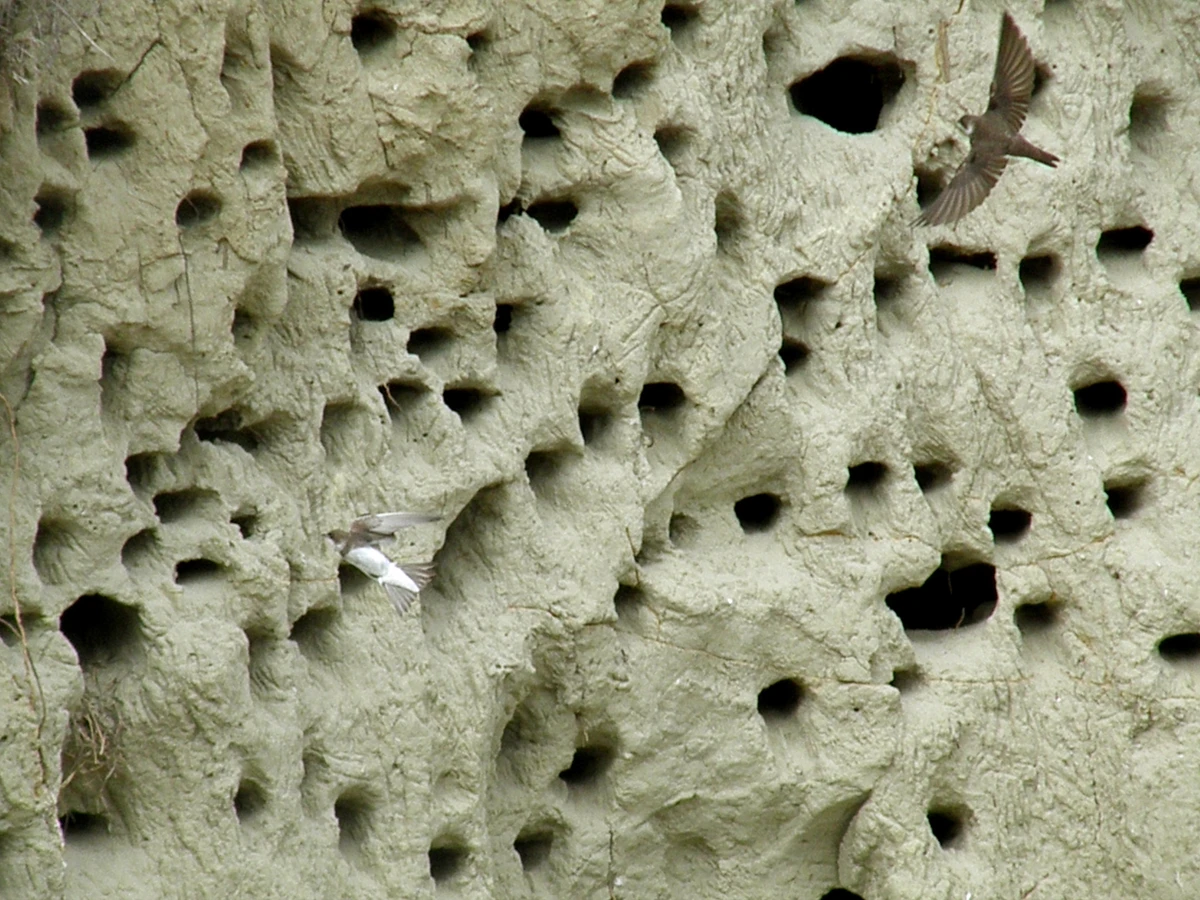
Trypophobes should avoid this.
You can find a bird underground almost anywhere in the world: in Eurasia, America, and Africa. But why all the hassle? Why turn into a mole when you can fly? Firstly, because no one else does. The niche is completely free! This means there's no need to compete with other bird species for the best spots and materials, which significantly simplifies the task of finding a place to live. 
Orange is the breeding area. Yellow is the migratory area. Blue is the non-breeding area (where they migrate for the winter). 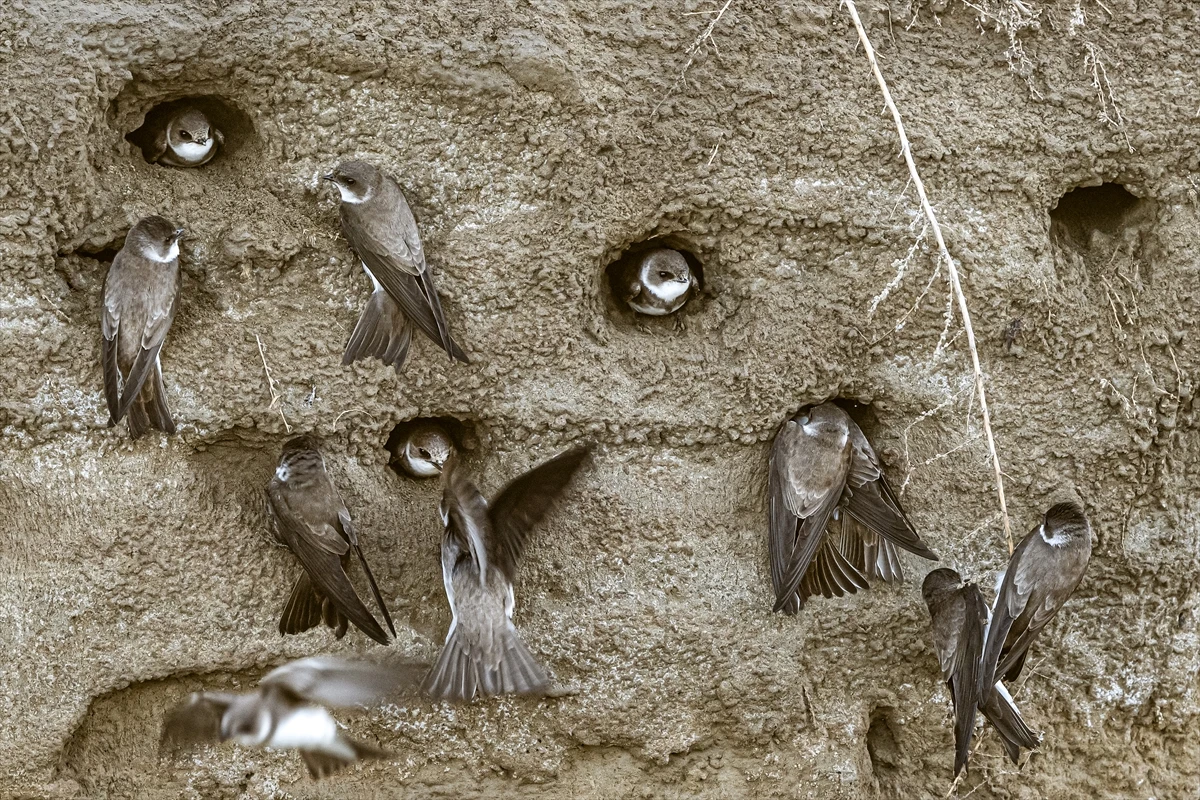
A burrow like that would cost a couple of million for humans!
Secondly, the sand martin's home is an impenetrable fortress for the vast majority of predators. Birds build nests on steep cliffs with soft, loose soil. Even the planet's most agile hunters—cats, snakes, weasels, and martens—can't defy the laws of gravity. They simply can't reach a swallow's nest! 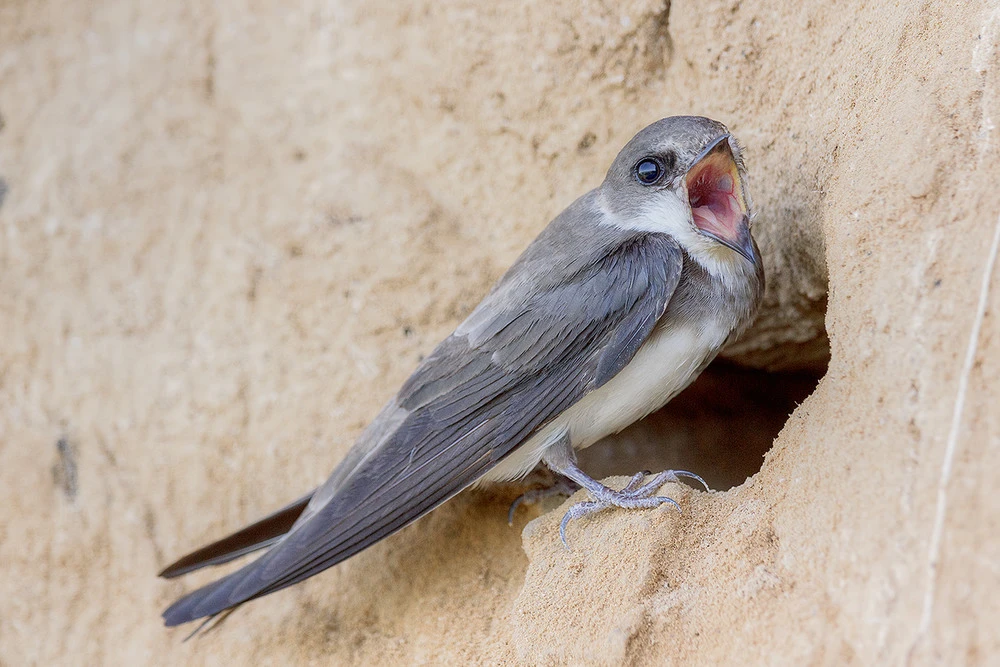
What's your mortgage rate?!
If you can fly and manage to reach the hole, try to fish something out! The entrance diameter is 5-9 cm, and the depth is 50 to 120 cm. Thanks to its unconventional approach to home improvement, the small, defenseless swallow has almost completely eliminated its natural enemies! 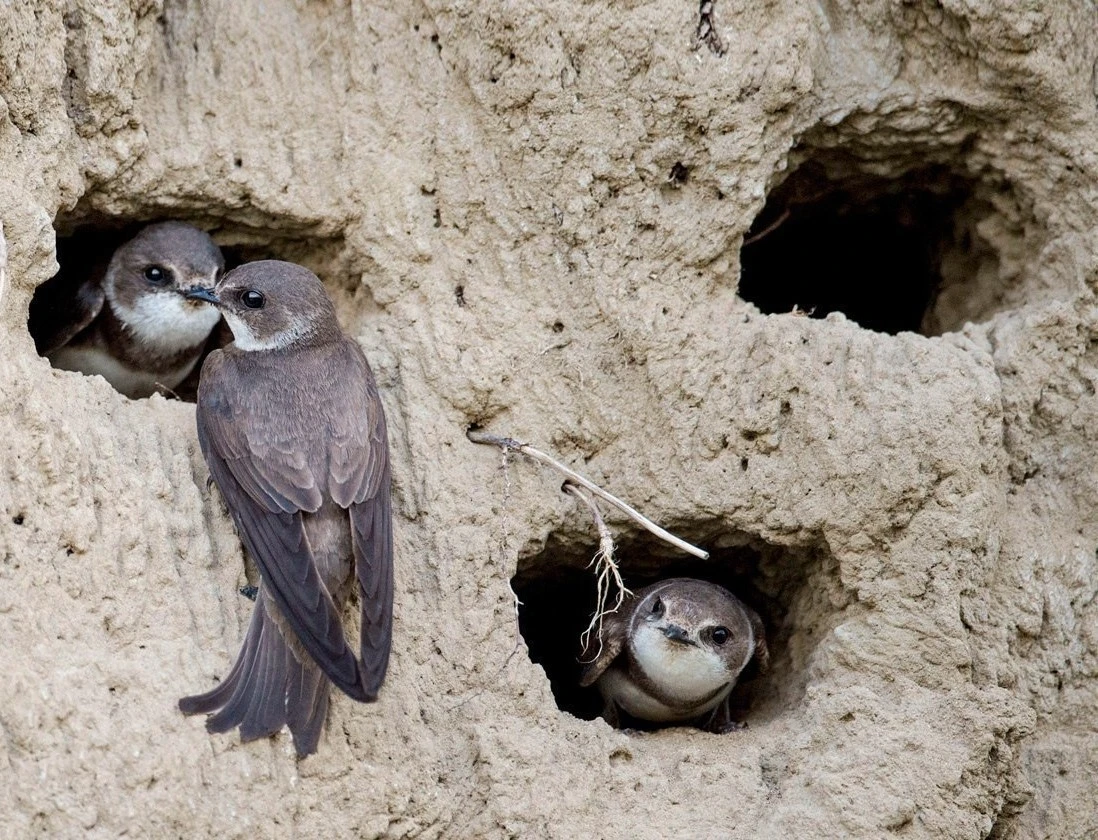
The nests are placed as close to each other as possible—10-15 cm apart. And you're still complaining about overcrowding in high-rise buildings!
Third, food. Remember: where do those annoying midges bother you the most? That's right, near the water! This is exactly what the birds take advantage of. Swallows snatch bugs in mid-flight, saving themselves from starvation and us from bloodsucking vermin. The shore swallow's diet is the same as that of an adult, meaning the bird can feed not only itself but also its offspring! However, to acquire these offspring, the swallow will have to go through the settlement procedure. How does this happen? 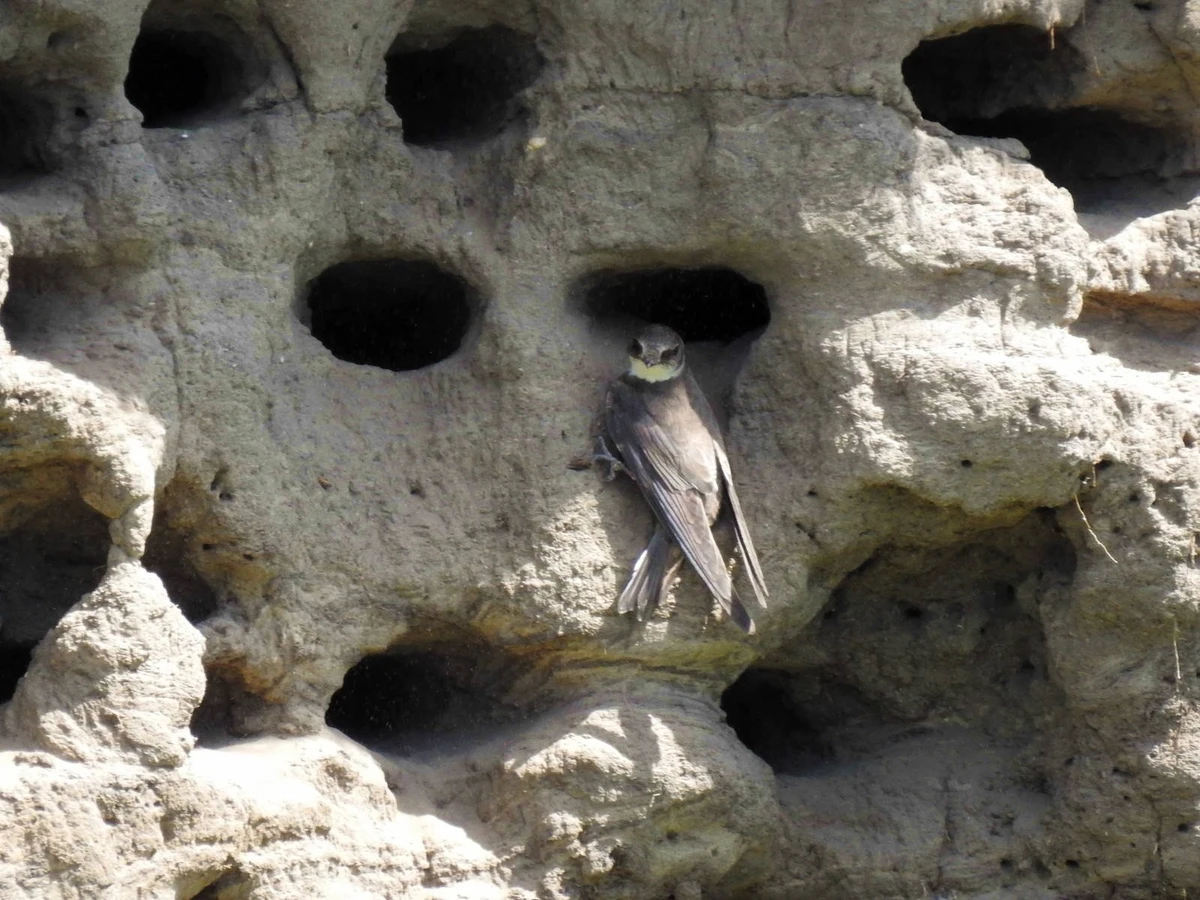
I wonder how to figure out where exactly YOUR apartment is among hundreds of holes?
No keys, mortgages for the rest of a bird's life, or struggles over inheritance! Having found a single partner with whom to raise brood after brood, the pair must build the apartment with their own feet. Swallows adhere to standard gender stereotypes, so the male is primarily responsible for the construction. The female ensures that her betrothed's efforts are not in vain: she guards the burrow until the renovation is completed. 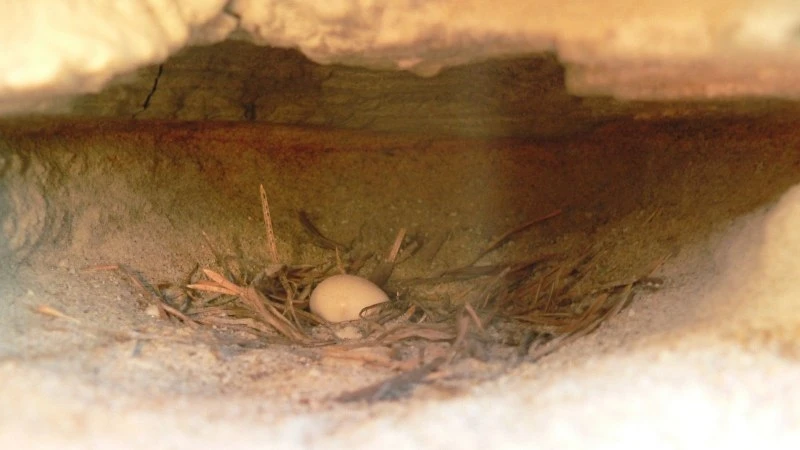
A comfortable one-room apartment from the inside.
Very soon, 2 to 8 chicks will appear in the nest. The nest can hardly be described as cozy. The babies grow up in darkness and perpetual moisture. Because of this, the nests are teeming with parasites. There can be 16 different species of mites in a nest alone! Perhaps this is why young swallows begin to fly just 20 days after hatching? 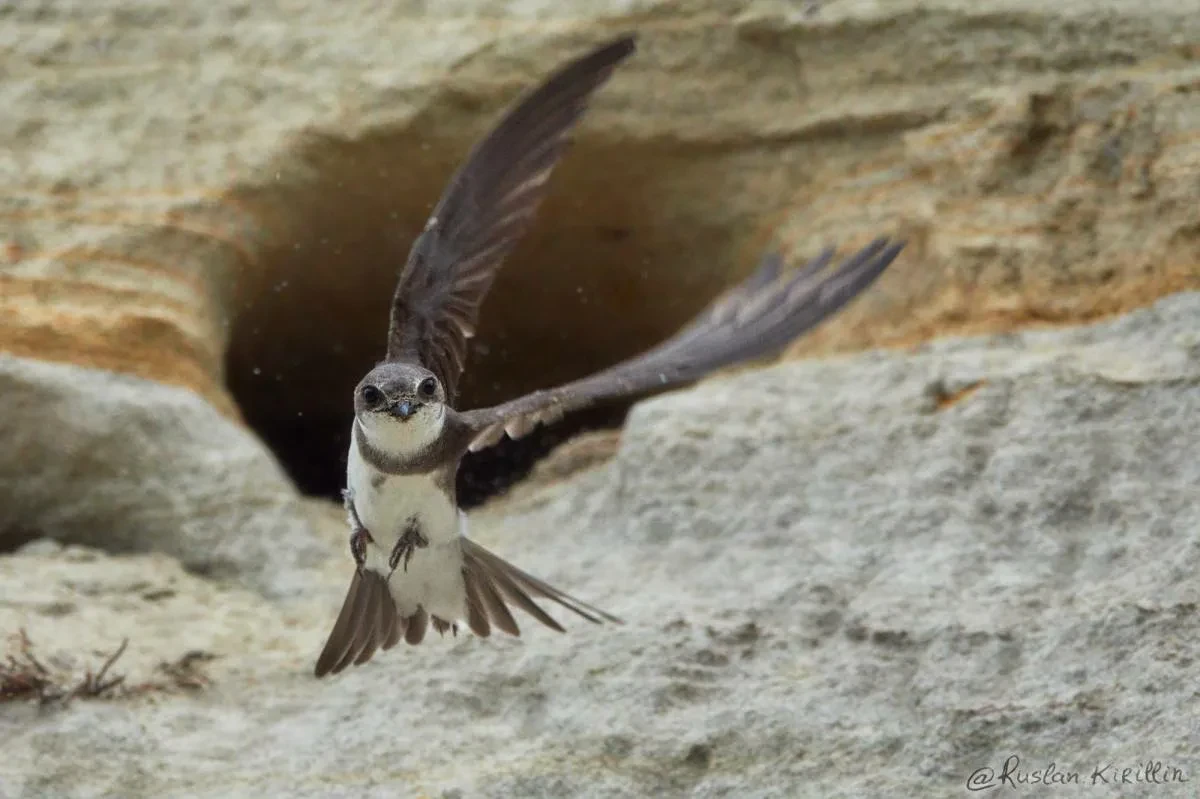
Hooray, finally freedom and no more ticks!
Another downside of the bird-filled metropolis is the numerous neighbors. Some apartments are empty, others are in disrepair, and still others are rented. Kingfishers and Coal tits can nest in sand martin colonies. But that's not a problem. Problems arise when a predator sneaks into the tenants' ranks. For example, a little owl. This small bird—the sand martin's burrow is just right for an owl. Most of the time, such a neighbor treats the swallows with feigned indifference, simply flying past them on their way to their apartment. But this is just a game—the predator lulls them into a false sense of security. Young and inexperienced swallows become its prey. And it attacks when no one expects it! 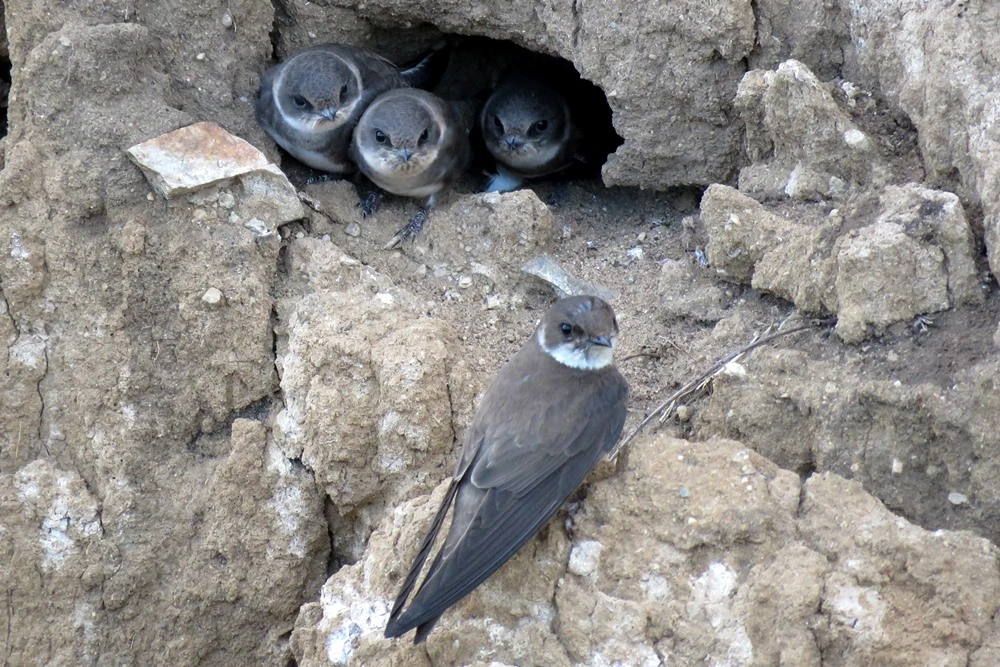
— Mom, can we play with the owl? — No, kids, he's bad company for you!
To get away from the bustle of apartment living and domestic squabbles with neighbors, sand martins regularly fly away on vacation. After raising their chicks in their nesting sites, the entire colony heads to warmer climates: South America, Pakistan, India, and South Asia, where they rest from parental duties, feed, and perhaps discuss new projects. Sand martins rarely return to old nests—they almost always build new burrows!